
Growth leaves fingerprints. Not just on revenue charts or headcount, but on people. It shows up in how teams communicate under pressure, how leaders make decisions when information is incomplete, and how customers feel when systems start to strain. As organizations expand, processes multiply, expectations rise, and complexity quietly settles in. The friction is rarely dramatic. It appears in missed handovers, unclear ownership, silent burnout, and teams working harder without necessarily moving forward together.
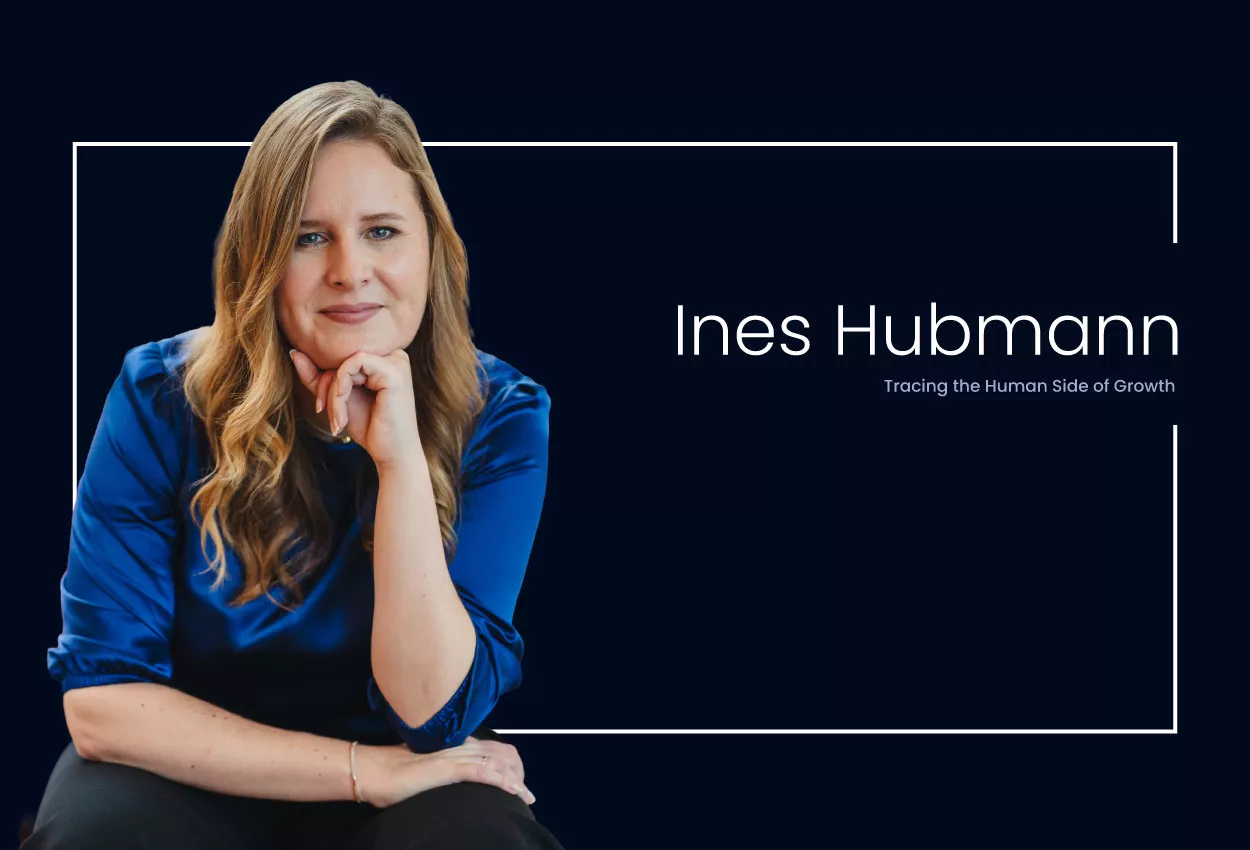
Ines Hubmann has seen this up close. She has worked inside fast-scaling environments where ambition was high, timelines were tight, and momentum felt relentless. As the leader of CX Consulting at Huble, she operates at the intersection of growth, customer experience, and organizational change. Her role centers on helping leadership teams reconnect people, processes, and systems so expansion does not come at the expense of culture, well-being, or coherence.
A Journey Shaped by Curiosity and Culture
Ines’s professional journey is rooted in curiosity, creativity, and exposure to different cultures at a young age. Moving to the United States at the age of fifteen introduced her to unfamiliar systems, new environments, and the discomfort of starting over. That early experience of adaption taught her something that would later define her leadership style: resilience is built when you learn to navigate uncertainty without losing yourself.
After completing her studies, Ines moved to the United Kingdom, where she got exposed to building a team and business from the ground up when working for a Fintech startup. Immersed in innovation and significant growth, she gained firsthand experience in scaling teams and businesses in fast-paced environments. Over the years, her career has spanned building a team across 6 international markets for an EdTech unicorn, developing global international marketing campaigns, and strategies for agencies, starting her own business with a focus on building the bridge between social impact & tech, and advising CEO and leadership teams on a global scale. She has trained with global brand leaders like Aprajita Jain (Chief Brand Evangelist at Google), where she was awarded for the best brand strategy developed among over 60+ US based marketers. She went on to found her own company, Profect, with a focus on driving long-term growth for businesses that create social impact.
Her work in international growth eventually led her to speak at conferences in Spain, mentor startups, and advise multinational enterprises. Today, she supports organizations and teams in areas such as digital transformation, change management, customer experience, and strategic growth, always putting human & psychology first in the work she does. At her core, Ines believes in following curiosity and leading with kindness and empathy, while consistently challenging the way things are done and finding new solutions. She values courage, risk-taking, openness to new experiences, and challenging norms as essential drivers of both personal and professional growth.
A Leadership Philosophy Built on Exposure
Leadership, in Ines’s view, is shaped by exposure to different people, cultures, and ways of thinking. Working with global teams has taught her that strong leadership is grounded in diversity & inclusion, clarity, empathy, and the ability to connect strategy with purpose, storytelling, and execution.
She believes leadership is about creating environments where people feel empowered to ask meaningful questions, challenge assumptions, and grow alongside the business. Ines steers away from a top-down leadership approach, creating fear, but focuses on enabling others to contribute their best work within a shared direction.
The Anatomy of Experience That Scales
As the leader of CX Consulting at Huble, Ines views long-term strategic, sustainable growth as far more than tools or technology. For her, effective consulting begins with a holistic understanding of how organizations and executive teams operate. This requires exposure to multiple departments and a deep understanding of the challenges businesses face as they scale. She believes that the consultants who ask the best questions will find the best solutions. We need to detect the core blockers first and turn the right wheels at the right time to enable growth.
Across industries, she observes that core challenges tend to repeat themselves. Strategy, systems, processes, culture, people, and communication form the foundation of sustainable progress, and they are often the areas that need the most attention. The best consultants are able to ask the right questions, think analytically, and design solutions that support long-term transformation.
Technology plays an important role, but it is always an enabler rather than the starting point. Tools support systems and processes through automation, data management, and friction reduction across departments such as marketing and sales. In customer experience work, Ines emphasizes focus on the most important touchpoints. The most effective journeys are created by identifying and optimizing the touchpoints that truly matter.
The AI Shift and the Future of Customer Experience
For Ines, the conversation around artificial intelligence is ultimately a conversation about how organizations understand people. While AI is reshaping how customer journeys are analyzed and managed, she believes technology only becomes valuable when it strengthens human connection rather than replacing it. The growing influence of AI-driven search and algorithmic discovery has changed how brands show up in the world, but in her view, visibility still depends on something deeper: trust, clarity, and meaningful engagement.
She observes that organizations approach AI differently depending on their maturity and risk tolerance. Larger enterprises often move more cautiously due to regulatory responsibilities and data sensitivity, while smaller companies experiment faster and adapt quickly. Yet regardless of size, she emphasizes that technology alone does not create progress. Without strong strategic foundations, clear processes, and aligned teams, AI simply magnifies existing gaps instead of solving them. Real transformation begins with clarity about goals and the human outcomes organizations want to achieve.
When it comes to content and communication, Ines advocates for balance rather than automation for its own sake. She sees AI as a partner that can support scale, but believes human judgment, creativity, and oversight remain essential for authenticity. For her, the most successful organizations are those that use technology to enhance intention and storytelling, ensuring that growth continues to feel human even as tools evolve.
Scaling CX Across Borders Without Losing the Human Core
Having driven transformation and growth strategies across DACH, the EU, and the United States, Ines believes the most common blind spot in global scaling is failing to listen. Customers and employees are the backbone of any organization, and sustained success depends on investing in culture and trust.
She emphasizes the importance of clarity around what a brand stands for and what it wants to be known for. Only when systems, processes, culture, and brand foundations are strong can organizations successfully translate their vision into new markets. Storytelling and messaging build the foundation of a strong brand and enable the right GTM strategy. Storytelling lies at the core of building human connection and driving growth.
Ines also cautions against underestimating cultural differences or expanding too quickly without sufficient local understanding. When building the content team for an EdTech unicorn, she focused on localization, not translation, to build momentum in new markets. Growth, she acknowledges, is rarely perfect. It is often messy, but with the right culture, tools, and skills, organizations can develop with intention and impact.
Human Connection at the Core of B2B and B2C CX
Ines believes the difference between B2B and B2C customer experience is often overstated in theory and underestimated in practice. In her work with B2B organizations, she still sees a strong tendency to focus heavily on product features, while the service and value proposition are not communicated clearly enough to truly resonate with customers.
For Ines, both B2B and B2C ultimately revolve around people. Meaningful connection is created when organizations address deeper goals, values, and motivations through what they offer. Personalized messaging is essential in both environments, and today’s AI-driven tools can support this at scale by helping teams deliver more relevant and timely communication.
At the same time, she observes a growing shift toward authenticity. Whether building a business brand or a personal brand, clarity around purpose and identity matters more than ever. Ines believes that genuine communication creates trust, engagement, and long-term loyalty. In many ways, she sees the industry coming full circle back to human connection, now strengthened by technology rather than replaced by it. The #1 blocker for larger organizations is still rooted in clear communication and understanding across teams. Bringing all views to the same table to address the same goal and solve the same problem is a must.
The Foundations That Drive Sustainable Growth
Behind outcomes such as significant demand generation growth and multi-fold revenue increases, Ines points to a set of non-negotiable foundations. For her, leadership begins with people and culture. People crave stability and understanding. With the right systems and processes in place, you can enable it for employees. Early in team building, she believes leaders must invest energy into creating a collaborative and inclusive environment. Motivated and supported teams consistently deliver stronger results. Weak foundations in culture create toxic work environments.
She has learned to set ego aside and focus on serving and empowering those around her. This leadership style requires energy and resilience, which is why she places strong emphasis on personal health and well-being. In high-growth environments, she has witnessed how easily ambition turns into exhaustion. That awareness reshaped her leadership philosophy. Performance without psychological safety is unsustainable. She believes that we need to advocate for our team members to take care of themselves and set time aside for well-being.
While culture comes first, Ines also stresses the importance of direction. Clear goals and a defined strategic plan help teams stay focused and prevent momentum from stalling. People want to follow a vision, and a strategy provides the structure that allows growth to continue. Strong systems, processes, culture, people, and strategy together form the base for long-term success.
In demand generation work, she focuses on identifying and removing blockers. Messaging, channel focus, and audience targeting are often the root causes of stalled progress. A structured analysis helps clarify priorities and unlock the next phase of revenue growth.
The Psychology of Progress
For Ines, digital transformation is rarely a technology problem. It is a people challenge. Organizations often feel overwhelmed by the number of tools available, yet the real difficulty lies in knowing how to create clarity and direction amid constant change. She has seen many companies invest heavily in new systems without achieving the outcomes they expected, not because the technology failed, but because the foundations around people, processes, and alignment were not fully in place.
Her approach begins with simplicity and structure. Before introducing advanced tools, she focuses on building strong foundations and helping teams understand why change is happening. For Ines, transformation is deeply psychological. It asks people to let go of familiar ways of working, which can create uncertainty and resistance. This is why she leads change with calm, clarity, and steady communication, helping organizations move forward without losing trust or momentum.
She believes that successful transformation depends on transparency, patience, and shared ownership. When stakeholders stay aligned, and teams feel supported, change becomes sustainable rather than forced. Instead of trying to transform everything at once, she encourages leaders to move step by step, creating progress that people can understand, adopt, and believe in.
Turning Noise Into Direction
For Ines, the difference between data-driven organizations and data-overwhelmed ones is clarity. She sees data overload as a very real challenge, especially in large enterprises operating across multiple regions, markets, and decision-making layers. Vast amounts of data are collected, but without structure, insight gets lost.
In her consulting work, a large part of the role involves reducing complexity through deliberate data cleanup. Reporting, she explains, can only reflect the systems, processes, and tracking mechanisms already in place. It is closely tied to lifecycle management, lead management, and tracking logic. Without alignment across these areas, reporting becomes misleading rather than useful.
She encourages leaders to focus on a few powerful questions. Where does the buyer journey stall? Where does the handover from marketing to sales break down? What blockers are slowing momentum, and how can they be removed? Addressing these points, often within platforms such as HubSpot, helps streamline cross-departmental processes, simplify operations, and create revenue growth.
Turning AI From Experimentation into Impact
Ines often sees organizations experimenting with AI without a clear understanding of how it supports long-term goals. For her, technology only becomes valuable when it is introduced with purpose and connected to real human needs within the business. Rather than chasing features, she encourages leaders to focus on clarity, motivation, and practical outcomes that teams can adopt with confidence.
She believes successful adoption begins with people, not tools. Leaders need to understand the purpose behind change before rolling solutions out widely, ensuring teams feel supported rather than overwhelmed. Starting with one meaningful use case and expanding gradually creates stronger engagement and reduces fatigue.
Ultimately, Ines views AI as something that should adapt to people, not the other way around. When used thoughtfully, it simplifies work and frees space for creativity and better decision-making. Human judgment, however, remains essential to maintain authenticity, intention, and trust.
Steady Leadership in Uncertain Times
Having advised C-suite leaders through periods of intense transformation, Ines understands the pressure that comes with leading in uncertain times. Economic volatility and difficult decisions have become defining features of leadership in recent years. When working with clients through her business Profect, she always started by asking the right questions: understanding where leaders are today, where they want to go, and what obstacles are standing in the way. Often, these challenges are clearly reflected in the numbers and can already be seen in the discovery phase.
Trust building is central to her approach. Progress only happens when leaders and teams are aligned around a shared vision and committed to moving in the same direction. She has seen what happens when communication lacks empathy, teams shut down, creativity narrows, and fear replaces curiosity. She believes leaders must create space for learning, allow room for mistakes, and support teams through change. She believes that feedback must always be timely, specific, constructive, and tailored to the person receiving feedback. Vague feedback and intransparent feedback mechanisms lead to frustration and a drop in employee motivation.
Her own leadership journey has involved high-pressure situations, fast turnarounds, and high-level decision-making. These experiences shaped her belief in progress, consistency, patience, and commitment. She also reminds leaders on the importance of optimism. A clear roadmap, the right mindset, and belief in the journey ahead can make even the most challenging transformations feel manageable. With the right team, the journey becomes lighter, and even in complexity, there is always room for humanity and laughter.
Balancing Vision and Execution in High-Growth Environments
Ines approaches her role as a fractional CMO and consulting lead with a strong hands-on mindset. Before stepping into leadership positions, she learned by doing and continues to work hands-on to stay on track with delivery. This balance allows her to remain grounded in execution while shaping strategic direction.
She regularly encourages teams to schedule deliberate moments to step back from daily operations and refocus on the bigger picture. These sessions help teams assess where they are, challenge assumptions, and realign around what is needed next.
As a fractional leader and business owner, Ines has simultaneously navigated execution, delivery, sales, finance, and marketing. Wearing multiple hats has shaped her understanding of how strategy evolves in real time, especially when building something independently. She values strong networks and supportive communities, particularly for solopreneurs, who often find leadership journeys can feel isolating.
Customer Activation as a Shared Leadership Responsibility
Ines believes customer activation and lifecycle management should be board-level priorities, but only when approached holistically. She sees advocacy for both the voice of the customer and the voice of employees as a core leadership responsibility, which is why she no longer views herself purely as a marketer but as a human leader, following a people-first approach and using a coaching/servant leadership style.
Customer activation, in her view, happens across multiple touchpoints and departments, including sales, marketing, operations, and customer service. Leadership teams must understand where customers drop off, why it happens, and which internal misalignments contribute to the problem. Shared goals across departments, rather than isolated targets, create stronger alignment and momentum.
She also highlights the importance of setting goals that are clear, relevant, and motivating. People commit to goals when they understand their value. The same principle applies to meetings, where engagement suffers without shared context, trust, or a clear plan. Ines encourages leaders to invest more in communication, empowerment, and inclusion. These soft skills are often undervalued, yet they are powerful drivers of performance. Simplifying complexity and reducing jargon frequently leads to more meaningful progress.
Leading Global Teams with Purpose and Authenticity
Having built and led global teams across over 9 international markets, Ines has learned that her strongest work comes from authenticity and alignment with purpose. Whether the focus is a project, a role, or the people involved, meaningful impact emerges when work is connected to a clear sense of why it matters.
Her leadership approach is rooted in inclusion, kindness, and empowerment. This does not mean avoiding conflict or difficult decisions. On the contrary, she believes questioning established ways of working and choosing new directions is essential for sustainable growth. Leadership also requires self-acceptance. Over time, she has learned to navigate external labels and use these as drivers for change, while staying true to her core values.
What keeps her grounded is purpose and a return to the values that shaped her. She has become more selective about who she works with and the environments she chooses. Curiosity about people, psychology, businesses, and growth continues to guide her work. Active listening, empathy, thoughtful decision-making while setting ambitious goals are central to her leadership style. She believes the risks that feel intimidating at first often become the milestones people look back on with pride.
Putting People First in an AI-Accelerated World
Looking ahead, Ines believes employee wellbeing and mental health must take priority. The acceleration of AI has the potential to create overwhelm, and organizations have a responsibility to provide the right support to prevent burnout. With burnout already widespread, she sees well-being as a necessity rather than a benefit.
She emphasizes the importance of investing in onboarding, training, and inclusive systems that support long-term growth. Too often, talented individuals leave organizations not because of a lack of opportunity, but because systems fail to support them or environments become unhealthy. In high-pressure settings, caring for people is a responsibility, not a luxury.
Ines believes culture, empathy, inclusion, and authenticity will define the future of work. High-performance work environments should embrace differences, imperfections, and diverse ways of thinking and being. She also cautions that AI bias can influence hiring decisions and limit inclusion. Supporting diverse backgrounds, skill sets, and non-linear career paths will be essential to creating inclusive and diverse workplaces.
Redefining Strength on Her Own Terms
For International Women’s Day, Ines encourages readers to embrace imposter syndrome and view perceived imperfections as strengths. She reminds women that they are capable and good enough, even when self-doubt creeps in. There should be more room given to generalists, people pursuing more interests, and neurodiversity, away from the label, typical career ladder, and title obsession that corporate systems project on people.
She believes that critical and innovative thinking are two of the most important traits for creation to happen. Having the right support network matters deeply, with an emphasis on quality over quantity. She also highlights introversion as a strength and calls for more space for quiet thinkers who reflect deeply and move thoughtfully. These voices often see what others have long overlooked.
Growth Beyond the Numbers
Looking back, the thread running through Ines Hubmann’s journey is not technology, growth metrics, or transformation frameworks, but people. The same curiosity that once drew her to stories now shapes how she helps organizations navigate change, listening closely to what teams need, what customers feel, and where meaning gets lost along the way. Growth, as she sees it, is rarely loud or immediate. It reveals itself quietly in stronger connections, clearer communication, and cultures that move forward without losing their humanity. In the end, the real measure of progress is not how fast organizations scale, but how well they stay connected to the people who make that growth possible.




