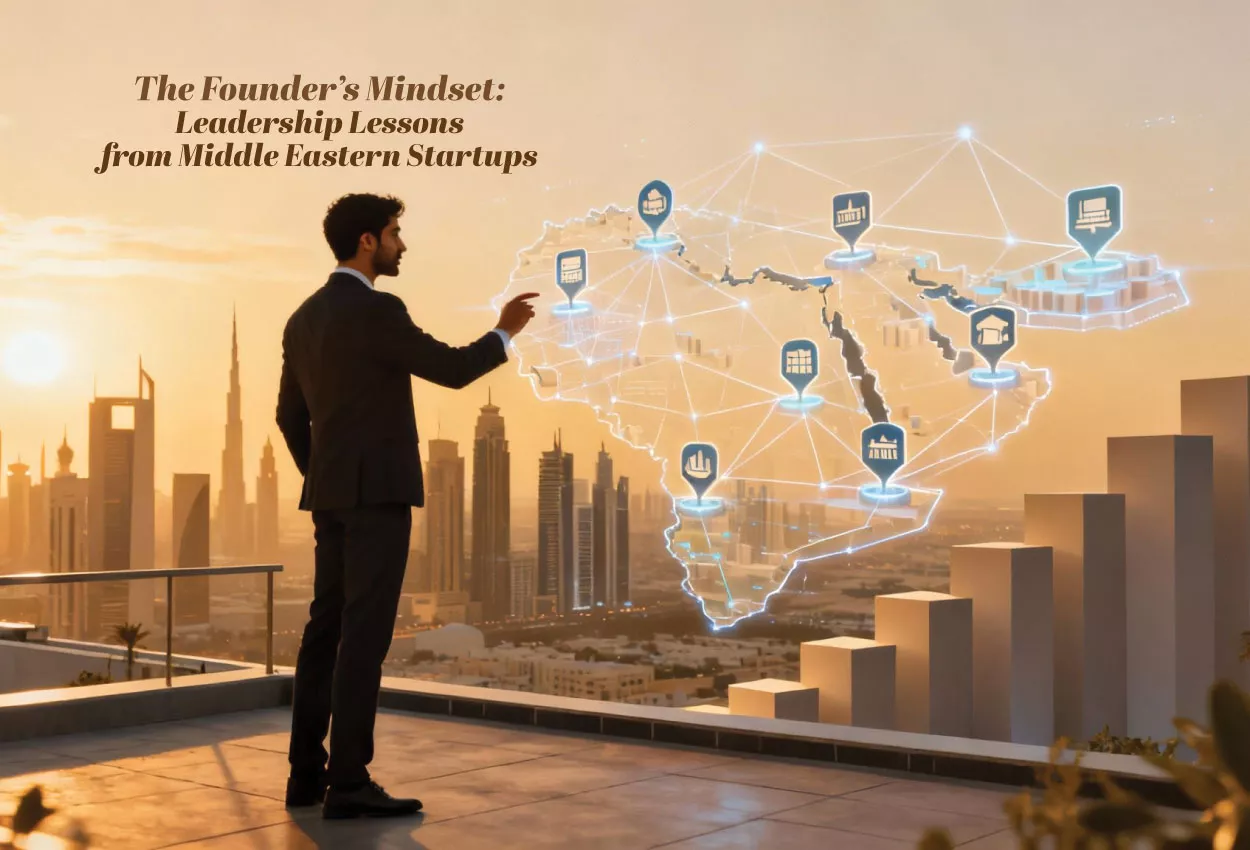
Across the Middle East, a new generation of entrepreneurs is redefining what it means to lead. In a region once dominated by traditional industries and large family-owned enterprises, startups are emerging as powerful engines of innovation and economic diversification. At the heart of this transformation lies the founder’s mindset, a distinct approach to leadership shaped by resilience, adaptability, and an unrelenting focus on opportunity. These founders are not only building companies but also reshaping leadership philosophies, offering lessons that extend far beyond the startup ecosystem.
Vision Rooted in Possibility
Every successful startup begins with a vision, but in the Middle East, that vision often carries a deeper sense of purpose. Founders are driven by the desire to solve regional challenges, whether in finance, logistics, healthcare, or education. Their ideas are not created in isolation but are closely tied to the evolving needs of their societies. This ability to identify gaps and imagine possibilities is a defining trait of the founder’s mindset. Leaders are not waiting for change to happen. They are actively creating it, often in markets that are still developing and full of untapped potential.
Resilience in Uncertain Environments
Building a startup anywhere requires courage, but in emerging ecosystems, the challenges can be even more pronounced. Access to funding, regulatory complexities, and market unpredictability demand a level of resilience that goes beyond conventional leadership. Middle Eastern founders have learned to navigate uncertainty with determination, often pivoting their strategies multiple times before finding success. This resilience is not just about survival. It becomes a strategic advantage, enabling leaders to adapt quickly and seize opportunities where others see obstacles.
Agility as a Core Leadership Trait
Speed and flexibility define the startup environment, and Middle Eastern founders embody this through agile leadership. Decisions are made quickly, hierarchies are minimal, and teams are encouraged to experiment. This approach allows startups to respond rapidly to market changes and customer needs. Unlike traditional organizations that may be slowed by rigid structures, startups thrive on their ability to iterate and evolve. For founders, agility is not just an operational necessity. It is a mindset that influences every aspect of leadership, from strategy to execution.
Building People First Cultures
Despite the strong focus on innovation and growth, successful founders understand that people are their greatest asset. In a region known for its cultural diversity, building cohesive and motivated teams requires thoughtful leadership. Founders are creating environments where collaboration, trust, and shared purpose take precedence over hierarchy. They invest in talent development, encourage open communication, and empower individuals to take ownership of their work. This people-first approach not only drives performance but also fosters loyalty and long-term commitment.
Customer Centric Thinking at the Core
One of the most powerful lessons from Middle Eastern startups is the emphasis on customer centricity. Founders are deeply connected to their users, often engaging directly with them to understand their needs and preferences. This close relationship allows startups to design solutions that are both relevant and impactful. Whether it is simplifying financial transactions or enhancing delivery services, the focus remains on creating value for the customer. Leaders who adopt this mindset recognize that sustainable success is built on trust and satisfaction, not just rapid growth.
Resourcefulness and Smart Scaling
Startups operate with limited resources, and this constraint often fuels creativity. Middle Eastern founders have mastered the art of doing more with less, leveraging partnerships, technology, and innovative business models to scale their operations. Rather than relying solely on large investments, they focus on efficiency and strategic growth. This resourcefulness teaches an important leadership lesson. Constraints can drive innovation, pushing leaders to think differently and find smarter ways to achieve their goals.
Collaboration Over Competition
The startup ecosystem in the Middle East is increasingly defined by collaboration. Founders are working together, sharing knowledge, and building networks that support collective growth. Governments, investors, and accelerators are also playing a crucial role in fostering this collaborative environment. For leaders, this represents a shift from traditional competitive mindsets to more cooperative approaches. By embracing partnerships and community building, founders are accelerating innovation and creating opportunities that extend beyond individual ventures.
Purpose Driven Leadership
A notable characteristic of many Middle Eastern startups is their alignment with broader societal goals. Founders are not only focused on profitability but also on making a positive impact. Whether it is promoting financial inclusion, supporting small businesses, or advancing sustainability, these leaders are driven by a sense of purpose. This approach resonates strongly with employees, customers, and investors, creating a powerful foundation for long-term success. Purpose-driven leadership is becoming a defining feature of the region’s entrepreneurial landscape.
Conclusion
The founder’s mindset offers a compelling blueprint for modern leadership. It combines vision with resilience, agility with empathy, and ambition with purpose. In the Middle East, where transformation is happening at an unprecedented pace, these qualities are not just desirable but essential. Startup founders are demonstrating that leadership is not about authority or tradition. It is about the ability to adapt, inspire, and create value in a constantly changing world. As their influence continues to grow, the lessons they embody will shape the future of leadership across industries and borders.