
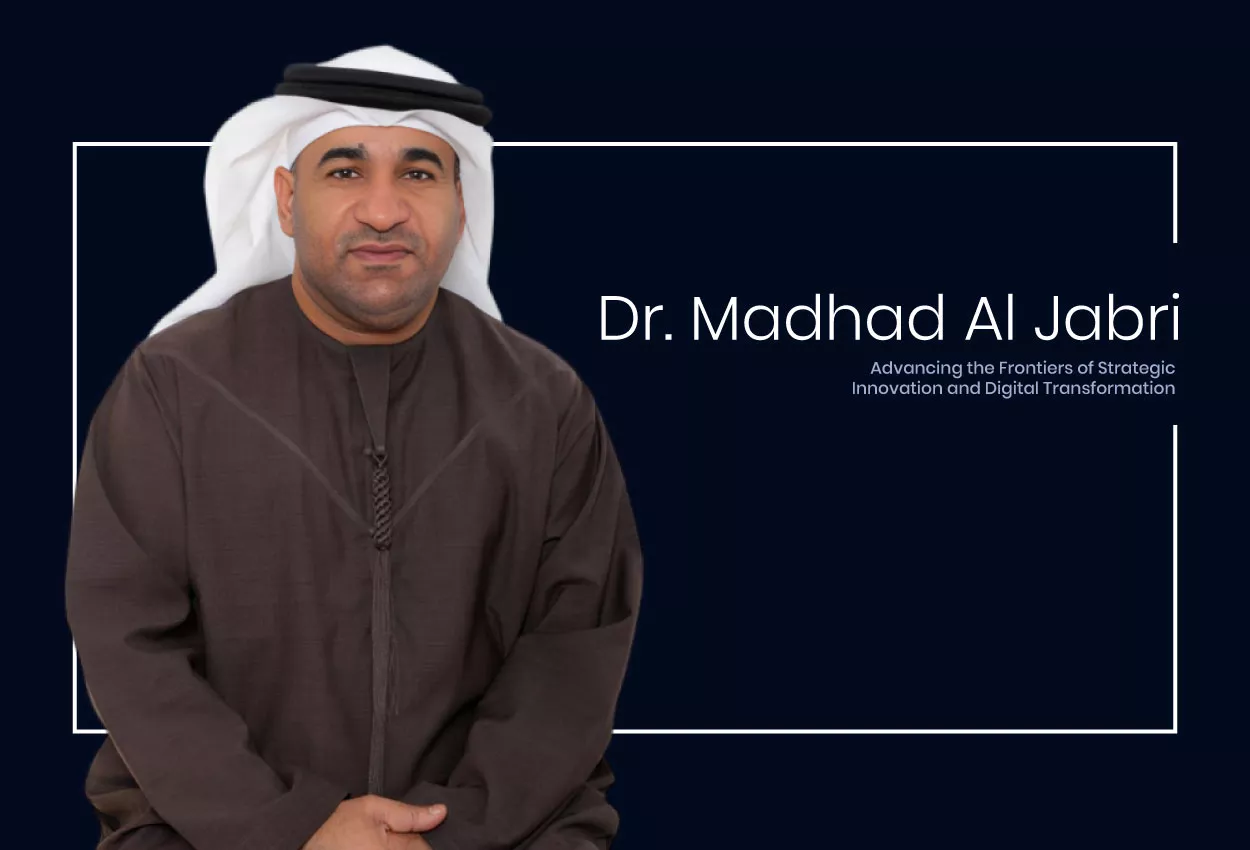
Dr. Madhad Al Jabri’s academic journey reflects a rare synthesis of theory and practice. His work stands at the intersection of strategic management, digital innovation, and enterprise agility, fields that are increasingly central to understanding how organizations survive and thrive in the digital economy. Through rigorous empirical inquiry, theoretical development, and an unrelenting commitment to intellectual precision, Dr. Madhad has contributed to shaping contemporary discourse on dynamic capabilities, digital transformation, and strategic ambidexterity.
For Dr. Madhad, research is not a distant academic pursuit. It is a means of translating complex strategic questions into frameworks that produce measurable insight and enduring relevance. His academic philosophy is rooted in the belief that scholarly inquiry should guide the evolution of industries, helping decision makers design adaptive, knowledge-based organizations to differentiate themselves in the marketplace. Over time, he has developed an extensive body of work that bridges conceptual models with practical application, providing a comprehensive view of how strategy and technology interact to drive the firm’s performance through agility and strategic change.
The Making of a Strategist
With a solid foundation in engineering from a leading local university, complemented by an Executive MBA from the University of Strathclyde in the UK and a PhD in Business Management with a focus on Strategy and Innovation from the British University in Dubai, an institution academically associated with Manchester, Glasgow, and Edinburgh universities. Dr. Madhad brings a unique blend of technical depth and strategic insight. Over the past two decades, Dr. Madhad has worked extensively across the industry, specializing in technology strategy development and large-scale transformation management. This journey has enabled him to bridge the worlds of innovation, operational excellence, and strategic foresight, contributing to impactful organizational change and sustainable competitive advantage.
Defining Moments in Academic Formation
Throughout his career, Dr. Madhad has engaged deeply with both scholarly and organizational systems, using each experience as an opportunity to refine his theoretical lens. The challenges he encountered in high-stakes environments offered a living laboratory for his academic interests. These experiences did not merely inform his professional and leadership skills; they shaped his intellectual curiosity and guided his research trajectory. The trust placed in him by the professional ecosystem during critical transitions and change reinforced his conviction that leadership, when studied through a strategic and analytical lens, provides a foundation for organizational learning and innovation.
Such formative moments influenced the questions that anchor his academic research today. How do firms sustain competitiveness in volatile markets? What mechanisms allow large enterprises to balance the exploitation of current capabilities with the exploration of emerging opportunities? And how can theoretical constructs such as dynamic capabilities be applied to understand real-world transformation in technology-driven contexts? These inquiries form the backbone of his research and continue to inform his scholarly investigations.
Exploring Strategic Orientations and Ambidexterity
One of Dr. Madhad’s most influential research endeavors is his study titled The Role of Strategic Orientations in the Relationship Between Adaptive Marketing Capabilities and Ambidexterity in Digital Services Firms: The Case of a Highly Competitive Digital Economy. The study examines the complex interplay between strategic orientations and adaptive marketing capabilities, focusing on how these factors collectively foster ambidexterity in organizations. His findings reveal that strategic orientations act as a critical mediator that aligns internal culture with both inward and outward perspectives, thereby strengthening an organization’s ability to innovate while maintaining operational excellence.
This study adds an essential dimension to the existing literature on dynamic capabilities and market ambidexterity. It highlights the importance of cultural and strategic alignment in achieving a balance between exploration and exploitation. By situating his research within the context of emerging digital economies, Dr. Madhad extends established theories into regions and industries that are often underrepresented in mainstream academic discourse. His emphasis on contextual nuance helps scholars and practitioners alike understand that the effectiveness of strategic orientations depends not only on firm-level capabilities but also on the broader economic and technological environment in which organizations operate.
Advancing Knowledge on Enterprise Agility
A significant contribution by Dr. Madhad and his colleagues was their investigation into the Impact of Dynamic Capabilities on Enterprise Agility: The Intervening Roles of Digital Transformation and IT Alignment. This study deepens academic understanding of how dynamic capabilities translate into tangible agility outcomes. Through empirical analysis, he demonstrates that IT alignment functions as a key mediating variable linking digital transformation initiatives with enterprise-level responsiveness. The research identifies specific sub-dimensions of dynamic capabilities that enable organizations to sense, seize, and reconfigure resources effectively, thus transforming agility from a conceptual aspiration into a measurable organizational outcome.
By examining enterprise agility through the combined lenses of digital transformation and strategic alignment, Dr. Madhad and colleagues contribute clarity to an area often criticized for conceptual ambiguity. His work not only defines the mechanisms by which firms achieve agility but also provides a structured framework for assessing how internal alignment supports innovation. Conducted within the United Arab Emirates, this research offers significant regional insight while enriching global theoretical perspectives on organizational adaptability. The study responds directly to ongoing scholarly calls for greater empirical exploration of how dynamic capabilities operate within digitally evolving contexts.
Academic Reflections on Technological Frontiers
In his ongoing research, Dr. Madhad is examining the role of digital transformation that will define the next stage of enterprise innovation. His focus remains impact of technological change in the digital era, focusing on organizational strategic capabilities, supported by strategic orientation, digital transformation (including the adoption of new technologies such as AI, cloud compute, IOT, data analytics, etc.) for long-term survival, resulting in value creation.
By engaging with these frontiers, Dr. Madhad contributes to a growing body of literature on digital ecosystems and responsible innovation. His research advances the notion that technological progress must be guided by principles of sustainability, collaborations, adaptability, inclusion, and stakeholders’ engagement. This perspective aligns his work with contemporary debates in strategic management and innovation, where scholars increasingly call for advancing digital transformation, impact in the AI era.
Scholarly Vision and Future Directions
Looking ahead, Dr. Madhad envisions his academic and Professional Journey as a continuous exploration of the evolving relationship between Organisational Capabilities and sustainable competitive Advantage with influencing factors such as strategic orientations, digital transformation, resilience, risks management, etc. His future studies seek to expand the theoretical boundaries of dynamic capability research by incorporating perspectives from organizational behaviour theory and complexity theory. He is also committed to mentoring emerging scholars, fostering interdisciplinary collaboration, and contributing to global research networks that advance understanding of digital transformation in both developed and developing economies through various opportunities.
His scholarly mission extends beyond publication metrics. It is rooted in a commitment to generate knowledge that informs responsible decision-making and contributes to societal advancement. For Dr. Madhad, academia is a collective enterprise that thrives on intellectual curiosity, empirical rigor, and ethical reflection. The impact of his work lies not only in the theories he refines but in the communities of inquiry he inspires.
Conclusion
Dr. Madhad Al Jabri’s contributions exemplify the role of the scholar as both thinker and catalyst. His research reshapes understanding of how strategic orientations, dynamic capabilities, and digital transformation converge to create agile, future-ready enterprises. By grounding theoretical models in empirical evidence and contextual insight, he ensures that his academic work remains relevant to practitioners while advancing the global dialogue on strategic management and innovation. His legacy continues to unfold through the ideas he develops, the questions he raises, and the transformative potential his research and practical experience in the industry continue to inspire across academia and industry alike.




