
Every journey on the road carries an invisible promise that the vehicle will keep moving, that systems will respond when needed, and that someone, somewhere, has ensured its reliability long after it left the production line. This promise is upheld in the aftermarket, where mobility is not manufactured but sustained. It is a space where precision meets unpredictability, where a delayed part can halt an entire operation, and where speed, proximity, and understanding of local demand define success. As vehicles become more advanced and markets expand unevenly, the aftermarket is evolving into a finely tuned network that blends technology, logistics, and human insight to keep the world in motion.
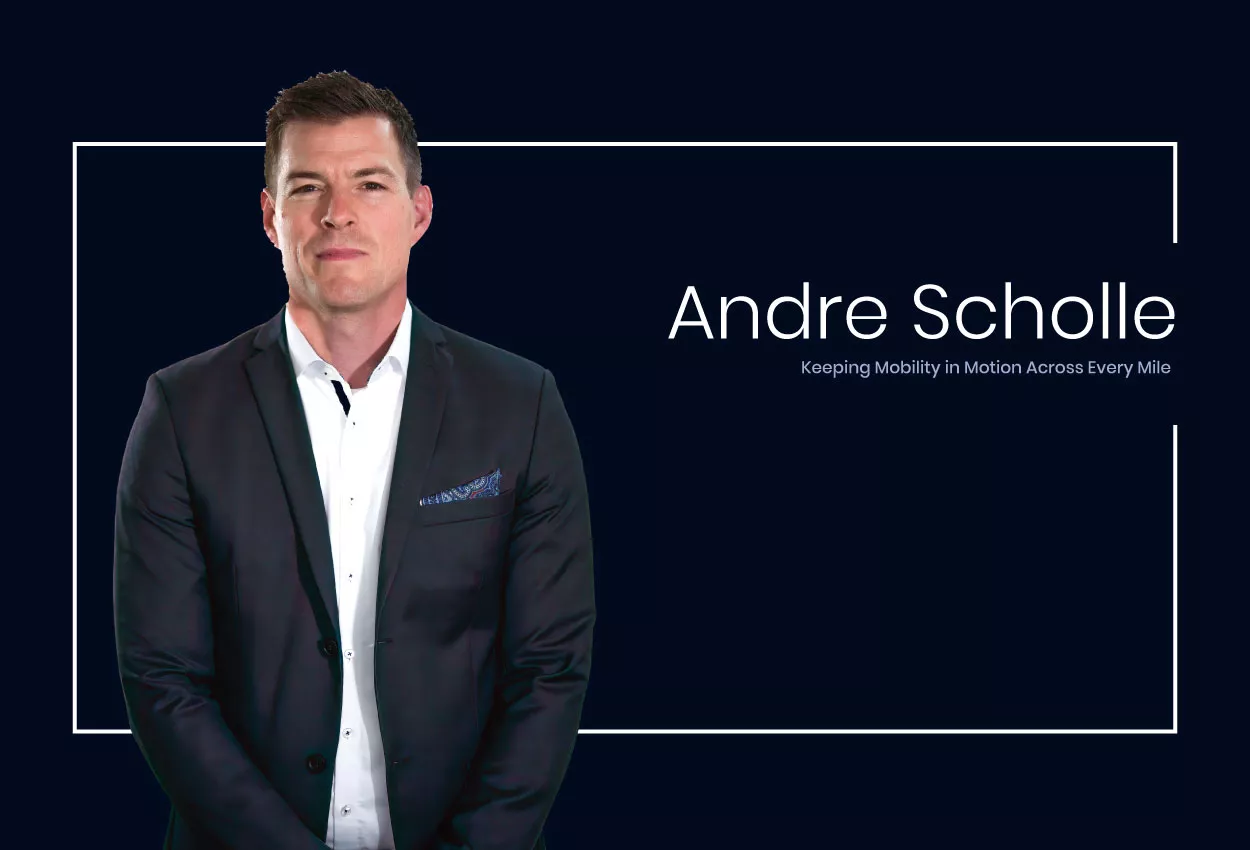
Andre Scholle’s role is built around delivering on that promise across some of the most demanding and fast-changing markets globally. As Vice President of ZF Aftermarket for India, Türkiye, the Middle East, Africa, and the Commonwealth of Independent States (CIS), he carries full responsibility for how the business performs, grows, and adapts in each of these regions. His work goes beyond managing operations.
Leading with Full-Spectrum Responsibility
Andre carries full profit and loss responsibility for the entire ZF Aftermarket business across India, Türkiye, the Middle East, Africa, and CIS. His role extends beyond sales, encompassing operations, finance, and human resources. This broad scope allows him to influence both strategic direction and day-to-day execution, ensuring that business performance aligns with regional priorities and organizational goals.
Aligning Global Direction with Local Market Realities
Andre approaches regional leadership through a carefully structured balance between standardisation and localisation. He works within a tiered framework that combines global guidance, regional steering, and local execution. Recognising that markets in his region vary widely in maturity, he adapts strategies to suit different development stages rather than applying a one-size-fits-all model.
He emphasizes that the region has evolved into a significant contributor within ZF Aftermarket, now ranking as the second-largest globally. This shift has strengthened its voice within the global organization. By grouping these diverse markets under a unified regional approach, Andre ensures they receive the attention and strategic focus they previously lacked.
Grounded Leadership with a Market-First Mindset
Andre’s leadership philosophy is deeply pragmatic and rooted in real-world market dynamics. While global strategies provide direction, he ensures they are adapted to reflect local realities. He actively incorporates feedback from regional teams, believing that strategies must resonate with both customers and employees to succeed.
He encourages an entrepreneurial mindset within his teams, stressing that strategies must drive tangible business outcomes. For Andre, market demand is the ultimate guiding force. If a strategy does not align with on-the-ground realities, it risks losing both customer acceptance and internal buy-in. His approach ensures that regional strategies remain practical, relevant, and impactful.
Expanding Beyond Parts to Ecosystem Solutions
Andre is focused on evolving ZF Aftermarket from a traditional parts supplier into a broader ecosystem solutions provider. While strengthening the core spare parts business remains essential, he is also driving efforts to expand market reach and deepen engagement with workshop networks.
He recognises the importance of being present where demand originates, rather than relying solely on large distributors. At the same time, he is steering the business toward digital transformation, acknowledging that vehicle repairs are becoming increasingly complex. Markets like India are already demonstrating rapid digital adoption, reinforcing the need for more advanced, technology-driven solutions.
Andre views this transition as both necessary and inevitable, with the pace of change in emerging markets often exceeding expectations.
Early Lessons That Shaped a Commercial Mindset
Andre’s career began with a banking apprenticeship, an experience that provided him with a strong foundation in financial principles such as profit and loss management and balance sheets. Although he quickly realised that banking was not his long-term path, it gave him valuable insight into international trade and business operations.
His transition into sales introduced a more hands-on dimension, allowing him to directly engage with products and customers. This combination of financial understanding and practical business experience shaped his commercial instincts. Over time, he integrated these learnings with his intercultural interests, forming the basis of his leadership approach today.
A Global Perspective on Emerging Markets
Having lived and worked across regions including Germany, France, Africa, the Middle East, and Asia Pacific, Andre has developed a broad and nuanced perspective on global business. These experiences have expanded his worldview and provided valuable lessons that he applies across different markets.
He finds particular value in emerging economies, where building businesses from the ground up offers both professional challenges and personal fulfillment. These environments allow for a more direct and visible impact, which he finds especially rewarding.
Currently based in Germany, Andre maintains a strategic link to ZF’s headquarters while effectively managing a geographically diverse region. His leadership team reflects this diversity, bringing together individuals from across cultures and markets. While this diversity can lead to differing perspectives, he sees it as a strength that fosters learning, collaboration, and innovation.
Embracing Diversity as a Leadership Strength
Andre believes that cultural diversity within his team is a key driver of success. By bringing together varied perspectives, the team gains a deeper understanding of different markets and customer needs. While cultural differences can sometimes lead to challenges, he views these moments as opportunities for growth.
Through open dialogue and mutual respect, Andre ensures that his team not only navigates these differences effectively but also leverages them to build stronger, more adaptable strategies.
Witnessing Leapfrogging Across Emerging Markets
Andre is currently witnessing a strong leapfrogging effect across several regions, with India standing out as the most prominent example. He observes that the rapid rise in the number of vehicles in operation, combined with large-scale infrastructure development, is transforming India at an extraordinary pace. In his view, the speed of infrastructure expansion in India is unlike anything seen elsewhere in the world at present. Unlike Dubai, which has traditionally functioned as a re-export hub serving the Middle East, the GCC, and parts of Africa, India’s growth is driven by immense domestic demand. With a population of more than a billion people, the Indian subcontinent presents a scale of opportunity that is fundamentally different, and the pace at which infrastructure is being built reflects that demand.
Andre also notes that similar patterns of growth are visible across other parts of his region, although each market progresses at its own pace. He points to Morocco as an example, particularly the development of Casablanca over the past five to ten years, which has been surprisingly rapid. While he acknowledges that it is not comparable to India in scale, he still sees remarkable progress. Across Africa, he highlights countries such as Tanzania and Kenya in the east, and Ghana, Nigeria and Ivory Coast in the west, where structural changes are taking place at a significant speed. He believes that the global perception often underestimates how quickly these transformations are happening.
He emphasizes that markets cannot be compared directly because each has its own development timeline. Dubai’s rapid development began around fifteen to twenty years ago, and when he looks at cities such as Riyadh or Jeddah today, he sees parallels with Dubai during its earlier growth phase. Across the region, there is often a delay in development compared to what Dubai achieved early on, but the trajectory remains strong. Andre also reflects on India’s growth over the last decade, attributing it to political stability and a favorable economic environment. He points out that India was previously overlooked during the global focus on China in the 1990s and early 2000s, but geopolitical changes are now shifting attention back to India, accelerating its growth.
Defining Customer Centricity in Practical Terms
For Andre, customer centricity is a fundamental principle that shapes every aspect of business operations. He believes that the customer and customer demand must be placed at the center of all activities. In his view, the ultimate purpose of any organisation is to serve its customers effectively, and optimising the business should always begin with understanding customer needs.
He points out that many companies make the mistake of focusing too heavily on internal optimisation without adequately considering the customer’s role in the equation. Andre questions whether organisations truly listen to their customers and whether they align their actions with what customers actually want. He sees this as a critical success factor, stating that failure to meet customer expectations ultimately leads to business failure because customers are the ones who sustain the company.
Andre highlights a shift in approach within his region. In the past, companies often focused on telling customers what they were offering. Today, he emphasizes the importance of asking customers how the organisation can support them and what they need to grow their own businesses. This approach ensures that the strategy is shaped by customer expectations rather than internal assumptions.
In practical terms, this means responding to customer demands in areas such as pricing, technical support, and business transformation. Andre acknowledges that it is not always possible to meet every price expectation, but understanding market pricing dynamics is essential. He also stresses the importance of providing the right technical support and aligning with the evolving needs of customers. He views customers as active contributors to strategy, describing them as the input providers who help shape the transformation of the automotive aftermarket.
Turning Diverse Legacies into One Unified Direction
Andre’s approach to managing integrations is deeply influenced by his understanding of diverse business legacies. He recognises that each organisation brings its own history, processes and cultural strengths, all of which have contributed to its success. Rather than discarding these elements, he sees them as valuable learning opportunities.
Having started his career as a salesperson for shock absorbers and clutches, Andre has witnessed the integration of multiple businesses over time. He believes that each legacy represents a learning curve that must be understood before moving toward a unified approach. His focus is on developing a best of breed model that combines the strongest elements from different organisations.
He adopts a collaborative leadership style, preferring cooperation over directive decision making. Within his regional leadership team, open discussions are encouraged, allowing different perspectives to be shared. At the same time, Andre acknowledges that leadership sometimes requires making decisions that may not satisfy everyone. In such cases, he expects the team to align behind the final decision and move forward collectively.
Andre is also open to feedback and recognises that not all of his proposals will be accepted. He is comfortable working within a hierarchical structure while maintaining a collaborative environment. He believes that this approach leads to stronger commitment and better execution because decisions are made with collective input.
Developing Leaders with Freedom and Accountability
Andre places significant importance on building strong leadership teams that grow alongside the business. He believes that team spirit is one of the most critical factors for success and works to create an environment where collaboration and mutual support are central.
He avoids overriding decisions made by his team members, as he wants to encourage entrepreneurial thinking. In his view, leaders must be given the freedom to make decisions and even to make mistakes. He sees mistakes as valuable learning opportunities that can strengthen the organisation when addressed collectively.
Andre’s leadership philosophy is based on a balance between freedom and responsibility. He expects his leaders to take ownership of their actions and remain accountable for outcomes. At the same time, he emphasizes the importance of commitment and hard work, ensuring that every member of the leadership team is aligned with the organisation’s goals.
Balancing Immediate Targets with Strategic Growth
Andre acknowledges that balancing short-term performance with long-term strategy is one of the most complex challenges in leadership. He explains that during difficult times, there is a natural tendency to focus on immediate targets and operational pressures, as these are often tied to commitments made to the board.
To address this challenge, he has implemented a structured approach within the organisation. Country and sub-regional teams are primarily focused on delivering short-term operational targets, ensuring that annual goals are met. At the same time, business line teams are responsible for driving long-term strategic initiatives across areas such as passenger cars, commercial vehicles, and digital solutions.
This dual structure allows the organisation to maintain a clear focus on immediate performance while continuing to invest in future growth. Andre believes that this balance is essential for sustaining competitiveness and achieving long-term success.
Driving the Next Era of Aftermarket Excellence
Looking ahead, Andre identifies several factors that will redefine aftermarket operations across his region over the next five years. He believes that adapting the product portfolio to better suit regional demand will be a key priority. At the same time, he emphasizes the need to actively manage the transformation of the aftermarket, particularly in fast-evolving markets such as India, Türkiye, the Middle East, Africa, and CIS.
Customer proximity is another critical element. Andre believes that being closer to customers than ever before is essential for understanding demand and delivering effective solutions. Speed is equally important, especially in logistics, as customers in even the most remote areas expect timely delivery of products.
Above all, Andre highlights the importance of having the right team in place. He believes that a capable and well-prepared leadership team is essential for managing both short-term and long-term priorities. With a regional team of hundreds of professionals, he stresses the need for a sophisticated approach to leadership and execution.
These priorities represent the key areas that Andre believes must be successfully addressed in the coming years. If achieved, he is confident that the region can grow significantly and potentially become the largest within ZF Aftermarket, fulfilling both organisational ambitions and his personal goals.




