
The distance between an idea and its impact is measured neither in kilometres nor in capital. It is measured in trust. Every major investment, industrial corridor, trade partnership, or development initiative must first cross an invisible bridge built from shared purpose, informed decisions, and lasting relationships. Without that bridge, opportunity remains only potential.
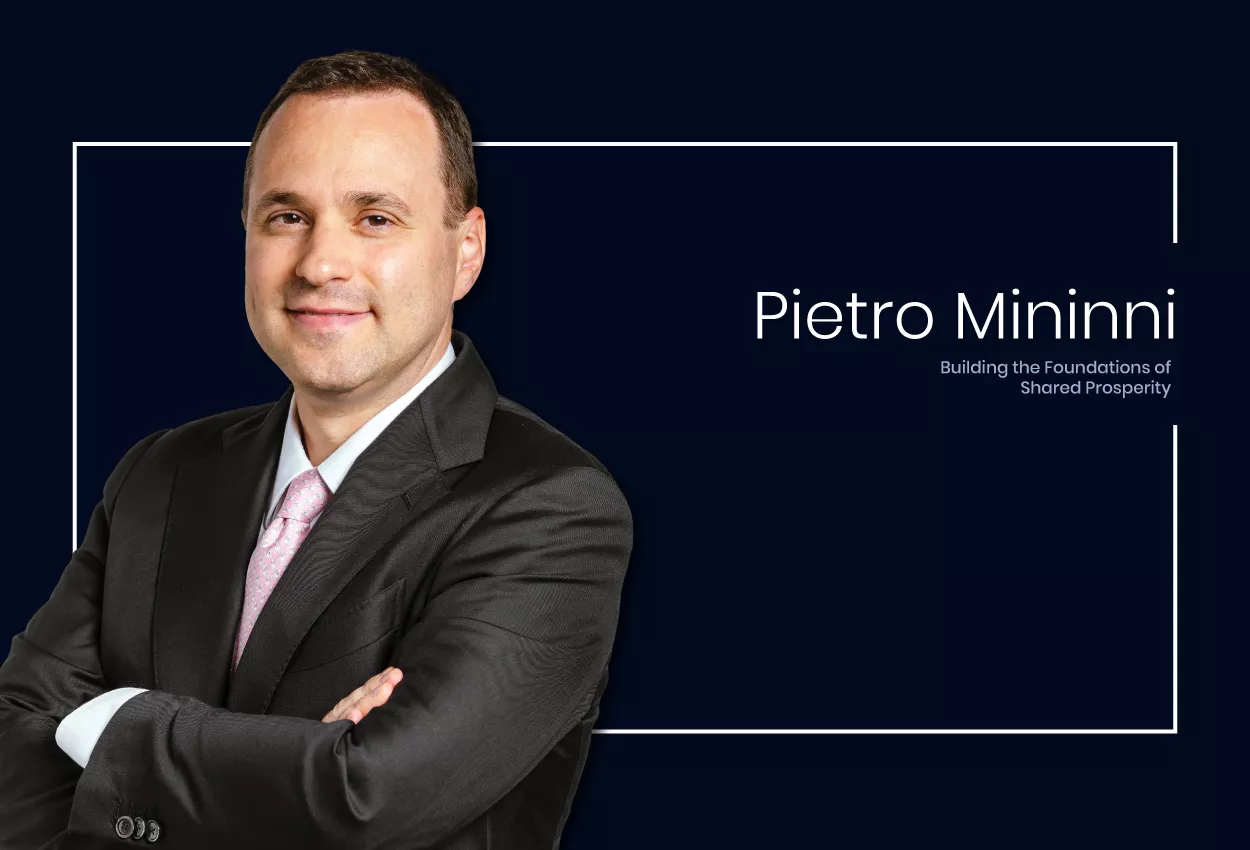
Building those bridges has become the defining focus of Pietro Francesco Mininni’s career. As CEO of TEHA Africa, he leads an organization that brings together research, strategic advisory, and business diplomacy to strengthen cooperation between Africa and Europe. By connecting governments, businesses, investors, and institutions, TEHA Africa helps transform promising ideas into partnerships capable of driving industrial growth, investment, and long-term economic progress across the continent.
In an exclusive conversation with us, Pietro shares the experiences that shaped his leadership, the economic forces redefining Africa’s future, and TEHA Africa’s ambition to turn knowledge, dialogue, and partnership into measurable progress.
Below are the highlights of the interview
What inspired your journey into international strategy and economic development, and how has it shaped your leadership approach today?
More than two decades ago, TEHA embraced a pioneering vision for Africa, recognising the continent not as a passive recipient of development aid, but as a dynamic region with which to forge mutually beneficial industrial partnerships, while placing particular emphasis on the vital role of the private sector.
I was impressed by an annual forum that TEHA organised in Taormina, Sicily, serving as a bridge between Europe and Africa, featuring in-depth analysis and innovative research into major economic and industrial trends for the future. I would say this was the turning point that prompted me to join TEHA, driven by the passion and personal curiosity I have always had for this continent.
What has impressed me most and has shaped my current approach to leadership is the exceptional entrepreneurial courage of the many African business leaders I have met over the years, their drive and ability to develop new industrial projects with courage, combined with their tenacity in operating within complex contexts. We cannot help but simply admire an African entrepreneurial class that, step by step, is increasingly making its mark on the global stage with its own style of management and leadership!
As CEO of TEHA Africa, what is your vision for strengthening economic and business partnerships between Africa and Europe?
My vision is that Africa-Europe relations must evolve into a new generation of partnerships: more pragmatic, more balanced, and focused on industrial growth, job creation and long-term value creation.
Sub-Saharan Africa is undergoing a deep transformation. Many countries are redesigning their economic strategies, strengthening regional integration, opening their markets internally and externally, and attracting new investments.
The fundamentals are strong: the region is projected to grow by around 4.1% in 2026, while intra-African trade still accounts for only 15–18% of total African trade, compared with about 67% in Europe and 59% in Asia. Additionally, by 2050, the region will have over 620 million more people of working age, representing more than three-quarters of the net increase across all emerging markets and developing economies.
The key challenge is to translate growth and demographic momentum into industrial capacity, employment, and productivity. This requires stronger public-private cooperation whereby governments create the enabling environment, while companies bring investment, technology, execution capacity, and international networks.
At TEHA Africa, our role is to connect African and European stakeholders, build trust and turn dialogue into concrete partnerships, investment projects, and business opportunities.
TEHA Africa engages with leaders from government, business, and civil society. How do you foster meaningful collaboration among these stakeholders?
At TEHA Africa, collaboration starts with understanding the real priorities of our African counterparts. Our role is not simply to create networking opportunities, but to identify the key themes, build the right narrative around them, and create the conditions for trust, dialogue, and action.
Continuity is essential: our platforms – from the TEHA CEO Dialogue on Southern Africa, that is now entering its 13th edition, to the Climate Change Global Business Summit on Africa – are recurring initiatives, year after year. The CEO Community African Chapter takes place once a month in Johannesburg and Cape Town. This consistency allows relationships to mature and provides leaders from government, business, and civil society with consistent opportunities to meet, exchange views, and work together.
At the same time, we always ground the conversation in data. Our forums are multi-industry platforms where leaders not only meet each other, but also reflect on evidence, trends, and strategic scenarios. In this sense, we try to combine networking, knowledge, and trust which, in our experience, make up the real foundations for effective public-private cooperation.
From your perspective, what are the most significant opportunities currently driving Africa’s economic growth and transformation?
I believe Africa’s transformation is being driven by a combination of structural forces.
The first is the strength of the private sector, which accounts for over 80% of production, around two-thirds of investments, and provides employment for about 90% of the working-age population. This makes it the real engine of Africa’s growth, innovation and resilience.
The second opportunity is represented by capital markets and access to finance. In 2026, Africa’s leading stock exchanges are estimated to represent well above US$1.8 trillion in market capitalization, with Johannesburg alone accounting for around US$1.5 trillion.
The Johannesburg Stock Exchange (JSE) remains by far the largest stock exchange in Africa and one of the continent’s most sophisticated financial hubs. This shows that Africa is not only a destination for development finance, but also a continent with increasingly deep and advanced financial ecosystems.
The third major driver is urbanization. Africa is the fastest urbanizing region in the world, with cities growing at around 3.5% per year. Africa’s urban population is expected to rise from around 700 million today to approximately 1.4 billion by 2050. This is why investors should increasingly look not only at Africa’s 54 countries, but also at its urban hubs (such as Johannesburg, Cairo, Lagos, and Nairobi), which are becoming centres for logistics, innovation, finance, mobility, energy, consumption, and talent.
Having worked extensively across African markets, what leadership qualities are essential for success in such diverse and rapidly evolving environments?
I believe that much depends on the country in which one operates, as well as on its unique background and history. I also think that ways of doing business across the continent vary from region to region. However, in my view, there is one indispensable common thread: understanding the direction each individual country is taking, together with its ambitions and strategic objectives.
Without a thorough understanding of our counterparts—and of the political, social, and economic nuances that shape their environment—it is simply impossible to establish a meaningful dialogue on any subject, including business. A top-down approach does not work anywhere, and even less so in Africa, where it is generally rejected. Instead, the focus should be on building long-term collaborative stories based on mutual trust.
Over the years, I have also learned the importance of cultivating personal and long-lasting relationships with leaders across the political and business spheres, as well as with other influential figures. It is essential to build agreements at the highest possible level while not overlooking the key role of mid-level stakeholders, who must be actively involved throughout the process.
How does TEHA Africa help organizations and policymakers translate strategic insights into measurable impact?
At TEHA Africa, we try to connect analysis with action. Our work does not stop at producing strategic insights; the objective is to transform them into decisions, partnerships, and measurable outcomes.
A key part of our work is the development of analytical and statistical tools that measure the attractiveness of countries, regions, and cities across different dimensions: infrastructure, business environment, human capital, innovation, connectivity, and investment potential. These tools help policymakers and business leaders understand where the main opportunities and bottlenecks are.
But measurement is only the starting point. The real impact comes when these insights are used to design public-private partnerships, investment projects, and business agreements. This is why TEHA Africa increasingly acts not only as a think tank, but also as a “do tank”: a platform that facilitates collaboration between governments, companies, investors, and institutions.
For us, a partnership is successful only if it remains alive after the signature. This means defining clear objectives, creating task forces on both sides, monitoring progress and measuring how the initiative changes the original scenario over time. This is how data, dialogue, and long-term execution become measurable impact.
The CEO Community African Chapter brings together influential decision-makers. What value do these dialogues create for business leaders and policymakers?
The value of the CEO Community African Chapter lies in the quality and diversity of the network. Our imprinting is that of a rainbow CEO community: multi-ethnic, multi-country, and multi-industry, involving companies that are listed and that are not.
We bring together, at the regional level, black business leaders, entrepreneurs who are Afrikaners, Indian-origin business families, African champions, multinational companies, not only European financial institutions, industrial groups, and public-sector leaders. This diversity is not only cultural, but also economic and sectoral, and it is precisely what makes the dialogue rich and useful.
The second value is confidentiality. The CEO Community creates a space away from the media, where leaders can speak openly, share concerns, compare experiences, and discuss opportunities in a direct way.
Finally, these dialogues allow us to bring together regional best practices that are often not sufficiently visible internationally. Our role is to create a platform where these experiences can be shared, connected, and scaled into more concrete public-private cooperation.
As co-founder and lead of the ECAM Council, how do you see international cooperation contributing to sustainable development and long-term prosperity?
International cooperation is essential to turn development priorities into concrete projects. Healthcare is a clear and relevant example. Although Africa has the youngest population in the world, strengthening health systems is vital to support long-term prosperity.
This means developing public-private partnerships to upgrade hospitals, create international medical and scientific collaborations, build new research centers, and develop regional centers of excellence. The objective is to also reduce medical tourism outside the continent by strengthening local capabilities and creating African champions in healthcare services.
Technology, including AI and digital health, can play an important role in improving access, quality, and efficiency. At the same time, sustainable financing and insurance systems will be crucial to make healthcare development scalable and affordable.
This is the kind of cooperation ECAM wants to promote: practical, long-term, and focused on measurable impact.
What emerging trends do you believe will have the greatest impact on Africa’s business and investment landscape over the next decade?
Over the next decade, Africa’s business and investment landscape will largely depend on how the continent addresses two major constraints: stability and climate change. Conflicts continue to weigh heavily on economic performance, with countries experiencing intense armed conflict losing an estimated 2.5% of GDP growth annually. At the same time, climate-related shocks are already costing African economies between 2% and 5% of GDP each year.
I leave it to readers to imagine what level of economic growth could be achieved if the continent enjoyed lasting peace and the impact of climate-related disasters could be significantly reduced.
Another trend I see is the growing determination of many African countries to pursue economic indigenization policies as a means of creating jobs and strengthening domestic industries, while at the same time making significant efforts to attract foreign investment. This is a complex balancing act that will require pragmatic policy-making in the years ahead. Finding the right balance between promoting local participation and maintaining an attractive investment climate will be essential.
Indeed, fostering African champions, creating greater value addition within domestic industrial value chains, expanding exports, and driving economic development across the continent are legitimate and necessary objectives. However, these ambitions must be accompanied by substantial improvements in transport infrastructure, including roads, railways, and ports, to facilitate quicker access to global markets, as well as by continued reforms aimed at improving the overall ease of doing business.
If these challenges are successfully addressed, the opportunities will be enormous. One of the most promising trends is the continued rise of SMEs, startups, and the future generation of African corporate champions. SMEs are already the backbone of Africa’s private sector, contributing up to 50% of GDP in many countries. Yet access to finance remains one of their greatest constraints: in Sub-Saharan Africa alone, the formal SME financing gap is estimated at approximately USD 331 billion. Expanding access to credit and innovative financing solutions will therefore be critical to unlocking their full potential.
Another trend I expect to gain momentum is the modernization of basic public services through stronger partnerships between governments and the private sector, supported by innovative financing mechanisms that avoid placing excessive pressure on public budgets and sovereign debt. This applies particularly to energy, education, healthcare, digital connectivity, and transport. The challenge will not only be to improve these services in major urban centres, but also to extend them to rural communities and secondary cities, ensuring that the benefits of development are shared more broadly across the continent.
Throughout your career, you have engaged with global leaders and institutions. What lessons from these interactions have influenced your own leadership philosophy?
Throughout my career, I have had the privilege of engaging with Heads of State, private-sector leaders, and influential personalities from different countries and regions. One lesson I have learned is the importance of working on very concrete issues while always keeping a global perspective: acting locally but thinking globally.
The second lesson is that vision matters. If you have a strong idea, and you are able to build the right partnerships around it, then it can become a reality. This is particularly true in Africa, where I have seen an extraordinary sense of resilience, leadership, ambition, and redemption. As Nelson Mandela said, “It always seems impossible until it’s done”.
In addition to this, another observation stands out in particular: the genuine commitment of companies to corporate social responsibility. I have been impressed by the breadth and quality of the initiatives aimed at supporting disadvantaged communities and promoting inclusive growth. These programmes are not merely a complement to day-to-day business activities; they are strategic pillars that define corporate identity and shape long-term business purpose.
As far as my leadership philosophy is concerned, it has been shaped by values such as respect, listening, friendship, and perseverance. I do not believe in short-term or “hit-and-run” relationships. I believe in building long-term trust, because only long-term relationships can create lasting partnerships. Africa has also taught me that temporary difficulties are not the end of the story: they can become the foundation to come back stronger and more successful.
How is TEHA Africa leveraging research, thought leadership, and strategic advisory services to address complex regional challenges?
TEHA Africa works at the intersection of research, business diplomacy, and strategic advisory. Our objective is to help institutions and companies better understand regional challenges and then translate this understanding into concrete partnerships and investment opportunities.
Research is the starting point. Through our strategic studies, observatories, and analytical tools, we identify the main economic, industrial, and social trends shaping African markets: climate resilience, infrastructure, energy, healthcare, tourism, women empowerment, urban attractiveness, regional value chains, and private-sector development.
The second step is thought leadership. Through our platforms, we bring these insights into high-level conversations with CEOs, governments, investors, and international institutions.
Finally, strategic advisory allows us to move from ideas to execution. We support companies and policymakers in identifying priorities, building public-private partnerships, entering new markets, developing investment narratives, and creating long-term collaborations.
Looking ahead, what are your priorities for TEHA Africa, and what legacy would you like the organization to create across the continent?
Looking ahead, our priority is to further consolidate TEHA Africa’s presence in Southern and East Africa, where we already have a strong network and long-standing relationships, while opening a new chapter in West Africa, particularly in countries such as Nigeria and Ghana.
Our ambition is to become the leading consulting firm and think tank on the continent, also for the new generation of African leaders, entrepreneurs, and policymakers.
At the same time, we want TEHA Africa to be increasingly recognized not only as a think tank, but also as a do tank. Thanks to our network and our ability to connect public institutions, private companies, local authorities, and financial players, we can create dedicated task forces around specific infrastructure, industrial and investment projects.
The legacy I would like TEHA Africa to create is that of a platform able to build long-term trust, mobilize partnerships and contribute concretely to the economic development of the continent.




