
Every year, countless individuals carry ambitions capable of changing their lives, strengthening communities, and contributing to entire industries. Yet talent alone rarely determines who succeeds. Between potential and achievement exists a space filled with barriers, limitations, and unanswered possibilities. For some, that distance is short. For others, it can feel impossible to cross.
The institutions that leave a lasting mark on society are those that understand this gap. They recognise that education is not merely about transferring knowledge or awarding qualifications. Its true purpose is to create pathways where none previously existed, transforming potential into momentum and ambition into meaningful outcomes.
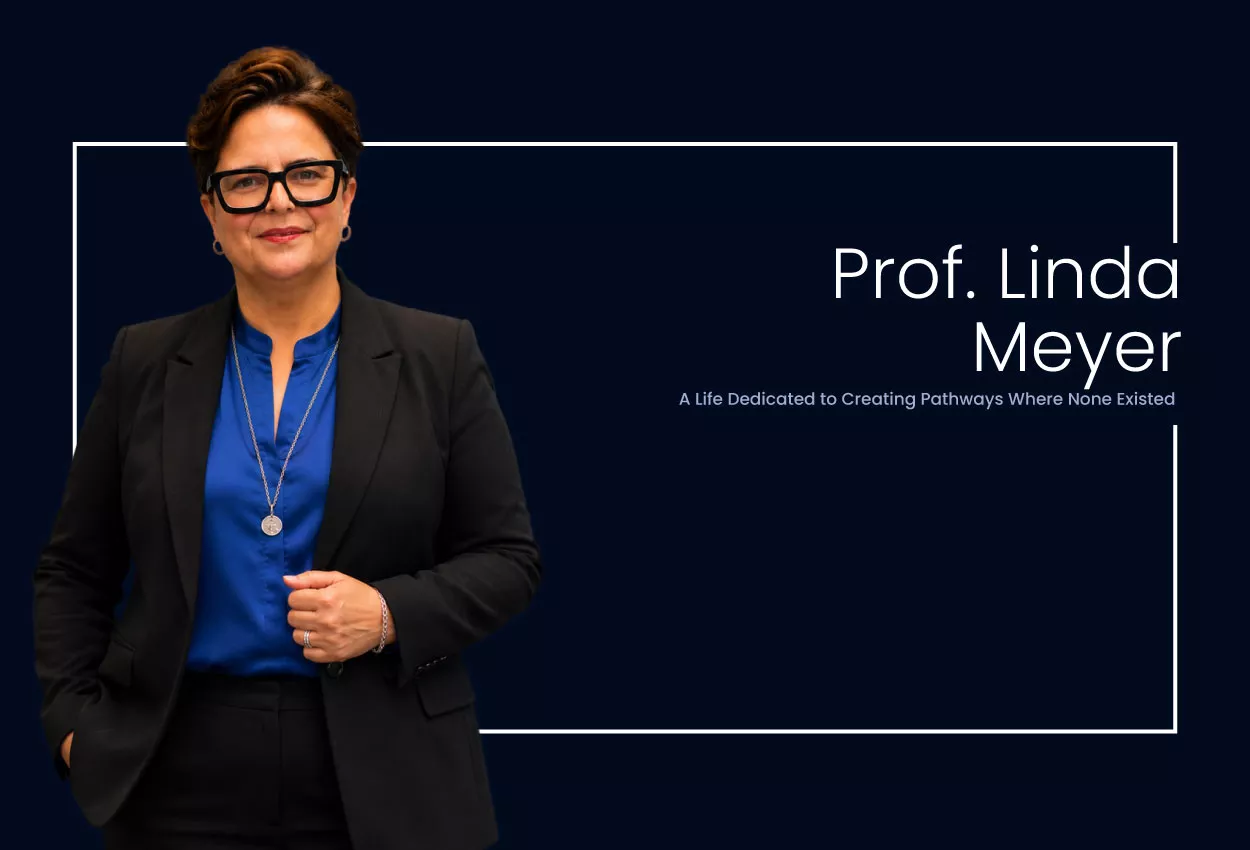
Few leaders understand this responsibility more deeply than Prof. Linda Meyer. Throughout a career spanning higher education, governance, quality assurance, and institutional leadership, she has consistently championed the idea that education must serve as a catalyst for opportunity and social progress. As President of Rosebank International, she has helped shape an institution committed to expanding access, strengthening student success, and preparing graduates for a future defined by constant change. Her leadership reflects a belief that the true measure of education lies not in the qualifications awarded, but in the possibilities it creates for those who receive them.
Leadership Rooted in Service
Prof. Linda’s leadership philosophy has been shaped by a career that spans higher education, government, quality assurance, governance, and executive leadership. Across these diverse sectors, one principle has consistently informed her approach: leadership exists to create value for others.
Her experiences have reinforced the importance of integrity, accountability, service, and long-term thinking as essential foundations for effective leadership. Exposure to different institutional environments and stakeholder groups has also strengthened her belief in education’s unique ability to drive social mobility, economic participation, and individual opportunity.
Throughout her career, she has viewed leadership as more than organisational management. For Prof. Linda, leadership is about creating conditions in which people, institutions, and communities can achieve their full potential. This perspective continues to influence both her strategic decisions and her vision for the future of education.
Rethinking the Foundations of Education
Years of service on national governance and quality assurance bodies have provided Prof. Linda with a comprehensive understanding of the opportunities and challenges facing South African higher education.
She believes the country possesses extraordinary institutional capability, innovation, and talent. At the same time, the sector must continue evolving to meet changing student expectations, rapid technological advancement, shifting workforce demands, and increasing calls for greater educational access.
From her perspective, the future of higher education will depend heavily on collaboration. Institutions, employers, governments, and communities will need to work more closely together to develop solutions that are responsive to societal and economic needs. Flexible learning models, stronger pathways into employment, and meaningful investment in digital transformation will all play critical roles in shaping the next generation of educational systems.
Perhaps most importantly, she believes progress will require courageous leadership that is willing to challenge traditional assumptions about how education is delivered, experienced, and evaluated.
Principles That Stand the Test of Time
While industries, institutions, and responsibilities may change, Prof. Linda maintains that certain leadership principles remain universally relevant.
The first is the importance of purpose. Sustainable success, she believes, can only be achieved when organisations are united around a clear mission that provides direction and meaning. Strategy is most effective when it serves a larger purpose rather than functioning as an isolated business exercise.
The second principle centres on people. Throughout her career, Prof. Linda has consistently recognised that talented individuals represent an organisation’s greatest source of strength. Exceptional outcomes are achieved when people feel empowered, supported, valued, and inspired to contribute at their highest level.
The third principle is accountability. Vision alone is insufficient without disciplined execution. Lasting success requires cultures where responsibility, excellence, and continuous improvement are embedded in everyday practice. These principles have remained constant throughout her professional journey and continue to guide her leadership philosophy today.
The Next Chapter of Learning
As an author, thought leader, and regular contributor to conversations surrounding the future of education, Prof. Linda sees the coming decade as one of the most transformative periods the sector has ever experienced.
Artificial intelligence is expected to fundamentally alter how education is designed, delivered, assessed, and supported. Learning experiences will become increasingly personalised, allowing students to progress according to their individual needs, learning styles, and career aspirations.
At the same time, traditional educational models will continue to evolve. The future is likely to place greater emphasis on lifelong learning, where continuous upskilling and reskilling become essential components of professional success. Educational institutions will increasingly operate as part of broader learning ecosystems that support individuals throughout their careers rather than only during specific periods of study.
Employers are also placing growing value on demonstrated competencies alongside formal qualifications. As industries evolve more rapidly, the ability to apply knowledge and adapt to change may become just as important as academic credentials themselves.
Prof. Linda also anticipates a future in which education becomes more globally connected, technologically enabled, and learner-centred. Institutions that embrace these changes proactively will be well-positioned to thrive, while those that resist transformation may struggle to remain relevant in an increasingly competitive environment.
Purpose, Progress, and the People Who Follow
For aspiring education leaders, Prof. Linda believes the most important priority is maintaining a strong sense of purpose while remaining open to innovation and continuous learning.
Although technology will continue to reshape educational systems and learning experiences, she emphasises that the fundamental mission of education remains unchanged: unlocking human potential and creating opportunities for individuals and societies to flourish.
Future leaders, she argues, must combine intellectual curiosity with strategic agility. They must be prepared to embrace change while remaining grounded in ethical values and an unwavering commitment to student success. They should be willing to challenge established models, explore new approaches, and adapt to emerging realities without losing sight of education’s broader societal purpose.
Above all, Prof. Linda believes that leadership should ultimately be measured by impact rather than position. The true legacy of an education leader is reflected in the lives they influence, the opportunities they create, and the positive change they inspire. Titles and achievements may fade over time, but the contribution made to students, institutions, and communities leaves an enduring mark that extends far beyond any individual career.
Education as a Gateway to Opportunity
Higher education is no longer defined solely by the qualifications it awards. Its true value lies in its ability to create opportunities, unlock potential, and equip individuals to contribute meaningfully to society. Rosebank International has built its reputation around this principle, establishing itself as an institution committed to making quality higher education accessible while maintaining a strong focus on academic excellence.
With a growing student population and a broad educational footprint, the institution continues to position itself as a catalyst for social mobility, economic participation, and lifelong learning. Rather than simply preparing students for employment, Rosebank International seeks to develop future professionals, entrepreneurs, innovators, and leaders capable of making a lasting impact across industries and communities.
Creating Pathways to Lifelong Success
At Rosebank International, student success extends far beyond graduation. The institution has cultivated an educational environment where academic achievement, personal development, and career readiness are closely interconnected.
Through comprehensive support systems, proactive interventions, and data-informed strategies, students receive guidance throughout their academic journey. This integrated approach ensures that learners are not only supported academically but are also equipped with the confidence, resilience, and adaptability required to thrive in rapidly evolving professional environments.
The institution’s commitment reflects a broader understanding that meaningful success is measured not merely by qualifications earned but by the opportunities and outcomes those qualifications create.
Creating Personal Connections at Scale
Supporting more than 45,000 students across campuses and online platforms presents unique challenges. Rosebank International has responded by investing in systems and structures designed to maintain a highly personalised student experience, regardless of scale.
Advanced learning analytics, dedicated support teams, and targeted intervention programmes enable the institution to identify student needs early and provide tailored assistance. Yet technology is only part of the solution. A strong culture of care and connection remains central to the student experience.
This balance between scale and individual attention ensures that students feel valued, supported, and connected throughout their educational journey.
Cultivating the Capabilities of the Future
The modern workplace is evolving at a pace few industries have experienced before. Many of the careers students will pursue in the future are still emerging, requiring educational institutions to remain agile and forward-looking.
Rosebank International maintains close collaboration with industry leaders, professional bodies, employers, and policymakers to ensure that its programmes remain aligned with workforce demands. Beyond technical expertise, students are encouraged to develop critical thinking, digital fluency, collaboration, creativity, ethical decision-making, and entrepreneurial capabilities.
This future-focused approach enables graduates to navigate changing career landscapes with confidence while remaining adaptable to new opportunities and challenges.
A Culture Grounded in Quality
As part of The Independent Institute of Education, Rosebank International operates within a robust framework of academic quality, governance, and continuous improvement. National accreditation and international recognition reinforce the institution’s commitment to maintaining high educational standards.
These quality benchmarks provide assurance that students receive qualifications aligned with both local and global expectations. More importantly, they contribute to a culture of accountability and excellence that influences every aspect of the institution’s operations.
For students, this translates into greater confidence in the value and recognition of their educational experience.
Opening Doors Without Lowering Standards
Access to higher education remains one of the defining challenges facing societies across the globe. Rosebank International continues to expand educational opportunities through flexible delivery models, online learning options, extensive campus networks, and student support initiatives.
However, the institution recognises that access alone is not enough. Success must accompany opportunity. This philosophy drives continued investment in academic support, student engagement, and quality teaching practices designed to help learners achieve their goals once they enter the institution.
By combining accessibility with rigorous academic standards, Rosebank International is helping create pathways to success for students from diverse backgrounds.
Supporting the Whole Student
The educational journey is much more than just lectures and assessments. Students often encounter personal, social, financial, and technological challenges that can impact their academic performance and overall wellbeing.
Rosebank International has expanded its Online Student Support Centres to respond to these realities, providing access to academic assistance, mentoring, advising, wellness resources, and administrative guidance no matter where you are.
Such initiatives promote student engagement and a sense of belonging, especially in the digital and blended learning environment. The institution supports the whole student and creates conditions that foster persistence, achievement, and long-term success.
Technology with a Human Touch
The digital transformation is continuing to reshape higher education and create new possibilities in teaching, learning, and student support. Technology is not a replacement for human interaction but a way to improve educational outcomes, Rosebank International said.
By means of learning analytics, adaptive learning systems, artificial intelligence, and digital collaboration platforms, the institution is designing more personalised and responsive learning experiences. These innovations enable educators and support teams to identify challenges early and implement targeted interventions that improve student outcomes.
The institution’s approach suggests that substantial technological innovation is most effective when combined with human-centred educational practices.
Leading Through Trust and Integrity
Trust is one of the most valuable assets an educational institution can have. Rosebank International has embedded ethics, integrity, and accountability within its governance structures, leadership practices, academic policies, and organisational culture.
These principles determine decision-making, stakeholder engagement, and institutional priorities. The institution aims not only to prepare students for success in their professions but also to educate graduates who appreciate the value of ethical leadership and responsible citizenship.
Such values are becoming more significant as organisations in all sectors face greater complexity, transparency, and scrutiny by the public.
A Vision That Extends Beyond Campuses
Rosebank International’s long-term ambitions are not just about institutional growth. The organisation is striving to make a meaningful contribution to the future of higher education in South Africa and the broader African continent.
The institution continues to build on its role as a transformative force in the educational sector through the expansion of access, innovation, improved graduate employability, and contribution towards economic and social development.
With the future workforce requiring more adaptability, creativity, digital capability, and lifelong learning, Rosebank International is committed to preparing students for not only the careers of today but the opportunities that are yet to come.




