
For decades, the digital economy has operated on an unwritten assumption: the more data collected, the greater the value created. Organizations invested heavily in gathering information, building analytics capabilities, and transforming data into competitive advantage. But the rise of artificial intelligence is exposing the limits of that model. In an economy where machines can generate extraordinary amounts of content, predictions, and inference, the scarce resource is no longer data itself. It is reliable data, information whose origin, context, legitimacy, and connection to a real person can be understood and trusted. As businesses navigate an increasingly complex digital landscape, trust is emerging as one of the most valuable assets in the modern data economy.
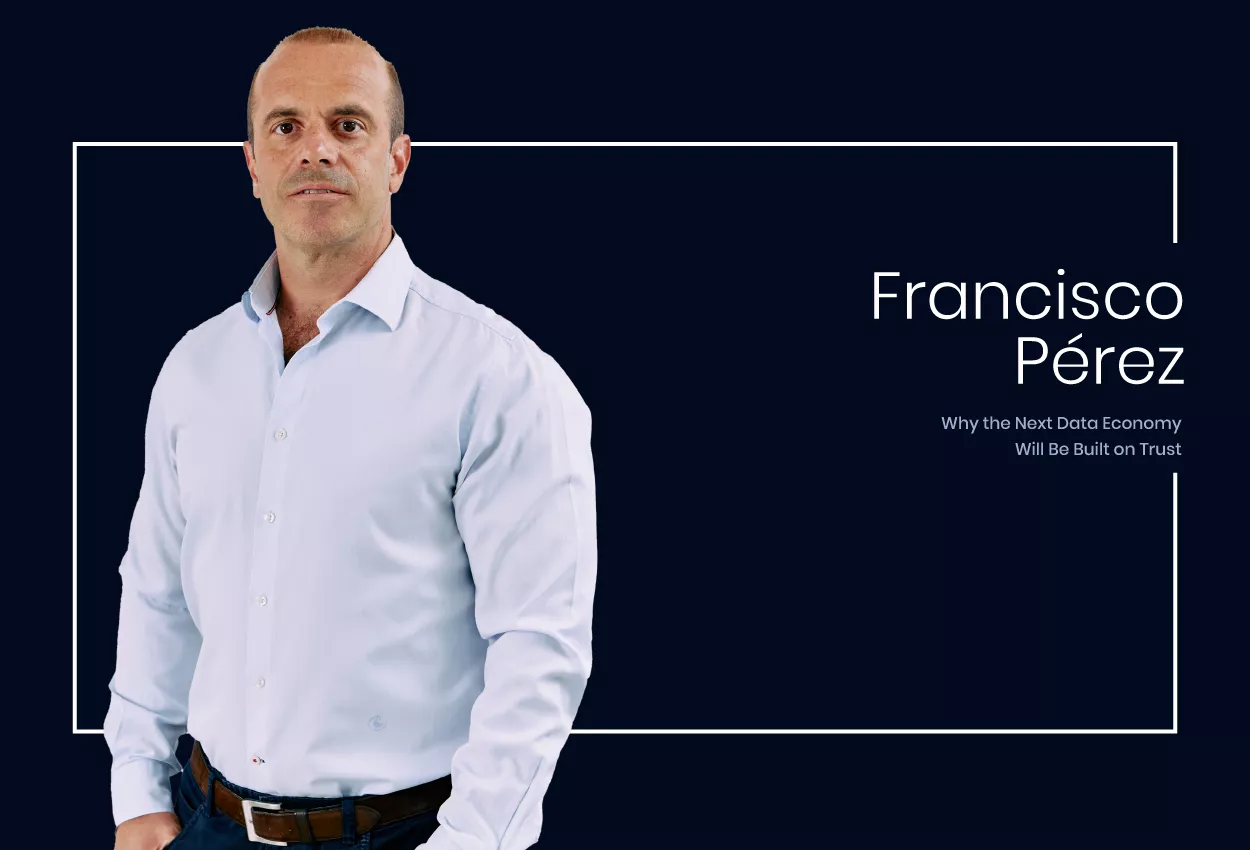
Few leaders have observed this transformation as comprehensively as Francisco Pérez Carrega, Founder and CEO of deitta. Having spent decades across international consulting, public-sector security, corporate analytics, and academia, Francisco has witnessed the evolution of data from an operational resource into one of the defining forces shaping modern business. Through deitta, he is championing a model that places transparency, consent, and trusted first-party relationships at the center of how organizations collect, understand, and create value from data.
Redefining the Human Role in the Data Economy
Francisco shared that deitta was not born from a single breakthrough moment but from decades of observing how organizations collect, govern, and monetize information. Drawing on a career that spanned international consulting, public-sector security leadership, corporate data analytics, and academia, he witnessed firsthand how businesses and governments approached data as an increasingly valuable asset. Over time, one contradiction became impossible to ignore: while personal data had evolved into one of the digital economy’s most valuable resources, the individuals generating that data remained excluded from the value it created. For Francisco, deitta represents the culmination of years of experience and reflection, designed to address not a technological challenge but a structural one by placing individuals back at the center of the data economy.
Reimagining Trust Through Ethical First-Party Data
Francisco believes that ethical first-party data fundamentally changes the relationship between businesses and consumers by transforming individuals from passive data sources into active participants. He explained that meaningful data exchange requires more than obtaining consent; people should clearly understand what information is being requested, why it is needed, how long it will be used, what they will receive in return, and how they can withdraw their permission. Rather than viewing transparency as a compliance burden, he sees it as an opportunity for organizations to access more relevant, accurate, and contextualized information. Having observed companies invest heavily in acquiring vast quantities of low-value data, Francisco argues that trust should no longer exist merely as a communications strategy but as an architectural principle embedded within every data interaction.
Compliance Beyond the Checkbox
For Francisco, regulatory compliance should never be treated as an afterthought. Reflecting on his years in public security, where failures in governance could have personal rather than commercial consequences, he developed a philosophy that prioritizes permissions, traceability, and accountability from the outset. At deitta, this translates into an architecture built around explicit consent, granular permissions, data anonymization, clear purposes, and comprehensive records of every authorization. Instead of simply documenting that a user clicked “accept,” the platform preserves evidence of who granted permission, for what purpose, and under which conditions. Francisco believes that while regulations will inevitably evolve, organizations that prioritize clarity, transparency, and user control at the design stage will remain better equipped to adapt to future legal and technological changes.
Empowering Individuals Through Data Monetization
Francisco views data monetization as an important step toward giving individuals greater agency over their digital lives. While many people understand that their personal information carries value, few have ever experienced that value in a tangible way. By allowing individuals to participate directly in the value their data creates, deitta encourages users to become informed decision-makers rather than passive subjects of analysis. Francisco prefers focusing on practical agency rather than abstract discussions of legal ownership, emphasizing people’s ability to control access, define purposes, determine permission durations, and share in the value generated by their information. Although he acknowledges that financial returns will vary and may sometimes be modest, he believes the broader impact lies in helping individuals understand and actively manage their digital presence.
Smarter Data Stronger Relationships
Francisco sees the decline of third-party data not as a setback but as a necessary correction for the digital economy. Throughout his career across industries including banking, telecommunications, energy, retail, hospitality, manufacturing, and public administration, he observed organizations accumulating enormous amounts of information without always understanding its origin, accuracy, or legal basis. Rather than producing deeper insights, excessive data often introduced duplication, inconsistency, and long-term risks.
In contrast, he believes first-party data encourages organizations to prioritize relevance over volume. One of its greatest advantages, he notes, is the ability to engage directly with individuals, ask meaningful follow-up questions, and build ongoing relationships that generate richer and more reliable insights. In a digital economy increasingly built on predictions and inferred behavior, directly declared information offers something fundamentally different: the ability to ask people what they actually think, need, prefer, or intend rather than relying exclusively on algorithms to infer it.
For Francisco, artificial intelligence and declared data are not competing approaches. Direct information from individuals can provide valuable context, strengthen decision-making, and help validate what algorithms infer. For Francisco, sustainable growth will come not from collecting everything possible but from asking better questions and earning the trust that encourages people to answer honestly. The future of intelligence may depend not only on what machines can infer about people, but also on what people are willing to tell us directly.
Ensuring Innovation Never Compromises Trust
Francisco believes organizational culture is defined not by written values but by the decisions made when ethical principles are tested under pressure. At deitta, every new feature is evaluated against a simple standard: whether the team would feel comfortable explaining it directly to the individual affected by it. If the answer is no, the design remains incomplete regardless of its technical sophistication. His experience in public administration reinforced the importance of creating systems capable of withstanding scrutiny from regulators, oversight bodies, or even courts. As a result, he measures innovation not only by technological advancement but also by the level of transparency, understanding, and control it provides to users. Francisco also values an environment where team members regularly challenge his ideas, viewing open internal debate as evidence of a healthy culture. While refusing shortcuts has occasionally slowed development, he believes that trust, once lost through a single careless decision, is exceptionally difficult, if not impossible, to rebuild.
Shaping the Future of AI Through Ethical Data
Francisco believes that the future of artificial intelligence will depend as much on the quality and legitimacy of data as it does on advances in algorithms or computing power. Drawing on his experience with large-scale analytics platforms, he explained that the greatest failures often stem not from flawed models but from inaccurate, outdated, or poorly documented data. Such systems can generate responses that appear sophisticated while remaining fundamentally unreliable.
As AI makes it increasingly easy to generate synthetic information at scale, Francisco believes that knowing where data comes from, in what context it was provided, and under what permission it was shared will become increasingly valuable. In that environment, provenance is not simply a compliance attribute; it becomes part of data quality itself.
He sees ethical data marketplaces as a crucial step toward improving the AI ecosystem by introducing traceability, explicit consent, and clear data provenance throughout the supply chain. Rather than encouraging indiscriminate data collection, these platforms enable organizations to request information for specific purposes. Looking ahead, Francisco believes society will demand a new social contract around data, where individuals increasingly expect transparency about whether their information contributed to AI models or automated decisions and under whose authority that data was used.
Leadership Rooted in Clarity, Responsibility, and Resilience
Throughout his career leading consulting teams across multiple countries and managing large public-sector initiatives involving more than 200 professionals, Francisco has worked with a diverse range of stakeholders, from corporate executives to government ministers and national policymakers. These experiences helped him identify the leadership principles that remained constant regardless of the environment. He believes clarity enables people to perform at their best because they understand not only what they are expected to do but also why it matters. Responsibility, in his view, involves creating an environment where challenges surface early enough to be resolved effectively. Francisco also considers translation to be an essential leadership skill, emphasizing the importance of bridging communication between technical specialists, executives, and public officials so that innovative ideas become practical solutions. Finally, resilience has consistently guided his decision-making, encouraging him to question established models and adapt whenever evidence supports a different direction. Founding deitta, he noted, required applying these principles personally, shifting from advising organizational transformation to accepting the risks of building one himself.
The Intelligence Behind Better Decisions
Francisco believes that successful organizations distinguish themselves not by the amount of data they collect but by their ability to connect information directly to business decisions. Rather than beginning with technology or dashboards, effective organizations first identify the decisions they want to improve, determine who owns those decisions, and establish how success will be measured. Governance and analytical tools then support those objectives instead of defining them. By contrast, organizations that prioritize technology before strategy often develop sophisticated infrastructure without changing decision-making behaviors. Francisco also stresses that context gives data its true value. Numbers without clear origins, ownership, meaning, or timing can easily mislead despite appearing precise. His experience designing a data academy for a financial institution and teaching Big Data at the University of Deusto reinforced his belief that data maturity is fundamentally a human capability rather than a purely technical one. Ultimately, he argues that organizations should focus less on how much data they possess and more on how their data helps them make better decisions for the future.
Preparing for a New Era of Digital Privacy
As awareness of digital privacy continues to grow, Francisco anticipates that consumers will expect far more than legal compliance. They will increasingly demand clear explanations, meaningful choices, and evidence that organizations respect the boundaries they establish. He believes traditional privacy notices accompanied by broad “accept all” options are rapidly losing credibility because they fail to provide transparency when it matters most. Instead, organizations should present understandable information at the point of interaction while allowing permissions to remain flexible rather than permanent. Francisco views privacy as an integral part of the customer experience rather than simply a legal obligation. He also emphasizes reciprocity, arguing that if organizations request valuable personal information, they should clearly communicate the benefits users receive in return. Those that embrace transparency and fairness early, he believes, will build levels of trust that competitors relying on opaque practices will struggle to achieve.
Technologies Redefining Digital Ecosystems
Francisco expects several technological developments to reshape the future of ethical data sharing. Among the most significant are verifiable credentials, which allow individuals to prove specific attributes without revealing unnecessary personal information, and privacy-enhancing technologies that enable meaningful analysis while minimizing exposure to raw personal data. He also foresees consent management evolving into a dynamic, granular, and interoperable system that gives individuals far greater control over how their information is used. At the same time, artificial intelligence is increasing demand for legitimately sourced data while regulators require organizations to demonstrate its origin, creating parallel pressures toward greater transparency. Francisco also predicts a shift from static notions of ownership toward programmable permissions, where access is granted only for defined purposes and timeframes before being modified or revoked. Beyond technological innovation, however, he believes the most significant transformation will be economic as individuals increasingly recognize the role their digital activities play in creating products, training AI models, and generating corporate value.
Building an Infrastructure of Trust for the Future
For Francisco, the ultimate objective extends beyond building a successful company or introducing new technologies. His broader ambition is to help reshape the relationship between people and the data they generate. He believes the next phase of the digital economy will depend on creating systems where transparency, participation, and trust become standard rather than exceptional.
Reflecting on the legacy he hopes to leave behind, Francisco offers a perspective that captures the philosophy underpinning his work at deitta:
“I would rather the legacy were not a company. I would rather it were a change in the default.”
For decades, organizations have focused on extracting value from data. Francisco believes the next chapter requires a more balanced model, one that gives individuals a clearer understanding of how their information is used and a meaningful role in the value it creates.
“We have spent decades teaching organizations how to extract value from data. The next step is to ensure that the people who generate that data can understand, control and participate in that value.”




