
Nigeria’s long-term national development vision rests on the promise of self-reliance, industrial strength, and shared prosperity. It is a vision that seeks to transform the nation’s abundant natural and human resources into engines of growth that sustain generations. From fertile farmlands to bustling factories, the country’s progress depends on building systems that empower people, nurture industries, and create livelihoods that endure. This vision is not only about economic advancement but about cultivating resilience, dignity, and opportunity within every community across the nation.
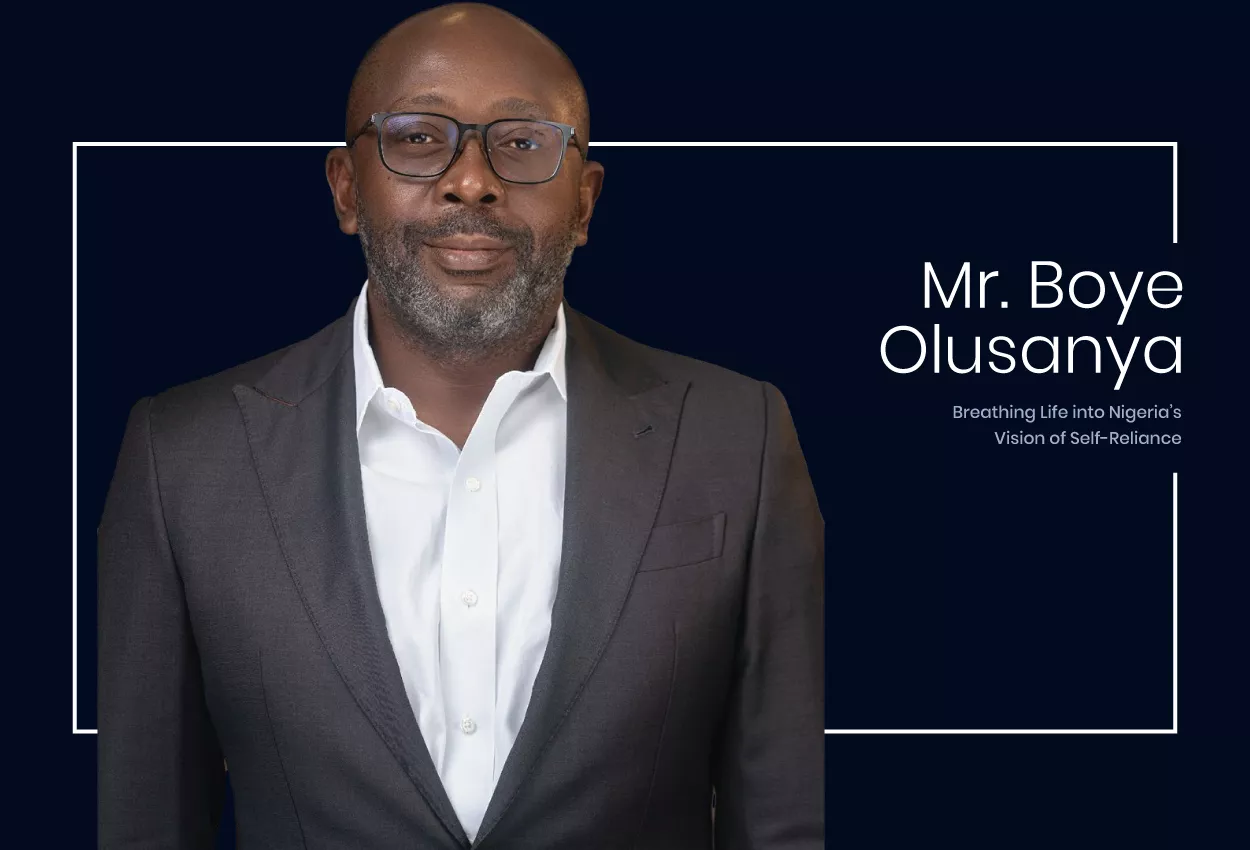
Guided by this same national aspiration, Mr. Boye Olusanya leads Flour Mills of Nigeria (FMN) with a vision of a Pan-African agenda while remaining at the forefront of the Food security drive in Nigeria. For over six decades, FMN has invested significantly in local content localization by strengthening local industries, deepening agricultural integration, and expanding opportunities for communities across the nation.
The Pursuit of Excellence and the Power of Possibility
Mr. Boye Olusanya’s journey from engineering into leadership across multiple industries reflects a lifelong commitment to curiosity, creativity, and excellence. He believes that inquisitiveness is the foundation of innovation, igniting passion and leading to meaningful results. Throughout his career, Mr. Boye has pursued not only great achievements but the pursuit of doing things exceptionally well. This philosophy has guided him in building long-term strategic and financial value across sectors including telecommunications, financial services, energy, and manufacturing.
Quoting Nelson Mandela’s famous words, “It is always impossible until it’s done,” Mr. Boye explains that his professional journey has been about transforming impossibilities into opportunities. From his early days at a global design consultancy firm to his roles in telecommunications and now manufacturing, he has consistently been driven by the idea of creating impact through excellence. For him, leadership is about building people, businesses, and systems that deliver sustainable results. He believes that every individual carries the responsibility to leave the world better than they found it, and that mindset continues to define his work and purpose.
Blueprint for FMN’s Growth
Drawing from his rich experience transforming institutions such as Etisalat (now 9mobile) and Dangote Industries, Mr. Boye has brought a culture of direct and practical leadership to Flour Mills of Nigeria (FMN). His approach emphasizes the effective transmission of knowledge and the conversion of experience into tangible outcomes. Under his leadership, FMN has achieved significant progress in three strategic areas: geographic diversification, B2C transformation, and technological advancement, alongside a comprehensive business restructuring effort aimed at improving global competitiveness.
Through geographic diversification, FMN has expanded its footprint beyond Nigeria by leveraging frameworks such as the African Continental Free Trade Area and the ECOWAS Trade Liberalization Scheme. The company now exports popular products such as Golden Penny pasta and noodles to markets including Ghana, Côte d’Ivoire, and Senegal, positioning FMN as a Pan-African food and agro-allied leader.
Mr. Boye has also championed FMN’s B2C transformation through the introduction of innovative food products tailored to consumer needs, such as Amazing Day cereal, Yum Bowl, and a new range of noodles and mayonnaise varieties. On the technological front, he has enhanced operational efficiency by improving supply chain visibility, upgrading enterprise resource planning systems, and establishing regional distribution centers. His leadership also oversaw the creation of an in-house power company to manage energy costs and improve productivity. Collectively, these initiatives have elevated FMN’s market valuation, strengthened stakeholder confidence, and reinforced its agility as a leading Pan-African enterprise.
Vision for Resilience and Sustainable Growth
Guiding a company as diverse and expansive as FMN comes with its share of challenges, but Mr. Boye approaches them with resilience and strategic foresight. He acknowledges that many of these challenges, such as global supply chain disruptions, geopolitical instability, and fluctuating macroeconomic conditions, are not unique to FMN but affect the entire sector. The company’s evolution from a single flour milling operation into a diversified Pan-African enterprise has required both adaptability and a steadfast commitment to its mission.
A key challenge, he notes, lies in maintaining competitive product pricing in volatile markets while remaining sensitive to consumers’ needs. Additionally, the decline in human capital, particularly in technical fields such as engineering and finance, presents another hurdle for the industry. Mr. Boye emphasizes that FMN continues to address these issues through proactive talent development, investment in local content, and the creation of sustainable systems designed to mitigate external pressures.
Through unwavering focus and strategic leadership, Mr. Boye continues to steer FMN toward long-term resilience, ensuring that the company not only thrives amid challenges but sets new standards for excellence in Africa’s food and agro-allied sector.
From Fields of Promise to a Nation of Plenty
In 2002, the Nigerian government introduced the Backward Integration Policy (BIP) to conserve foreign currency, boost local capacity, enhance job creation, and reduce dependency on imported raw materials. Over the years, this policy has achieved remarkable progress in key commodities such as sugar, cement, and petroleum. Aligned with this national vision, FMN has been an invaluable partner in strengthening Nigeria’s food security agenda through its Agro Business Structure.
For more than six decades, FMN has served as a source of livelihood for millions of Nigerian families by providing both direct and indirect employment opportunities through its strategic investments across five key value chains. In the sugar sector, the company’s investment in Sunti Golden Sugar Estates in Niger State is regarded as the country’s foremost greenfield investment in the sugar industry since its inception in 2012. With a total landmass exceeding 21,000 hectares and a world-class refinery, FMN continues to expand operations at Sunti Golden Sugar Estate, including new developments in Nasarawa State and further investments planned over the next three years to develop the upland area.
Through Golden Agri Inputs Limited (GAIL), FMN launched and scaled Project YALWA, a collaborative initiative with the West Africa Trade and Investment Hub (WATIH) and USAID to boost maize and soybean production nationwide. Through this program, over 5,000 outgrower farmers receive improved seeds, quality fertilizers, access to input loans, extension training, and guaranteed markets. The YALWA initiative has become one of FMN’s flagship efforts in achieving yield transformation within Nigeria’s grain sector.
As a leading wheat miller, FMN has taken a leadership role alongside other millers in developing domestic wheat-growing capacity by introducing improved varieties, optimizing cultivation practices, and building farmer capacity. The company is also developing high-yield, disease-resistant cassava seedlings at SAH Lab in partnership with cassava supply chain stakeholders in Ososa. In collaboration with the Federal Government, Premium Cassava Products Division (PCPD), and GAIL, FMN is accelerating cassava industrialisation to enhance competitiveness and prevent future shortages.
The company’s work extends to Edo State, where FMN has partnered with Okomu Oil Palm Company Plc at AgriPalm to strengthen local oil palm cultivation and processing, thereby reducing Nigeria’s reliance on imported palm oil and its derivatives.
Through these multi-sectoral investments, FMN continues to stand as one of the nation’s most steadfast partners in promoting food self-sufficiency. For FMN, value creation is not just a goal but an inherent part of its identity, to feed and enrich the lives of people and nations every day.
Sowing Seeds of Empowerment
According to Mr. Boye, Nigeria has long demonstrated its commitment to local content development through continuous agricultural reforms and production policies. While some of the healthiest food products such as sorghum and cashew nuts are exported globally, he emphasizes that growth in agriculture remains a progressive journey, one that FMN has fully embraced as an invaluable ally to the nation.
Through its farmer empowerment initiative, the Outgrower Program, FMN provides a structured framework that supports farmers with hybrid seed varieties, fertilizers, input loans, agronomy training, and guaranteed markets. Implemented under FMN Agro Limited, this program ensures that local farmers have access to the tools and resources they need to enhance productivity and achieve higher yields.
To date, FMN has empowered more than 400,000 Nigerian farmers nationwide through its outgrower programs. These initiatives have driven significant local cultivation of essential crops such as maize, sorghum, cassava, wheat, and soybean, which form the foundation of FMN’s production lines. By doing so, FMN continues to reduce dependency on imported raw materials while uplifting rural communities and strengthening the nation’s agricultural base.
Sustaining Quality and Legacy Through Golden Penny
For Mr. Boye, FMN’s mission, “Creating superior African brands that inspire consumers every day,” captures the company’s unwavering dedication to excellence. The company’s culture goes beyond ensuring quality; it is built on creating superior products that stand out through distinction and impact. This daily commitment reflects FMN’s vision of leaving a legacy that transcends operational success.
Through its integrated farm-to-table model, FMN upholds a rigorous quality culture across all its operations. The company’s iconic brand, Golden Penny, remains at the heart of this mission, nourishing millions of Nigerian families each day with nutritious, high-quality products.
Over two generations, FMN has built trust and loyalty through consistency and innovation. Families continue to pass down their love for Golden Penny products, making the brand an enduring symbol of quality and reliability. As the company scales its production to meet growing demand, it remains firmly guided by its mission to feed and enrich lives every single day.
Harnessing Technology to Feed the Future
According to Mr. Boye, emerging and existing data clearly show that the brands succeeding across industries are those that continuously innovate across multiple focus areas. At the heart of FMN’s processes lies a clear vision, to become the leading food company in Africa, enriching lives with quality brands. To stay aligned with this vision, the company consistently renews its commitment to providing consumers with superior-quality products that enhance their everyday lives.
FMN is not only focused on creating products but also on building value, resources, and experiences that enable long-term growth aligned with global best practices and standards. Technological utilization spans all aspects of its business, from operations and supply chain to secondary distribution networks. The company is also expanding its digital reach by making its products available on e-platforms to ensure easier and faster access for consumers anytime and anywhere.
In line with its local content development mandate to reduce dependency on imported raw materials, FMN is introducing smart farming techniques such as smart irrigation and the use of improved seedlings. With the growing adoption of artificial intelligence, the company’s Enterprise Resource Planning (ERP) systems are undergoing a major transformation toward process automation. This shift is designed to improve operational effectiveness and ensure optimal time utilization.
FMN also integrates data analytics throughout its supply chain management. Every day, data on consumer trends, raw material inventories, and retail sales are gathered and analyzed to fine-tune operations. Recently, FMN adopted a digital distribution platform known as OmniRetail, which provides real-time visibility into its markets. This platform connects FMN’s warehouses and trucks directly to tens of thousands of retailers, delivering live data on demand trends, stock levels, and customer preferences.
Balancing Vision, Adaptability, and Trust
Reflecting on his journey, Mr. Boye emphasizes that one of the most important leadership lessons he has learned is the power of process and systems thinking. To drive innovation and synergy at scale, he believes leaders must build processes that flow seamlessly and systems that connect these processes coherently. This approach enables leaders to anticipate how developments in one area may create risks or opportunities in another and to design responses that strengthen the entire enterprise.
The second key lesson for Mr. Boye is adaptability across industries. Each sector presents unique challenges and opportunities, yet the core principles of leadership remain the same, clarity of purpose, data-driven decision-making, and the ability to rally diverse teams toward a shared goal. Understanding different stakeholder landscapes and regulatory environments helps leaders anticipate risks and align their organizations with emerging realities.
Another cornerstone of effective leadership, according to Mr. Boye, is stakeholder engagement. He believes sustainable value cannot be achieved without building trust with partners, employees, regulators, communities, and consumers. Staying close to these groups ensures alignment and fosters mutual growth.
Finally, he underscores the importance of maintaining a long-term vision while remaining agile in the short term. In a market as dynamic as Nigeria, volatility is inevitable. However, as Mr. Boye notes, if a leader is clear about their destination, they can always adjust their tactics without losing sight of their purpose.
Feeding Possibilities and Enriching Lives
Mr. Boye explains that FMN’s purpose of “Feeding and Enriching Lives Every Day” goes beyond food. The company’s broader mission is to feed possibilities for all its stakeholders through a shared-value approach that reinvests resources into human capital development.
A central part of this vision is the FMN Women Network (FMNWN), a women-led developmental program focused on advancing the growth of girls and women. The Network’s “Girls in Action” initiative empowers young girls by helping them identify their strengths and providing the support needed to thrive. It also allows FMN’s women to inspire and mentor the next generation, fostering equity and inclusion while building a strong community of empowered women across Nigeria.
Another significant component of the Feeding Possibilities agenda is the George S. Coumantaros Foundation. Through this initiative, FMN partners with institutions such as the American Farm School and Perrotis College to offer postgraduate scholarships to deserving Nigerians. To date, the Foundation has invested more than N115,000,000 (approximately €46,800) in education and skills development for selected candidates.
Additionally, FMN launched the FMN Prize for Innovation (PFI), an initiative created to encourage creativity and forward thinking within the food and agro-allied sector in Nigeria and across Africa. This initiative seeks to identify and support innovators who are reimagining food production and processing for sustainable food systems. Since its inception in 2021, FMN has financially, technically, and strategically supported eight innovators and businesses, investing more than N200,000,000 in total.
As Mr. Boye affirms, these initiatives represent only a fraction of FMN’s efforts. At the core of its business philosophy lies a deep commitment to shared value creation for all stakeholders and an unwavering dedication not only to feed the people but also to enrich their lives every day.




