
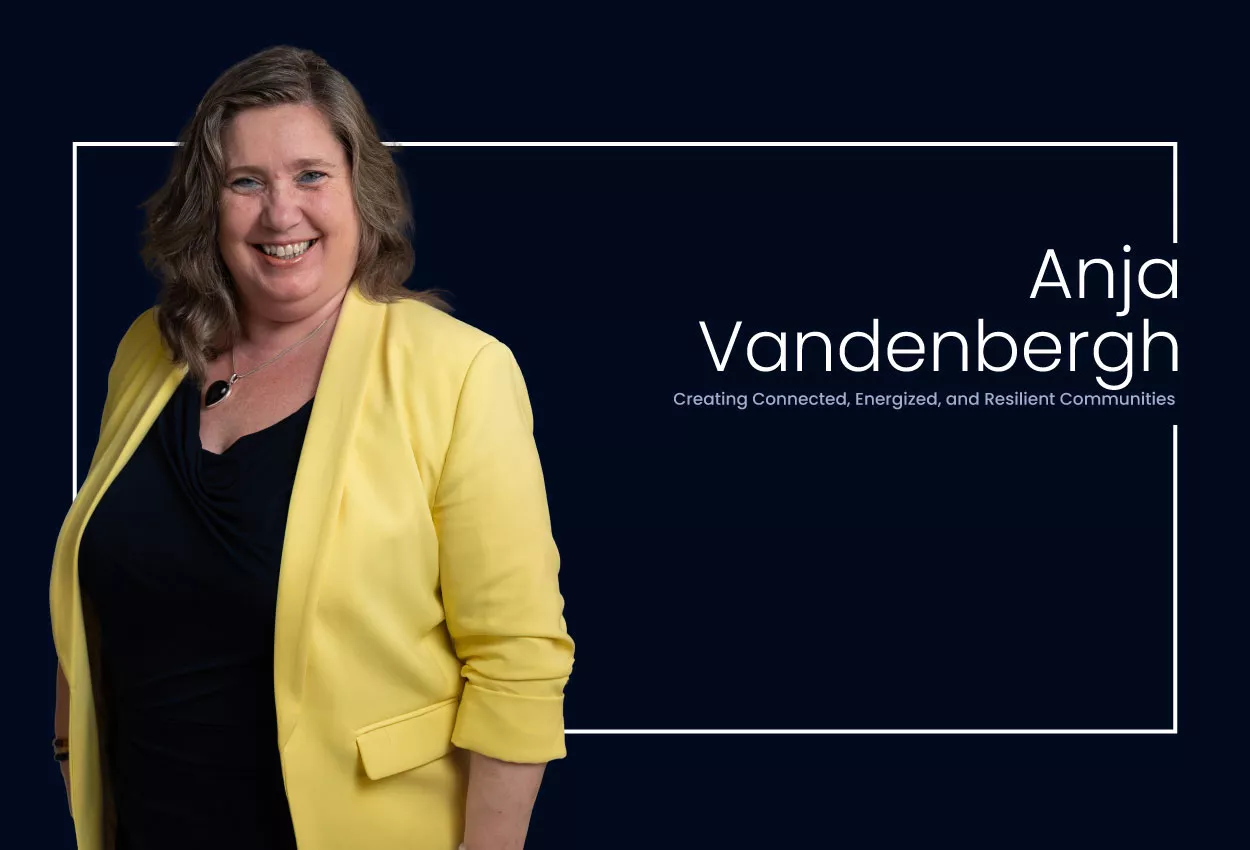
Laughter is not a tool most people expect to find in a project manager’s toolkit. Between schedules, budgets, stakeholder meetings, and delivery targets, there seems little room for something often dismissed as light-hearted or incidental. Yet after spending years working in project management, Anja Vandenbergh came to view laughter differently, not as a distraction from performance, but as something that could strengthen it. What began as a personal discovery during a challenging period of her life eventually evolved into a mission to help professionals build resilience, manage stress, and foster stronger connections within their teams.
That journey has made Anja a distinctive voice within the project management community. As President of the PMI Belgium Chapter and a driving force behind the PM Fair, the chapter’s annual project management congress, she has spent more than two decades contributing to the profession’s growth while encouraging people to look beyond methodologies alone. Whether discussing the opportunities presented by artificial intelligence, creating communities for women and life sciences professionals, or preparing younger generations for leadership roles, her work reflects a belief that successful projects are ultimately driven by engaged, empowered, and connected people.
Building a Marketplace for Project Management Excellence
Anja explained that the PM Fair is the annual project management congress organized by the PMI Belgium Chapter. Its origins date back nearly three decades, when Belgium was still part of the PMI Benelux structure. At the time, the event was created as a one-day conference where both members and non-members could connect with the project management community while exploring emerging trends, technologies, and professional skills.
Following the separation of the three Benelux chapters in 2010, the Belgian chapter developed its own independent event and introduced the name “PM Fair.” The concept was inspired by the idea of a marketplace where professionals could freely explore different topics, workshops, and perspectives, much like visitors moving between stands at a traditional fair. The objective was to create an environment where project managers could discover new capabilities, gain practical insights, and identify opportunities for career growth.
Today, Anja noted that the event continues to focus on the latest trends and innovations shaping the profession. Beyond knowledge sharing, the PM Fair serves as a platform for collaboration, allowing project managers from different industries to exchange experiences, discuss common challenges, and learn from one another as peers rather than competitors.
From Project Leadership to Personal Transformation
Anja described project management as the first professional world she encountered and one that naturally suited her strengths. Rather than coming from an engineering background, she was drawn to the human and organizational aspects of projects, creating trusted environments, encouraging collaboration, and helping teams work together toward meaningful outcomes.
However, the demanding nature of project work eventually took its toll. After experiencing burnout multiple times, she realized that she needed to focus on her own well-being before continuing to help others succeed. This period of reflection led her to reconnect with something she had always loved as a child: laughter.
A turning point came when a colleague introduced her to a laughter yoga session. The experience had an immediate impact. For the first time in a long while, she enjoyed a deep and restful night’s sleep. Intrigued by the effect, Anja began exploring the science and techniques behind laughter. Her curiosity led her to study laughter yoga under the teachings of Dr. Madan Kataria during the COVID-19 period, opening the door to a completely new dimension of personal and professional development.
Bridging Project Management and the Power of Laughter
Through her studies, Anja discovered a concept that fundamentally changed her perspective: the brain does not significantly distinguish between spontaneous laughter and intentionally initiated laughter when it comes to many of the physiological benefits. She found it remarkable that something as simple as beginning with a deliberate laugh could quickly shift mood, increase energy levels, and create a sense of positivity within seconds.
Recognizing the potential of these techniques, she saw an opportunity to combine her project management expertise with the principles of laughter and conscious breathing. For Anja, these practices are powerful because they are accessible to everyone. Breathing is a natural part of daily life, and laughter requires no special equipment or resources. Yet when used intentionally, both can become effective tools for reducing stress, strengthening connections between people, and improving overall well-being.
This realization evolved into a personal mission. Anja is now dedicated to helping project managers integrate simple breathing and laughter exercises into their professional lives. By bringing together the structured world of project management and the human-centered benefits of laughter, she hopes to equip professionals with practical tools that support resilience, collaboration, and long-term success.
Learning Project Management Beyond the Textbooks
Anja’s journey with PMI Belgium began more than two decades ago when she was studying the Project Management Institute’s PMBOK (Project Management Body of Knowledge). While she appreciated the theoretical foundations of project management, she was naturally drawn to practical application. Curious about how experienced professionals translated methodology into real-world results, she decided to volunteer with the PMI Belgium Chapter when an opportunity arose.
Her initial involvement centered on organizing the PM Fair, the chapter’s flagship congress. Through this experience, she gained firsthand exposure to how project managers adapted established frameworks to suit the realities of their projects. One lesson that particularly stood out involved communication planning. While PMBOK emphasized the importance of a communication plan, she noticed that the congress team operated successfully without a formal one. This sparked an important realization: PMBOK was not a rigid rulebook but a flexible framework.
Anja came to understand that project management methodologies are designed to be adapted rather than followed mechanically. Organizations can tailor different knowledge areas according to their needs, selecting the tools and processes that add value while avoiding unnecessary bureaucracy. She believes this flexibility is one of PMI’s greatest strengths, enabling project managers to “plug and play” with various approaches rather than being constrained by extensive templates and documentation.
AI and the Rise of the Modern Project Manager
Discussing the challenges facing project managers today, Anja pointed to the rapid rise of artificial intelligence as one of the most significant developments reshaping the profession. Traditionally, project managers spent considerable time creating plans, overseeing execution, and conducting data analysis. However, many of these operational tasks can now be supported, or even partially performed, by AI-powered tools.
As a result, she believes the role of project managers is evolving toward more strategic responsibilities. Rather than focusing primarily on execution, professionals are increasingly expected to act as trusted advisors within their organizations, helping leaders determine whether projects should be pursued and what value they are expected to deliver. This shift requires stronger decision-making capabilities and a greater ability to engage with senior stakeholders and executive leadership.
At the same time, Anja emphasized that AI is a support tool rather than a replacement for human judgment. While technology can assist with information gathering, analysis, and recommendations, it cannot fully manage stakeholder relationships, resolve conflicts, facilitate communication, or negotiate complex situations. These human-centered skills remain critical to successful project delivery. In her view, the future of project management lies in combining technological capabilities with strong interpersonal leadership.
Creating a Safe Space for Women in Project Management
Anja’s commitment to supporting women in project management emerged from both her professional experiences and her broader personal journey. Through her work and interactions with women from different backgrounds, she became increasingly aware of the unique challenges many women face in professional environments, particularly in industries and leadership roles that have traditionally been male-dominated.
She observed that women in project management often encounter similar obstacles, including the need to assert themselves in meetings, navigate preconceived judgments, and overcome hesitation about speaking up. Recognizing the importance of shared support and understanding, she helped create a dedicated community for women in project management.
The initiative provides a safe and welcoming space where women can openly discuss their experiences, challenges, and achievements. Through regular weekly gatherings, participants exchange ideas, seek advice, celebrate successes, and support one another through difficult situations. The conversations are intentionally informal, allowing members to bring forward whatever topics are most relevant to them at the time.
For Anja, the community is about much more than professional networking. It serves as a reminder that women are not alone in the challenges they face and that collective support can foster confidence, resilience, and growth. She also values the opportunity to learn from younger generations within the group, noting that leadership is a two-way process in which everyone has something to contribute. By creating an environment of mutual learning and encouragement, she hopes to empower more women to thrive and lead confidently in the project management profession.
The Foundation of Strong Teams: Clarity and Trust
Reflecting on her experience leading multicultural and virtual teams, Anja emphasized that successful collaboration begins with clear communication. In diverse environments, misunderstandings can easily arise if expectations are not explicitly defined. She believes project leaders must communicate clearly about responsibilities, objectives, and reporting structures so that everyone understands their role within the team.
For Anja, clarity is closely connected to trust. When team members know what is expected of them and feel informed about decisions and processes, trust naturally develops. Once trust is established, communication becomes more open and effective, enabling teams to make better decisions and work together more efficiently. In her view, clarity and trust are the two essential pillars that help unite teams across cultures, locations, and working styles.
Leading Beyond Automation
Anja sees artificial intelligence as a transformative technology that project managers must learn to embrace. While she actively uses AI in her own work, she stresses that it should be viewed as a support tool rather than a substitute for professional judgment.
She highlighted several practical applications where AI is already creating value. Data analysis, for example, can be performed much faster with AI-powered tools, allowing project managers to identify patterns and insights more efficiently. She recalled working with an AI-driven dashboard that helped identify planning issues within a master planning process. The system successfully highlighted key areas requiring attention, enabling corrective actions to be taken more quickly. However, the experience also revealed the limitations of automation, as some contextual information and conclusions still required human interpretation.
Another area where AI has proven valuable is meeting management. Automated note-taking tools can generate summaries, action points, and meeting minutes within minutes, significantly reducing administrative workloads. Tasks that once required an additional hour of documentation after a meeting can now be completed in a fraction of the time.
Despite these benefits, Anja cautioned against overreliance on technology. AI can provide recommendations and accelerate analysis, but it cannot replace human skills such as communication, negotiation, conflict resolution, and stakeholder management. She believes the profession is undergoing a significant shift, with routine analytical tasks becoming increasingly automated while interpersonal and strategic leadership skills become even more important.
According to Anja, project managers who are willing to adapt and strengthen these human-centered capabilities will thrive in the years ahead. Those who resist change may find it increasingly difficult to remain competitive as the profession evolves. This reality is one of the key reasons she has encouraged discussions about AI and future skills through initiatives such as the PM Fair.
Creating a Home for Life Sciences Project Managers
Anja’s involvement with the life sciences sector inspired her to establish a dedicated community for project managers working in the field. Throughout her career, she gained experience across several industries, including automotive, manufacturing, healthcare, and radiopharmacy. This exposure helped her recognize that life sciences projects face unique challenges that differ significantly from those in other sectors.
While PMI provides a broad project management framework applicable across industries, Anja observed that life sciences professionals often operate within highly specialized environments involving drug development, research and development, patient safety requirements, regulatory compliance, and approval processes. These complexities create a professional language and set of challenges that are not always fully understood by project managers from other fields.
The idea for a dedicated community emerged when a major life sciences company approached PMI Belgium with a proposal to organize an event specifically for project managers in research and development. The initiative led to the first R&D Project Management Day, bringing together professionals from across the sector to exchange experiences and best practices.
The response exceeded expectations. Participants expressed appreciation for having a space where they could discuss industry-specific challenges with peers who understood their terminology, regulations, and working environment. Many described the experience as feeling “at home” among colleagues facing similar realities.
Encouraged by the success of the event, Anja helped expand the initiative into an ongoing community. Subsequent editions continued to attract strong participation, creating a platform where life sciences project managers could learn from one another, share solutions, and build valuable professional connections. For Anja, the community demonstrates the importance of creating spaces where specialists can collaborate with others who truly understand the unique demands of their profession.
Inspiring the Next Generation of Project Leaders
Looking ahead, Anja’s primary focus is on encouraging greater involvement of younger generations in project management. She pointed to recent PMI research highlighting a growing talent gap, driven in part by the retirement of experienced professionals over the coming decades. Without a sufficient pipeline of new talent, organizations could face significant challenges in replacing the knowledge and expertise that will leave the workforce.
Anja believes one of the reasons for this gap is that many young people do not recognize how deeply project management is already embedded in everyday life. To illustrate this point, she shared examples from her own family. Her children grew up being introduced to project management concepts through ordinary activities, such as planning holidays. Discussions about budgets, scope, stakeholders, risks, and objectives became natural parts of decision-making, helping them develop a project-oriented mindset from an early age.
She has experienced its long-term effect personally. Anja’s oldest son thinks about project management aspects such as the scope of a project, budget considerations, potential risks, and the interests of various stakeholders while addressing different issues in the workplace. This experience proves that project management is not only a career choice but a mode of thought that can be cultivated well before the individual starts working professionally.
She claims that the school system and other institutions of education have the opportunity to instill the basics of project management into young minds, thus equipping the youth with skills needed for planning, problem solving, and organization. Such an approach would contribute greatly to preparing young people for leadership roles and addressing the shortage of talented professionals in the industry.
In conclusion, the development of the next generation of project managers is one of the key tasks of the future according to Anja.




