
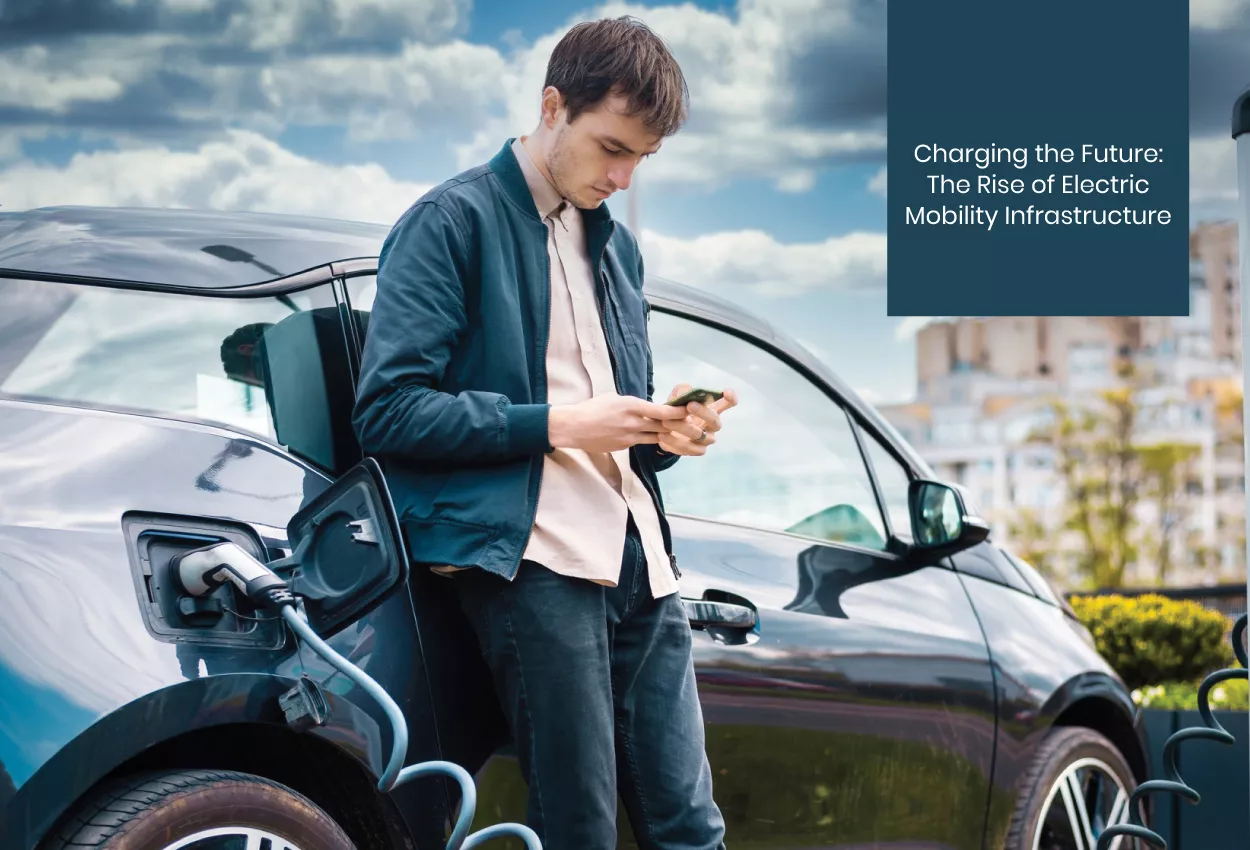
Electric vehicles have moved far beyond being a niche technology. What was once considered an emerging trend has become one of the most significant transformations in the global transportation sector. Governments are introducing ambitious decarbonization targets, automotive manufacturers are investing billions in electrification, and consumers are increasingly embracing cleaner modes of transport. Yet while much attention is focused on the vehicles themselves, the true foundation of the electric mobility revolution lies elsewhere: infrastructure.
The success of electric mobility will ultimately depend not only on the number of vehicles on the road but on the networks that support them. Charging infrastructure has become one of the most critical components of the transition toward sustainable transportation, serving as the bridge between technological innovation and everyday adoption.
Beyond the Vehicle
Electric vehicles represent only one part of a much larger ecosystem. For widespread adoption to occur, drivers must have confidence that charging is accessible, reliable, and convenient.
Unlike traditional fueling stations, electric mobility requires a fundamentally different approach to infrastructure planning. Charging points must be integrated into cities, workplaces, commercial centers, highways, residential developments, and public spaces. The goal is not simply to replicate the existing fuel station model but to create an interconnected network capable of supporting diverse transportation needs.
As EV adoption accelerates, infrastructure is becoming the determining factor in how quickly countries can transition toward cleaner transportation systems.
Solving the Range Confidence Challenge
One of the most commonly discussed barriers to electric vehicle adoption has been range anxiety, the concern that a vehicle may run out of power before reaching a charging point. While advances in battery technology have significantly increased driving ranges, confidence remains closely linked to infrastructure availability.
Fast-charging networks play a crucial role in addressing this challenge. Modern charging systems can provide substantial battery capacity within minutes rather than hours, making long-distance travel increasingly practical. The expansion of charging networks is transforming electric mobility from an urban solution into a viable option for regional and national transportation.
As infrastructure becomes more visible and accessible, consumer confidence naturally increases, accelerating adoption across broader segments of society.
Building Smart Mobility Networks
The future of electric mobility is not simply about installing more chargers. It is about creating intelligent networks that interact with the broader energy ecosystem.
Modern charging infrastructure is increasingly integrated with digital technologies that optimize performance, improve user experience, and support grid management. Smart charging systems can respond to energy demand, adjust charging schedules, and help balance electricity consumption across the network.
This level of connectivity allows infrastructure operators to maximize efficiency while supporting both drivers and energy providers. As transportation becomes increasingly electrified, digital integration will become just as important as physical infrastructure deployment.
Accelerating Sustainable Cities
There is going to be great advantage to the urban environment with the rise in electric mobility infrastructure. Transport sector has been one of the major sources of greenhouse gases for many countries in the world, and also transport pollution has impacts on public health.
With the rise in electric mobility infrastructure, people are going to be able to shift to better transportation methods, and it will help cities cut down on their emission levels, improve air quality, and sustain themselves. Electric buses, commercial transportation, public transport, and personal vehicles are going to help create livable urban areas.
The Investment Opportunity
In addition, the emergence of electric mobility infrastructure also presents a major economic opportunity. More and more governments, utilities, investors, technology companies, and infrastructure firms are seeing the economic value in investing in the future.
This includes investment in charging stations, smart grid systems, batteries, software, and renewables. Such investments do not only advance environmental goals but also create jobs, fuel innovation, and promote economic development.
Those countries and organizations that take an early interest in the infrastructure of electric mobility are poised to profit from what is considered by many to be one of the defining industrial revolutions of our time.
Charging Toward Tomorrow
However, the electrification of transport is no longer a matter of if it will happen, but rather one of how fast. Cars will keep developing, batteries will become better, and technology will progress. Yet, nothing of all this can achieve its full potential without the proper infrastructure to complement it.
Electric car charging infrastructure has become just as important for modern transport systems as roads, highways, and public transport infrastructure. These infrastructures supply the security, accessibility, and reliability that are essential to mass adoption.
Electric mobility will be the way of the future, but the key to making it happen lies in the development of adequate infrastructure. With innovative solutions like intelligent charging systems and renewable energy generation systems, we can develop a transport system that is sustainable, efficient, and robust.
The road to sustainable transport is well underway; all that’s left is for us to build the right infrastructure for this road to be a success.