Some places are difficult to define because they refuse to remain just one thing. They evolve with the people who pass through them. A facility built for recreation becomes a gathering place for civic leaders. An event venue becomes a launching pad for careers. A space designed for community engagement finds itself hosting entrepreneurs, educators, athletes, artists, and families, each leaving behind a different story. Over time, the purpose of the place expands, shaped not only by its design but by the possibilities people discover within it.
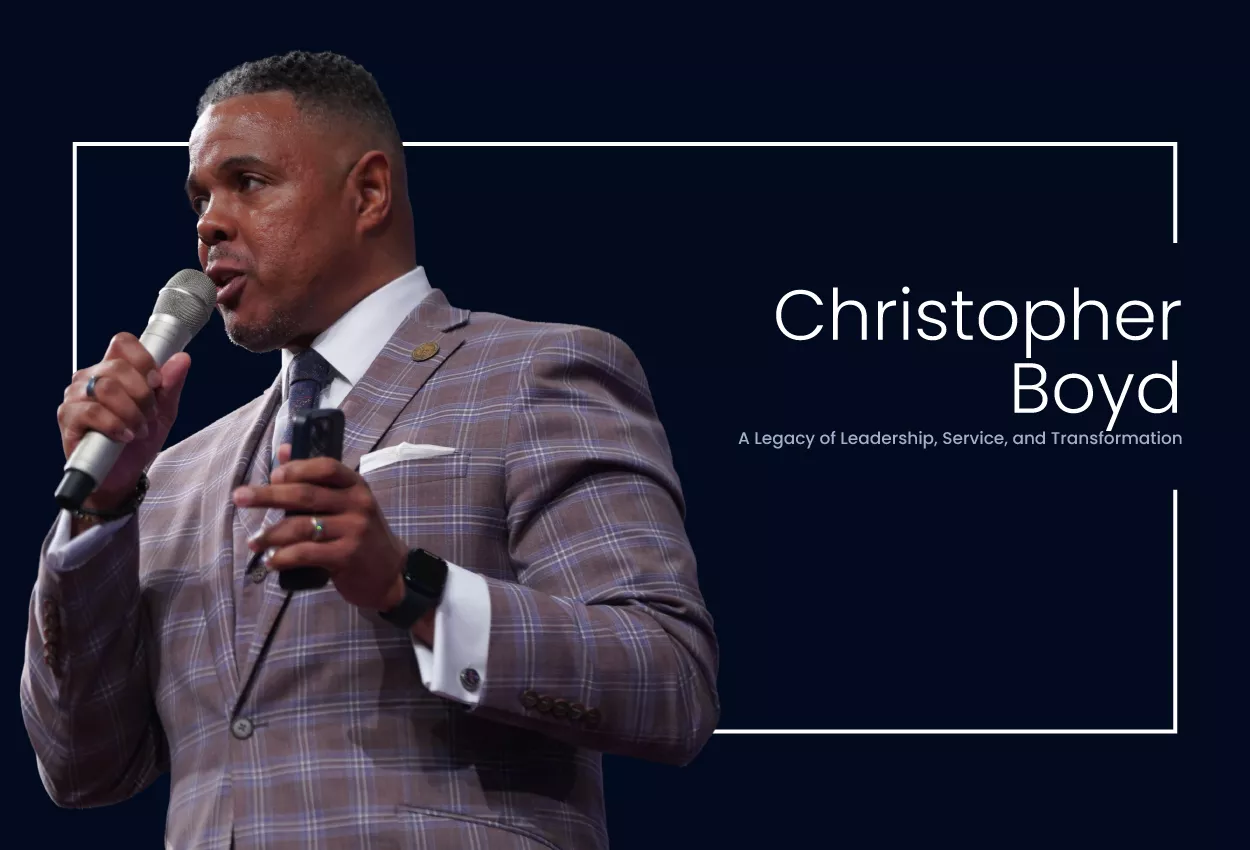
Christopher Boyd, Ph.D., has dedicated much of his career to cultivating environments where those possibilities can take root. As General Manager of Riverside EpiCenter, he has helped transform an ambitious vision into a dynamic hub for entertainment, wellness, entrepreneurship, leadership development, and community engagement.
Creating Value That Extends Beyond Revenue
For Boyd, success and social impact are not opposing forces. They are interconnected elements of a larger mission. Since its inception, Riverside EpiCenter has been guided by a vision first articulated by Bishop Dale C. Bronner: to create a place where individuals, families, businesses, and organizations could discover opportunities that inspire growth and unlock potential.
While Riverside EpiCenter operates as an independent business entity, Boyd views its work through the lens of what he describes as marketplace ministry. Financial sustainability remains essential because it enables the organization to maintain excellence, invest in innovation, create opportunities, and continue serving the community. Yet profitability alone is not the ultimate measure of success.
Under Boyd’s leadership, Riverside EpiCenter has evolved into far more than a recreational facility. It has become a venue for film and television productions, the official practice facility of the Atlanta Dream, a gathering space for civic leadership, and a destination for major employment initiatives. For Boyd, each milestone reinforces the original vision: build something exceptional, make it accessible, and allow its impact to expand in ways that benefit the broader community.
At the heart of this philosophy lies a commitment to what Riverside EpiCenter calls Profitable Stewardship, a principle that emphasizes responsible growth while remaining focused on significance. For Boyd, revenue sustains the mission, but purpose gives that success meaning.
Expanding a Vision Beyond Expectations
Boyd often describes himself as an organizational architect. His leadership approach centers on connecting people, systems, technology, resources, and relationships in ways that create opportunities greater than the sum of their parts.
Rather than viewing Riverside EpiCenter as a collection of amenities, Boyd sees it as an ecosystem where entertainment, wellness, business, entrepreneurship, education, technology, and community engagement coexist. This perspective has enabled the organization to embrace opportunities that were never part of the original blueprint.
Among the accomplishments he values most are the diverse ways the facility has served the region. Riverside EpiCenter has welcomed hundreds of thousands of visitors, hosted major entertainment productions, supported civic initiatives, and strengthened partnerships across corporate, nonprofit, educational, and faith-based sectors.
Yet Boyd places equal value on achievements that often receive less public attention. Creating jobs, developing employees, supporting entrepreneurs, expanding youth programming, and fostering meaningful community partnerships represent forms of impact that align closely with the center’s purpose.
Perhaps most significant is the organization’s resilience. Maintaining and evolving a 113,000-square-foot facility through changing economic conditions and a global pandemic has reinforced Boyd’s belief that great organizations succeed not only because of their vision, but because of their willingness to continuously grow into that vision.
Leadership That Outlasts the Moment
In Boyd’s view, leadership fundamentals remain remarkably constant despite rapid changes in technology, business, and society. Throughout his career, three principles have remained foundational: integrity, hard work, and a positive attitude.
He believes future leaders must also cultivate self-awareness. Understanding personal strengths, weaknesses, values, and motivations creates the foundation for authentic and effective leadership. For Boyd, leadership begins with knowing oneself before attempting to influence others.
Adaptability is equally critical. As artificial intelligence, automation, and emerging technologies continue to reshape industries, Boyd believes leaders must remain lifelong learners. Success will belong not necessarily to those who know the most, but to those willing to continuously learn and evolve.
Another quality Boyd considers indispensable is relational intelligence. Across corporate leadership, ministry, education, and community development, he has consistently observed that meaningful progress depends on trust, communication, and the ability to build strong relationships.
He also emphasizes resilience and discipline. Sustainable success rarely arrives overnight. Effective leaders must remain committed to growth even when results are not immediate and maintain perspective during periods of challenge and uncertainty.
Above all, Boyd encourages future leaders to adopt a legacy-minded perspective. Leadership, in his view, is measured not by titles or achievements alone, but by the people developed, the opportunities created, and the lasting impact left behind.
Lessons From Two Worlds
Few leaders have had the opportunity to navigate both for-profit and nonprofit sectors as extensively as Boyd. The experiences gained from each environment have shaped a leadership philosophy that blends performance with purpose.
The corporate world taught him the importance of execution, accountability, customer experience, measurement, and operational excellence. It reinforced the reality that strong intentions must be accompanied by effective systems and sustainable business practices.
His nonprofit and ministry experiences, meanwhile, deepened his understanding of stewardship, servant leadership, collaboration, and human development. Serving as Executive Pastor of Word of Faith Family Worship Cathedral further demonstrated that business excellence and mission-driven leadership can reinforce one another rather than compete.
Today, those lessons converge at Riverside EpiCenter. Boyd frequently references the concepts of marketplace ministry and social entrepreneurship, frameworks that allow organizations to pursue both financial sustainability and community impact simultaneously.
The result is a leadership approach that values profitability not as an end goal, but as a resource that enables greater service, innovation, and long-term significance.
Leading Through Unimaginable Loss
One of the most profound leadership challenges Boyd faced occurred when a colleague lost her life during a tragic act of domestic violence on the Riverside EpiCenter campus.
The incident required Boyd to draw simultaneously upon his experience as both a pastor and an organizational leader. While employees and community members needed compassion, support, and space to grieve, the organization also required decisive leadership to address operational concerns, communications, safety protocols, and coordination with law enforcement.
For Boyd, the experience reinforced an important leadership principle: compassion and strategy are not mutually exclusive. During moments of crisis, people need both emotional support and clear direction.
The response extended beyond the immediate aftermath. An education fund was established for the colleague’s daughter, reflecting Boyd’s belief that authentic leadership leaves tangible evidence that people matter.
Although the tragedy remains one of the most difficult experiences of his career, it strengthened his conviction that an organization’s true culture is often revealed during its most challenging moments.
Building Bridges That Strengthen Communities
Community partnerships remain a defining element of Riverside EpiCenter’s success. Boyd believes the most impactful collaborations emerge when organizations are united by a shared purpose and committed to creating value beyond their individual capabilities.
One notable example was Riverside EpiCenter’s partnership with the Cobb & Douglas Department of Public Health during the COVID-19 pandemic. The facility became an important location for testing, vaccinations, and innovative public health initiatives, including participation in a pilot program involving COVID test-kit vending machines.
Another example emerged through collaboration with the City of Mableton. As the newly established city developed its governmental operations, Riverside EpiCenter provided space for City Council meetings and municipal offices, helping support civic engagement during a formative period.
For Boyd, partnerships are most effective when they address genuine community needs, leverage the strengths of each participant, and generate measurable benefits for the people they serve.
He believes Riverside EpiCenter’s greatest contribution is not necessarily delivering every service itself, but creating a platform that allows other organizations to maximize their own impact. Through that philosophy, the center continues to strengthen its role as a trusted community hub where innovation, collaboration, and opportunity intersect.
The Power of Attitude and Adding Value
Throughout his career as an educator, leadership trainer, author, and mentor, Christopher Boyd, Ph.D., has consistently returned to two foundational principles: attitude and adding value. These concepts have shaped his approach to leadership for decades and remain central to the lessons he shares with students, professionals, ministry leaders, and emerging executives.
Boyd traces the importance of attitude back to both personal and professional influences. A lesson from his high school basketball coach and the timeless message of Charles Swindoll’s Attitude reinforced a belief that individuals cannot always control circumstances, but they can control their response to them. In an era defined by constant change, he believes this principle is more relevant than ever. Leaders who focus exclusively on obstacles often miss opportunities to influence what they can actually change.
Equally important is the concept of adding value. Boyd encourages individuals to invest continually in their own growth while seeking ways to improve the lives and experiences of others. He views leadership as an ongoing process of learning, serving, and contributing. By focusing on development rather than comparison, people position themselves to expand both their capabilities and their influence.
For Boyd, these principles have endured because they are rooted in timeless fundamentals: integrity, hard work, relationships, communication, and a commitment to making a meaningful difference wherever one is planted.
Technology with a Human Purpose
Technology and performance analytics have played a significant role throughout Boyd’s professional journey. At Riverside EpiCenter, innovation is not pursued simply for the sake of modernization; it is embraced as a tool for improving experiences, enhancing efficiency, and creating greater organizational impact.
Under his leadership, data is integrated across nearly every aspect of operations. From customer relationship management and event performance to membership activity, financial results, marketing engagement, and visitor feedback, information serves as a guide for smarter decision-making. Boyd believes the true value of data lies not in collection, but in its ability to help organizations ask better questions and identify opportunities more effectively.
Innovation also extends to new opportunities such as eSports, gaming, and technology-driven youth engagement. Boyd sees these emerging sectors as pathways that connect entertainment, education, workforce development, and community building. At the same time, sustainability remains an important focus, reflected in Riverside EpiCenter’s LEED-certified design, electric vehicle charging infrastructure, and exploration of solar energy solutions.
While Boyd embraces artificial intelligence and automation as valuable tools for streamlining operations, he remains committed to preserving the human element of service. Technology, in his view, should enhance hospitality rather than replace it. Data should inform decisions without diminishing the importance of judgment, relationships, and personal connection.
Designing Organizations for Excellence
Boyd’s description of himself as an organizational architect reflects a philosophy rooted in intentional design. Much like an architect begins with a foundation before constructing a building, he believes successful organizations are built upon a framework of purpose, people, culture, systems, and accountability.
Purpose serves as the starting point. Organizations must clearly understand why they exist, whom they serve, and what success looks like. While strategies and technologies may evolve, purpose provides the stability needed to navigate change.
The next critical component is people. Boyd frequently references what he calls the Three Cs: Character, Competence, and Chemistry with Culture. Technical skills are important, but they must be complemented by integrity and an ability to contribute positively to the organizational environment. Sustainable excellence depends on all three working together.
Strong systems and accountability mechanisms further strengthen organizational performance. Boyd believes excellence should never depend solely on individual effort. Instead, organizations should create repeatable processes, clear expectations, and meaningful feedback structures that allow success to be consistently replicated. Accountability, he argues, is ultimately about clarity and growth rather than punishment.
Culture completes the foundation. Leaders shape culture through what they communicate, model, celebrate, and tolerate. When values and behaviors align, excellence becomes embedded within the organization’s identity rather than remaining an aspiration.
Reading the Future of Leadership and Community Development
Looking ahead, Boyd sees a future defined by rapid change and increasing interconnectedness. He believes the organizations best positioned for success will be those capable of adapting quickly while remaining anchored in their purpose.
Among the most significant trends he identifies is the continued expansion of artificial intelligence, automation, and data-driven decision-making. While these technologies will reshape operations, communication, and service delivery, Boyd believes human-centered qualities such as empathy, creativity, judgment, and relationship-building will become even more valuable.
He also anticipates greater collaboration across sectors. The challenges facing communities increasingly require businesses, nonprofits, educational institutions, government agencies, and faith-based organizations to work together rather than in isolation. Boyd has repeatedly witnessed how meaningful partnerships can amplify impact and create solutions that no single organization could achieve alone.
Other emerging priorities include wellness, sustainability, and adaptable multi-purpose spaces. As organizations seek to address the needs of the whole person, physical health, emotional well-being, workplace culture, and community engagement will become increasingly interconnected. Similarly, sustainable practices will evolve from being optional initiatives to strategic necessities.
Yet amid all these changes, Boyd remains convinced that leadership itself will continue to depend on trust, relationships, responsible decision-making, and a clear sense of purpose. Technology may change how organizations operate, but people and purpose will continue to define why their work matters.
A Legacy Measured in Lives Changed
When Boyd reflects on legacy, he focuses less on personal recognition and more on the lasting impact his work leaves behind. His philosophy centers on helping others become better prepared because their paths crossed with his.
This perspective is explored in a project he has been developing titled More Great Things To Come: Reflections on Legacy, Leadership, and Life at 50. Within that work, Boyd describes life through three interconnected stages: the Learning Years, the Earning Years, and the Returning Years. While learning and achievement remain lifelong pursuits, he believes maturity brings a growing responsibility to invest knowledge, wisdom, and opportunity into future generations.
This belief is in sync with his own purpose of offering proactive life preparation tools. As a leader at Riverside EpiCenter, an educator, a mentor, or through ministry, Boyd aims to guide individuals into realizing their talents and potential.
Ultimately, Boyd hopes to be remembered not simply for what he accomplished, but for the value he returned to others. His vision of leadership extends beyond personal success toward preparing future generations to achieve even greater things.
In essence, Boyd wants to be remembered more for what he gave back than what he achieved. For Boyd, legacy is not simply what we leave behind; it is what we invest in others while we are here. And as long as there are people to develop, opportunities to create, and value to return, he remains convinced that there are more great things to come.