Every organization has moments when the answers that once worked no longer do. Growth brings new challenges, teams become larger, decisions become harder, and the cracks hidden beneath success begin to show. What looked like a communication issue turns out to be a leadership challenge. What seemed like a people problem reveals itself as a systems problem. Behind every thriving organization is an ongoing effort to align vision, culture, accountability, and execution in a way that allows both people and performance to flourish. Understanding that connection has become one of the most important conversations in modern leadership.
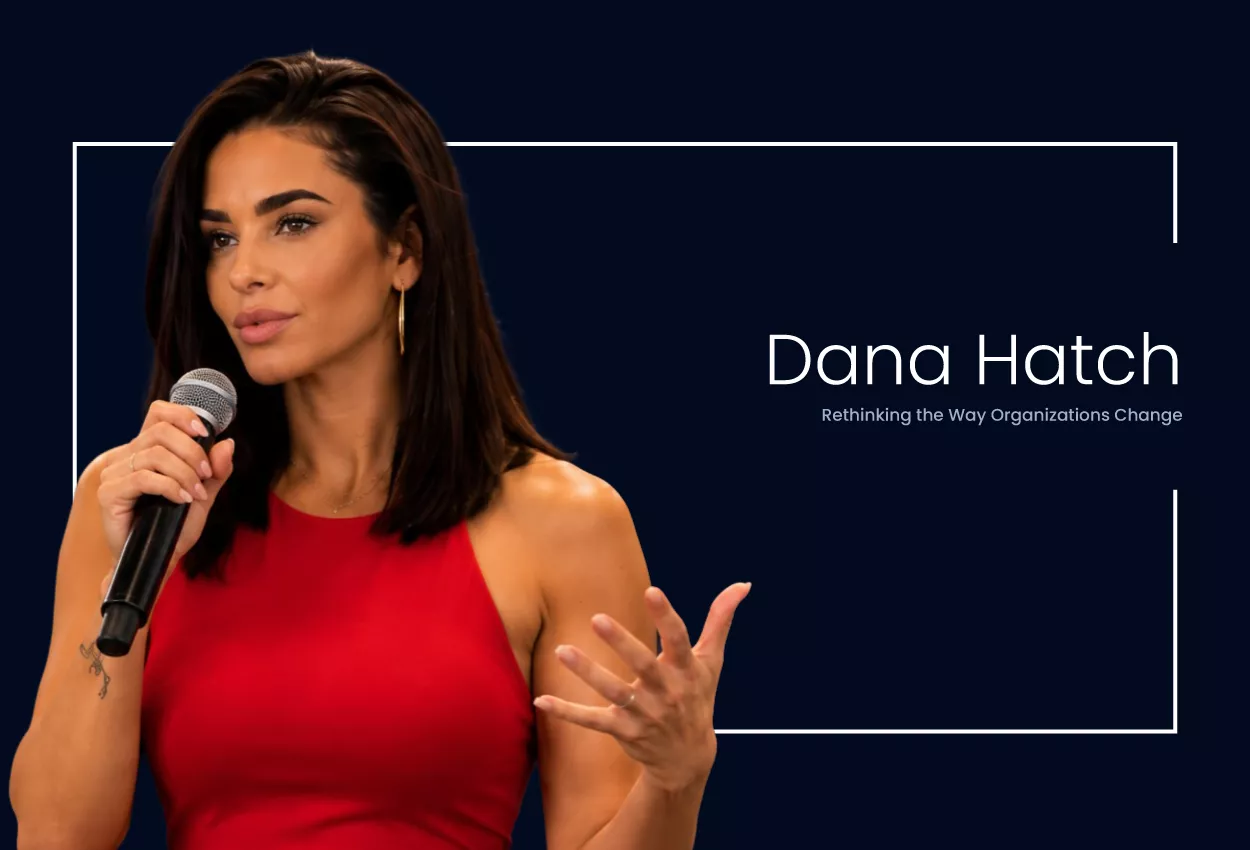
For Dana Hatch, that conversation has shaped an entire career. As the Founder & Principal Advisor of The Unfiltered Method™, she has dedicated her work to helping leaders uncover what is really happening inside their organizations. Drawing from executive coaching, neuroscience, organizational behavior, and operational strategy, she encourages businesses to look beyond surface-level symptoms and examine the deeper patterns influencing results.
The Birth of a Systems-Driven Approach
Dana’s evolution from executive coaching to organizational transformation began with a recurring observation: many leadership challenges were not individual problems but symptoms of broader organizational systems. While coaching could help leaders improve self-awareness, communication, and resilience, those improvements often struggled to take root within environments marked by unclear accountability, misaligned incentives, ineffective communication, or cultures that reinforced undesirable behaviors.
This realization shifted Dana’s focus toward the relationship between human behavior and business performance. She became increasingly interested in how leadership influences culture, how culture shapes execution, and how organizational structures either enable or hinder performance.
Dana also identified a significant gap in the market. Traditional consulting often emphasizes strategy and processes while overlooking the human factors that determine success. Executive coaching, meanwhile, can focus too narrowly on individuals without addressing the organizational conditions surrounding them. The Unfiltered Method™ emerged as a bridge between these disciplines, helping organizations understand that operational performance and human behavior are deeply interconnected. Today, Dana’s work focuses on uncovering what is happening beneath the surface of organizations and addressing challenges through leadership, culture, accountability, structure, and systems.
The Hidden Link Between People and Process
Dana believes organizations often struggle because they categorize problems too narrowly. Performance issues become process problems, conflict becomes a people problem, and turnover becomes a culture issue. In reality, organizations function as interconnected systems where people and processes constantly influence one another.
A well-designed process can fail if employees do not understand, trust, or feel accountable for it. Likewise, investments in culture and leadership development can produce limited results when people operate within inefficient workflows, unclear roles, or inconsistent expectations.
According to Dana, most organizational challenges are simultaneously people and process challenges. Addressing only one side often results in treating symptoms rather than root causes. Sustainable transformation requires examining the conditions within the system that are producing specific outcomes. By identifying patterns rather than isolated issues, organizations can create environments where people and processes reinforce one another to drive stronger performance.
When Growth Exposes the Cracks
One of Dana’s core philosophies is that growth acts as an amplifier rather than a creator of dysfunction. As organizations expand, previously manageable weaknesses become increasingly visible.
In smaller companies, informal communication, founder involvement, and strong individual contributors can compensate for structural weaknesses. As complexity grows, however, organizations often experience communication breakdowns, duplicated responsibilities, unclear accountability, leadership bottlenecks, and departmental silos.
Culture is another area where scaling exposes weaknesses. While culture may initially be transmitted organically through founders and early employees, growth requires organizations to intentionally define expectations, behaviors, and accountability. Dana views rapid growth as a valuable diagnostic opportunity, revealing where leadership structures, communication systems, and operating models have failed to evolve alongside the business.
From Operator to Architect
Dana sees one of the most difficult founder transitions as recognizing that the leadership style that built a company is not necessarily the one that will scale it.
Founders often succeed because of their deep involvement in decision-making and operations. Over time, however, this involvement can become a constraint. Many founders struggle with delegation because it feels like a loss of control or relevance. As a result, authority is only partially delegated, and employees continue relying on the founder for key decisions.
Dana emphasizes that scaling requires founders to move from being the center of the organization to designing systems that function effectively without their constant involvement. This means developing leaders, establishing clear decision-making authority, and allowing others to take ownership. Ultimately, founders must shift their focus toward vision, innovation, strategic relationships, and long-term growth. The transition from operator to architect, she believes, is one of the most critical shifts in leadership.
The Science Behind Sustainable Performance
Dana integrates neuroscience, human behavior, leadership, and operations because she believes understanding behavior provides deeper insight into organizational performance.
Rather than labeling employees as resistant, disengaged, or difficult, she encourages leaders to examine the conditions influencing those behaviors. Human beings continuously assess risk, uncertainty, and outcomes, shaping how they communicate, make decisions, and respond to challenges.
Dana argues that accountability should begin long before consequences are introduced. Clear expectations, adequate resources, timely feedback, and consistent standards all play a role in driving performance. She also emphasizes that culture is not defined by values statements but by repeated experiences, behaviors, and reinforcements within the organization.
Neuroscience further highlights the impact of workplace conditions on performance. While healthy challenges can stimulate growth and focus, chronic uncertainty and psychological threats can undermine judgment, creativity, and adaptability. For Dana, empathy and accountability are not opposing concepts; understanding behavior enables organizations to establish stronger expectations and more effective systems that support sustained high performance.
Why Great Strategies Fail in Execution
Dana believes most organizations do not struggle because they lack strategy. Instead, they struggle because strategy often becomes disconnected from the people responsible for execution.
A strategic vision must be translated into practical actions across departments, teams, and individual roles. Without clarity around ownership, priorities, decision-making authority, and performance measurement, strategy remains an idea rather than becoming operational reality.
One of the most common barriers Dana observes is competing priorities. When organizations attempt to prioritize everything, they effectively prioritize nothing. Employees become consumed by urgent issues while strategic objectives lose momentum.
She also highlights what she calls the “translation gap” between strategy and behavior. Organizations may promote innovation while punishing mistakes, advocate accountability while centralizing decisions, or encourage collaboration while rewarding competing objectives. In such situations, organizational systems inevitably override strategic intentions.
Dana stresses that execution depends on consistency, measurable outcomes, and behavioral alignment. True execution occurs when strategy guides thousands of everyday decisions, even when senior leadership is absent. For her, the ultimate test of strategy is not whether leaders can articulate it, but whether employees understand what it requires of them in the course of their daily work.
Designing Communication That Scales
Dana believes that as organizations grow, effective communication becomes less about volume and more about ensuring the right information reaches the right people with the appropriate context. She often observes companies attempting to solve communication challenges by increasing meetings, emails, and messaging channels, which frequently creates noise rather than clarity.
In smaller organizations, communication happens naturally through proximity and informal interactions. As companies scale, however, those informal systems become unreliable. Dana emphasizes the importance of intentionally designing communication architecture, establishing clarity around information flow, decision-making processes, escalation pathways, and reporting structures.
She also stresses the importance of leadership alignment. When employees receive conflicting messages from different leaders, trust quickly erodes. Leaders may not always agree privately, but once decisions are made, communication must be clear, consistent, and unified.
According to Dana, trust is strengthened when communication loops are closed. Employees who provide feedback need to understand what happened to their input, even when suggestions are not implemented. Ultimately, she believes the goal is not constant communication but reliable communication—creating systems that enable employees to make aligned decisions even when senior leadership is not present.
The Mirror of Transformation
Dana sees a defining difference between leaders who successfully guide transformation and those who unintentionally resist it. The most effective leaders are willing to be transformed themselves rather than expecting change to occur solely around them.
She notes that many leaders embrace change conceptually while continuing to operate with the same behaviors, habits, and decision-making patterns. Because leadership behavior is amplified throughout an organization, employees closely observe whether leaders truly embody the changes they advocate.
Dana believes transformational leadership requires deep self-awareness. Leaders must be willing to examine how their own actions may reinforce the very challenges they seek to eliminate. They must also distinguish discomfort from danger, recognizing that meaningful change naturally creates uncertainty and tension.
Consistency is another critical factor. Employees place greater trust in what leaders repeatedly do than in what they announce. For Dana, successful transformation occurs when leaders remain committed to the desired outcome while remaining flexible enough to adapt their approach. Leadership, she argues, is not separate from transformation—it is part of the system being transformed.
Culture Beyond Values on a Wall
Dana defines a healthy organizational culture as the alignment between what an organization claims to value, what leaders consistently model, and what the organization rewards, tolerates, and holds accountable.
She views culture as a system rather than a feeling. An organization can have strong relationships and positive energy yet still possess an unhealthy culture if expectations are unclear or poor behavior is repeatedly excused. Accountability, in her view, is not opposed to positive culture; it is one of the primary mechanisms that protects it.
As organizations scale, culture can no longer be maintained through daily interactions with founders and leadership teams. Growth requires intentionality. Expectations must be clearly defined, leaders must understand which behaviors are non-negotiable, and accountability must remain consistent regardless of position or influence.
Dana also emphasizes that alignment should not be confused with uniformity. Different departments naturally operate in different ways, but they should remain connected through a shared organizational identity. Ultimately, she believes culture is built through repetition. What leaders consistently model, reward, correct, and tolerate becomes the culture that shapes the organization.
When Strengths Become Limitations
Dana often observes that the behaviors limiting senior leaders are frequently the same behaviors that once drove their success. Rather than obvious weaknesses, leadership limitations are often strengths that have been overextended or applied in contexts where they no longer serve the organization.
A decisive leader may begin making decisions too quickly. A leader known for high standards may struggle to delegate. A founder who built a company by solving every problem may inadvertently create organizational dependency.
Under pressure, these tendencies often intensify. Stress pushes leaders toward familiar patterns, sometimes turning strengths into liabilities. Dana encourages executives to pay attention to recurring organizational challenges and areas where teams have become overly dependent on them, as these patterns often reveal leadership habits that need to evolve.
She believes executive growth requires more than learning new techniques. It often demands letting go of identities and behaviors that were once highly effective but are no longer sufficient for the next stage of leadership. True leadership maturity comes from knowing when to apply strengths, when to regulate them, and when the organization requires something different.
Leading Through an Uncertain Future
Looking ahead, Dana believes adaptability without reactivity will become one of the most important leadership capabilities. As technology advances, markets evolve, and uncertainty becomes a permanent feature of business, leaders will increasingly need to make decisions without complete information.
She argues that strong leaders do not need to predict the future perfectly. Instead, they must remain clear, intentional, and flexible when outcomes are uncertain. Since teams often mirror leadership behavior, reactive leaders create reactive organizations.
Dana expects self-awareness and emotional regulation to become essential business skills. Leaders must understand how pressure influences their thinking and recognize when fear, urgency, ego, or the desire for certainty begins driving decisions.
She also views critical thinking as increasingly valuable in an AI-driven world. As access to information expands, leadership differentiation will come from asking better questions and exercising sound judgment. Equally important is the ability to create clarity without pretending to possess certainty.
For Dana, the future belongs to organizations built on distributed leadership, where decision-making authority, trust, accountability, and psychological safety exist throughout the organization. The strongest leaders will be those capable of balancing confidence with humility, urgency with patience, and technological advancement with human judgment.
A New Vision for Organizational Transformation
Dana’s future outlook for The Unfiltered Method™ goes way beyond establishing a successful coaching and consultancy practice. What she wants to do is transform the very way that organizations understand the process of transformation.
Dana thinks that it is wrong to treat leadership, culture, human behavior, strategy, and operations as distinct fields because these concepts continuously influence each other, and any real transformation necessitates their integration. What Dana wants to achieve with her method is expand it further by systematizing all the frameworks, tools, assessments, and systems it uses so that they could be used on a bigger scale in organizations.
Additionally, she would like to challenge the conventional thinking about leadership that pits humans versus performance, empathy against accountability, or culture versus outcomes as contradictory factors. She sees that great organizations are those that are able to blend these contrasting priorities.
With technology and AI changing our workplaces, Dana thinks that it will be increasingly necessary to understand the workings of the human mind. Her ultimate dream is to create organizations that are highly human and highly performing. If The Unfiltered Method™ has any lasting influence on leadership, it would make leaders change their thinking from people fixing to systems designing for people and performance.