For decades, the story of computing has been written with the same language. Make chips smaller. Make them faster. Make them stronger. Then begin again. It became a cycle so familiar that few stopped to ask whether progress had quietly become imitation. The world celebrated every new nanometer conquered, every processor made thinner and quicker, yet beneath that achievement remained the same burden growing heavier with time, more heat, more energy, more pressure on a planet already carrying too much.
The real challenge was never how to perfect the electronic chip. It was whether someone would dare to imagine life beyond it. Whether someone would look at a system the world had accepted as permanent and say it could be redefined. That kind of vision does not come from comfort. It comes from obsession, from the refusal to settle, from the belief that invention must serve something greater than profit or applause.
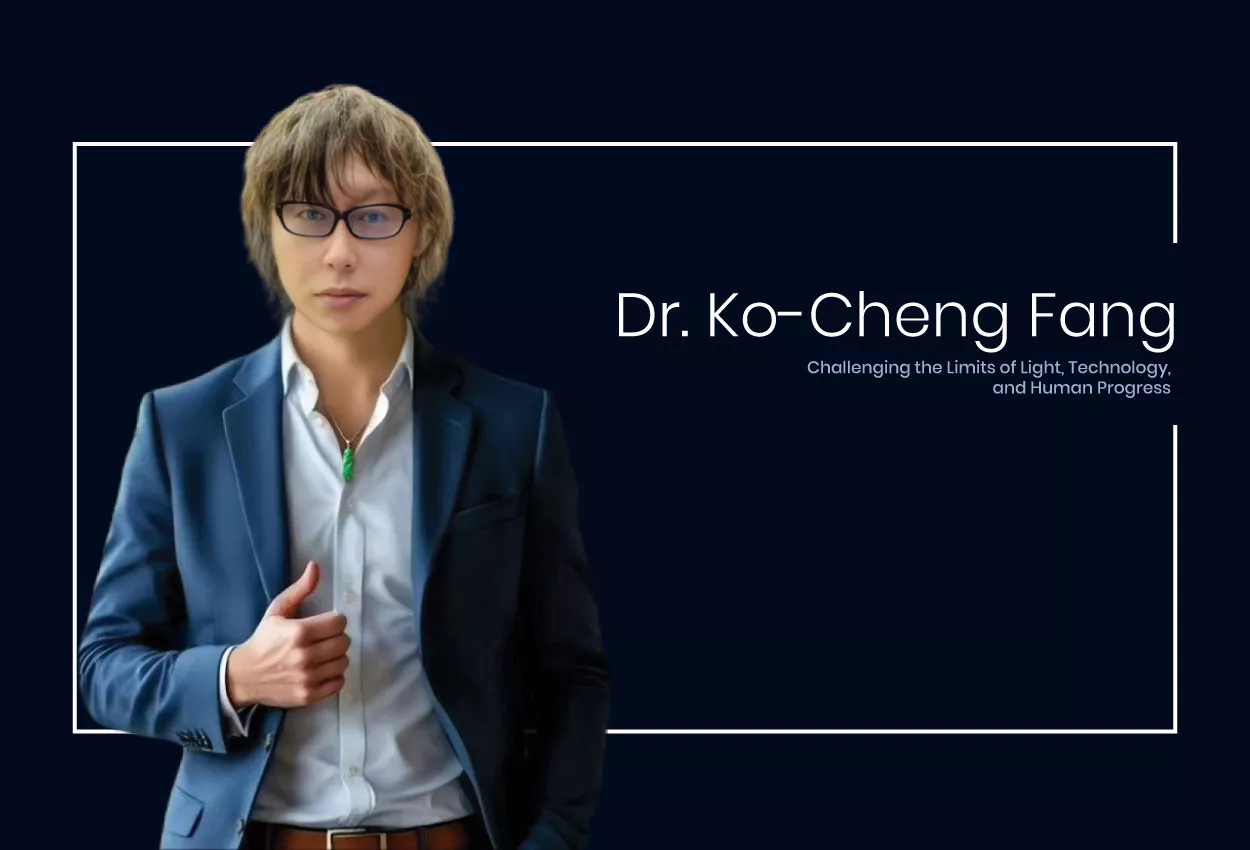
That belief defines Dr. Ko-Cheng Fang’s journey. As the founder of LongServing Technology, he has devoted his life to building what many considered impossible. Through the development of photonic quantum chips powered by his X Photon material, he is creating an alternative to traditional semiconductor systems, one designed not only for extraordinary speed, but for sustainability and survival. His work extends far beyond computing into laboratory-grown Imperial Green jadeite, biotechnology for cancer treatment, and advanced cloud security systems, each driven by the same principle that technology should leave the world better than it found it. What distinguishes him is not simply the scale of his ambition, but the courage to challenge accepted limits and prove that the future does not have to be built by repeating the past.
Passion as the Foundation of Discovery
For Dr. Fang, the true essence of work has always been passion. He believes that meaningful work is not driven by obligation, but by a deep internal calling. He often reflects on how figures like Bill Gates transformed a simple garage into a laboratory through passion alone, proving that devotion can turn ordinary spaces into centers of innovation.
He sees this same spirit in all forms of dedication, whether in invention, art, or even in the quiet persistence of an angler by the river. In contrast, he believes many people separate work from joy, assuming that labor must be painful while happiness belongs only to leisure. Dr. Fang rejects this idea entirely. To him, the greatest fulfillment comes after enduring difficulty.
This philosophy became especially real during his pursuit of laboratory grown jadeite. At the time, even global giants and advanced laboratories had failed to create Imperial Green jadeite in a controlled environment. Before him stood what seemed like an impossible challenge. Yet rather than accepting failure, he embraced thousands upon thousands of unsuccessful experiments until a single breakthrough finally emerged.
His love for jadeite runs deep, rooted in its cultural and historical significance. Once treasured by Empress Dowager Cixi and preserved in the National Palace Museum, the legendary Jadeite Cabbage became one of the greatest symbols of this gemstone’s rarity. Dr. Fang now plans to recreate this masterpiece using his own laboratory grown jadeite, turning history into innovation.
For him, every invention, whether in gemstones or photonic quantum chips, is sustained by the same belief: passion makes the impossible worth pursuing.
The Artist Behind the Scientist
Although widely recognized for his scientific achievements, Dr. Fang considers himself an artist at heart. His creative journey began in childhood, when he immersed himself in traditional Chinese gongbi flower and bird painting before moving into Western watercolor and oil painting. His home was filled with artistic influence, from plaster sculptures of Venus and David to shelves of art books and the unmistakable scent of mineral spirits in the air.
Painting and sculpture shaped not only his creativity but also his philosophy of life. He views life itself as a form of sculpture, where perfection is achieved not by adding more, but by removing what is unnecessary. Like carving stone into art, success requires eliminating excess, refining constantly, and shaping something valuable from what first appears rough and unfinished.
This same principle defines his approach to business, experimentation, and innovation. He believes progress is often a process of elimination, removing ninety nine failures to reveal one success. Experience then shortens the path, reducing future failures and improving decision making.
Dr. Fang applies this artistic discipline to science and technology. Whether designing materials, planning innovation, or navigating life itself, he follows the same method: preserve what matters, discard what does not, and allow clarity to emerge through refinement.
To him, creativity and logic are not opposites. They are partners.
Revolutionizing Computing with X Photon for a Sustainable Tomorrow
There came a moment when Dr. Fang realized his work was no longer simply about invention, but about shaping the future itself. He describes himself as a firefighter, someone who runs toward the crisis first and gathers the team afterward. Today, that crisis is the future of global computing and energy sustainability.
As artificial intelligence advances rapidly, he believes traditional electronic chips are approaching their physical and computational limits. More data centers are being built to support this demand, each consuming enormous amounts of electricity. In places like Taiwan, the energy burden of advanced semiconductor manufacturing has become impossible to ignore, with single 2 nanometer fabrication plants using power comparable to the total household electricity demand of eastern Taiwan.
For Dr. Fang, the solution lies in light.
Photons, as the fastest transmission medium known to humanity, offer the possibility of computation thousands of times faster than electronic chips while consuming far less energy. However, existing silicon photonics operates at wavelengths far too large for modern nanoscale chip architecture. Reaching chip level dimensions required a radical breakthrough.
His answer was the invention of X Photon, a new photonic quantum material capable of emitting light at a 2 nanometer wavelength. Through years of nanomaterial development and testing using Raman spectroscopy and X ray diffraction, he discovered a material that matched no known spectrum, a completely new creation. X Photon is regarded as having extraordinary breakthrough potential and is even considered to possess Nobel Prize-level scientific value.
This breakthrough allowed the development of a photonic gate system, where photons themselves could be controlled for data processing. Patent protection has already been secured across 26 major semiconductor nations, including the United States and the European Union.
Dr. Fang sees this not as a personal victory, but as a global responsibility. He believes photonic quantum chips are essential for reducing energy consumption, lowering carbon emissions, and enabling the next era of AI without environmental collapse.
World First: Revealing the Architecture of Photonic Computing
Recently, Dr. Ko-Cheng Fang unveiled for the very first time the 3D architectural diagram of his photonic chip, the photonic pathway design of the photonic chip, and a full-adder photonic chip structural demonstration. Compared to electronic chips that often require dozens of layers, photonic chips can achieve high-efficiency computation with only three layers. Combined with photonic memory, computational performance of the photonic chip can be increased by hundreds of thousands of times. Because light completes access at near-instantaneous speeds, its actual speed is difficult to measure accurately using traditional methods.
This breakthrough represents a computing technology capable of achieving performance at least tens of thousands of times greater than conventional systems and has already drawn global attention.
Innovating for a Better Future
Dr. Fang established LongServing Technology with the ambition of developing frontier technologies capable of leading the world. From the very beginning, his goal was not simply to participate in existing industries, but to solve challenges that shape the future of humanity. He focused on innovations that people now often take for granted, such as smartphone encryption systems and cloud based data technologies that allow seamless global connectivity.
His work also extended into rare materials like Imperial Green jadeite. As Myanmar introduced large scale mining bans on this precious resource, Dr. Fang and his team successfully recreated jadeite in the laboratory, transforming scarcity into scientific achievement.
When cancer emerged as one of the defining diseases of the century, LongServing immediately turned its attention toward biotechnology research. Using organic essential oils validated under dozens of European Union testing standards, the company began extracting bioactive plant compounds designed to inhibit and destroy cancer cells. Laboratory results already showed promising effectiveness, including against highly aggressive lung cancer cells.
Looking ahead, Dr. Fang plans to enhance this treatment through material modification and nanotechnology, improving penetration and delivering therapy directly into tumor cells through probe based injection. His vision is to suppress tumor growth and prevent metastasis without the need for invasive surgery.
All research and development to date has been funded entirely by his own capital. Now, he seeks more partners, stronger resources, and greater collaboration to accelerate the fight against one of humanity’s greatest medical challenges.
The Rise of Photonic Intelligence
Dr. Fang believes the world is standing at the edge of a major transformation shaped by artificial intelligence and robotics. While the AI revolution has already begun, he sees current systems as only the earliest stage of what is possible. Industrial robots exist, and self driving systems continue to develop, but true intelligent machines remain limited by one critical factor: computing power.
He argues that traditional semiconductor manufacturing has already reached its physical limits, making it impossible for conventional electronic chips to support the future of advanced robotics.
LongServing Technology is addressing this challenge by developing photonic quantum computing chips capable of operating at speeds more than at least one thousand times faster than current systems. These breakthroughs in materials science have already been validated within the company, and Dr. Fang believes the market is now ready for the next generation of intelligent machines.
He sees this era as the beginning of photonic quantum robots, where highly intelligent robots will move beyond factories and become essential companions in everyday life. From homes to construction sites, from rescue operations to industrial systems, robots will operate in connected teams, communicating through advanced networks and carrying out complex responsibilities with precision.
For Dr. Fang, this is not distant science fiction but the practical replication of future technology in the present.
Beyond Hype and Headlines
As both a founder and investor, Dr. Fang approaches innovation with discipline rather than emotion. He believes public attention has little real value if it is not supported by substance. In his view, science is a serious investment, and every investment must be managed within rational and strategic limits.
He values systems that allow innovation to grow responsibly, from early stage research supported by foundations and institutions to venture capital investment and eventual access to public markets. He sees this structure as essential for turning breakthrough ideas into sustainable enterprises.
Budget control, strategic outsourcing, partnership expansion, and timely engagement with capital markets are all part of his method. Rather than chasing short term momentum, he focuses on building technologies with long term value and ensuring that growth is supported by strong operational discipline.
He believes LongServing is moving steadily along the right path because every decision is guided by both scientific rigor and practical financial judgment.
Innovation Guided by Responsibility and Purpose
Dr. Fang believes that truly meaningful innovation is defined by its ability to transform human civilization and shape the future responsibly. In his view, history is marked by only a few inventions powerful enough to change the course of humanity. He points to the steam engine, which replaced animal power during the Industrial Revolution, aviation that made transcontinental travel possible, and computers that launched the digital age. Today, he sees artificial intelligence as the next major turning point.
However, he believes the future extends even further. For Dr. Fang, the era of fully intelligent robotics will be defined by photonic quantum systems, creating what he describes as the arrival of a new technological age. He sees countless scientists and inventors as the pillars carrying civilization forward, and believes that invention must always serve a larger purpose beyond profit or recognition.
To him, responsible innovation means building technologies that do not simply improve convenience, but fundamentally elevate humanity’s future.
Transforming Vision into Sustainable Innovation
When making high-impact decisions, Dr. Fang believes accurate judgment is essential. He sees innovation not only as a scientific process, but also as a strategic exercise that requires timing, observation, and the ability to read both technology and market realities clearly.
During the transition between electronic chips and photonic chips, he recognized that full-scale production of photonic chips through entirely new fabrication systems would be costly, time-consuming, and potentially delayed by industry resistance. Building a new fabrication facility could take years and require enormous capital, while also provoking competition from established semiconductor giants.
Instead of choosing direct competition, Dr. Fang favored cooperation. He adopted a dual track strategy where existing semiconductor foundries could continue operating electronic chip production while gradually integrating photonic processes. This approach allows for flexibility, cost efficiency, and a smoother market transition.
For him, balancing discipline with intuition means understanding when collaboration creates greater long-term success than confrontation.
Technology with Elegance and Human Meaning
Dr. Fang believes technology should not exist in isolation from beauty, design, and culture. While LongServing is widely recognized for scientific innovation and laboratory grown jadeite, he also sees the company expanding into the world of luxury and refined aesthetics.
He understands that international luxury brands often represent much more than products. Fine jewelry, fashion, handbags, and other luxury creations reflect artistic appreciation, craftsmanship, and emotional connection. This is an area where he believes the same dedication applied to science can also create extraordinary value.
To him, entering the luxury industry is simply another form of artistic expression. He hopes LongServing Technology will not only be known for advanced inventions, but also for embodying humanistic richness and cultural sophistication.
Dr. Fang sees no contradiction between science and elegance. Both require vision, discipline, and the pursuit of perfection.
Where Uncommon Minds Shape the Future
As both a leader and investor, Dr. Fang understands that true innovators are often misunderstood in the early stages of their work. He notes that people are quick to doubt what they cannot easily explain, especially when someone steps beyond conventional boundaries. Questions arise about how a person without formal medical training could work on anti-cancer treatments, or how someone outside the semiconductor industry could invent photonic quantum computing chips.
He believes that extraordinary innovation often comes from uncommon sources of inspiration. He reflects on Nikola Tesla, often called the Father of Alternating Current, who also described receiving ideas in ways that seemed beyond ordinary memory. Despite criticism, rejection, and public attacks, Tesla’s inventions helped shape the technological foundation of the modern world.
Dr. Fang sees such individuals as rare, often isolated, but ultimately necessary for human progress. He relates to that journey and values those who can think beyond accepted limitations.
His own early experiences in financial markets also shaped his perspective. In his twenties, he developed proprietary formulas that generated major success in stock trading, creating both wealth and confidence in his instincts. Today, he invests that same conviction into his own ventures, driven by long term purpose rather than short term validation.
Creating Progress That Belongs to Every Generation
Dr. Fang encourages teams to think beyond immediate results and focus instead on lasting societal value. He observes that many organizations prioritize imitation, reverse engineering existing ideas, making small modifications, and presenting them as innovation. While such strategies may bring quick returns, he believes they fail to create true progress.
For him, protecting inventors’ rights is not simply a legal matter but a responsibility to the future of technological advancement. This is why LongServing never engages in plagiarism. Original creation must be respected because invention itself is never easy.
While Taiwan’s semiconductor industry has developed national efforts around silicon photonics, LongServing has chosen a completely independent path by focusing on X photon based photonic quantum computing chips through original research and development.
Dr. Fang believes these achievements should benefit the broader industry, not create imbalance. This is why he supports helping semiconductor foundries transform their capabilities rather than using photonic technology to dominate the market and destabilize existing industries.
In his view, the responsibility of an inventor is not to destroy a generation for personal gain, but to contribute to an era and ensure progress is shared by all.
Taking Photonic Innovation from Taiwan to the World
Dr. Fang believes that one of the greatest challenges in scaling advanced technology from Taiwan to the global stage is overcoming skepticism before recognition. Unlike institutions such as Bell Labs or research teams backed by Harvard, LongServing Technology does not carry the immediate authority of a globally recognized name. It is a relatively unknown company, and this often leads people to question its capabilities before understanding the depth of its achievements.
However, once people examine the company’s technological results, they are often surprised by the scale and originality of its innovations. TSMC dominates Taiwan’s semiconductor landscape, making electronic chips the foundation of the country’s technological identity. In such an environment, independently pursuing photonic quantum chips is an exceptionally difficult path.
Access to laboratory equipment, whether through purchase or rental, can be limited by institutional bias, industry structures, and lack of visibility. Yet Dr. Fang sees equipment as only a secondary challenge. He believes the true advantage lies in materials science engineering. LongServing developed its materials independently and submitted them to neutral academic institutions for verification, ensuring that the results were supported by objective validation.
From funding strategy and research milestones to public disclosure and market readiness, every step was planned with precision. For Dr. Fang, products matter more than narratives. He believes facts will always prove themselves. When the time is right, he plans to publicly demonstrate a direct performance comparison between electronic chips and photonic quantum chips, allowing raw computing power to speak for itself.
Building Technology That Protects Humanity
As emerging technologies continue to reshape the relationship between humans, intelligence, and systems, Dr. Fang believes one principle must remain absolute: progress should never come at the cost of humanity. He believes innovation must serve people, not exploit them. Employees, communities, and society as a whole must be treated with dignity and respect.
For him, technological success without conscience carries no true value. He believes social responsibility should not be an afterthought, but something embedded at the earliest stage of research and development. The world being shaped today through invention is the same world future generations will inherit.
This belief directly guided his development of X photonic materials. Before focusing on speed or performance, he insisted that the materials must be non toxic, environmentally safe, and free from pollution. Only after meeting those standards did the company move forward with the development of 2 nanometer photonic materials.
The next question was scalability. Could these materials be produced at industrial scale without compromising safety or sustainability? Dr. Fang’s answer is yes. He explains that these photonic materials are fully mass producible, environmentally friendly, and non toxic, offering a clear contrast to many compound semiconductors currently used in the industry, such as gallium arsenide, gallium nitride, and indium phosphide.
For him, true progress is not measured only by speed or power, but by whether innovation leaves the world better than it found it.
The Human Responsibility of Inventors
Dr. Fang believes inventors and technology leaders carry a profound responsibility in an age of accelerated automation and rapid change. As machines become more intelligent and systems more autonomous, the human element must remain at the center of every decision.
He is heavily opposed to the notion that people should be phased out and discarded in order to achieve efficiency by itself. Rather, he views technology as an upliftment device, as something that is supposed to enrich the lives, build a stronger society, and a better future instead of enhancing inequality.
In his opinion, inventors need to go beyond product introductions or market triumphs. Each invention has an impact on the world, and along with that comes moral accountability. What could be termed as true success cannot be a breakthrough that hurts people or harms the environment, however lucrative it might be.
All areas of work of LongServing are manifested in this philosophy, in particular, in the creation of sustainable photonic materials. Dr. Fang feels that the role of leadership is not merely to speed up development, but the development must be human centered.
To him, innovation is not gauged by its pace of development, but rather its duty to humanity.
Turning Vision into a Global Photonic Future
Dr. Fang believes that iconic leadership is not a position, but a duty. To him, leadership involves taking photonic quantum chips to the practical markets so that technology makes a practical impact. He considers this a great step forward of the electronic age and he hopes that more innovators, investors, and builders will come with him and make a global photonic center in the future.
When Contribution Outlives Applause
Dr. Fang evaluates success based on long-term impact and not recognition. He hoped to be recognized when his cloud computing systems and programmable encryption technologies were taken up as security mechanisms, yet he was met with criticism and a lack of understanding. Nonetheless, he decided to keep on producing. Millions of people are enjoying these technologies today, and he is convinced that the contribution that will be remembered is what is important than being praised by people.
Where Courage Becomes Legacy
Dr. Fang hopes his legacy will encourage future innovators not to be afraid to be doubted and rejected. On his part, he feels that talent comes with a responsibility, and he should make use of it in order to serve the world. Similar to the example of Bill Gates, who opts to be innovative rather than conventional, he urges the upcoming generation to pursue unconventional ways and apply their talents in a meaningful way.