Most organisations spend their time responding to change. A smaller number attempt to anticipate it.
For institutions responsible for supporting government operations, that distinction matters. Technology cycles accelerate, citizen expectations evolve, and entirely new capabilities emerge within a matter of years. Yet public institutions are expected to remain stable, secure, and reliable while adapting to this constant movement. The challenge is not simply keeping pace with change, but building the capacity to evolve without losing continuity.
This challenge is shaping the current chapter of State Informatics Ltd (SIL). Having contributed to Mauritius’ digital development for more than three decades, the organisation is now undertaking a transformation designed to strengthen its capabilities in data, cybersecurity, artificial intelligence, talent development, and digital service delivery.
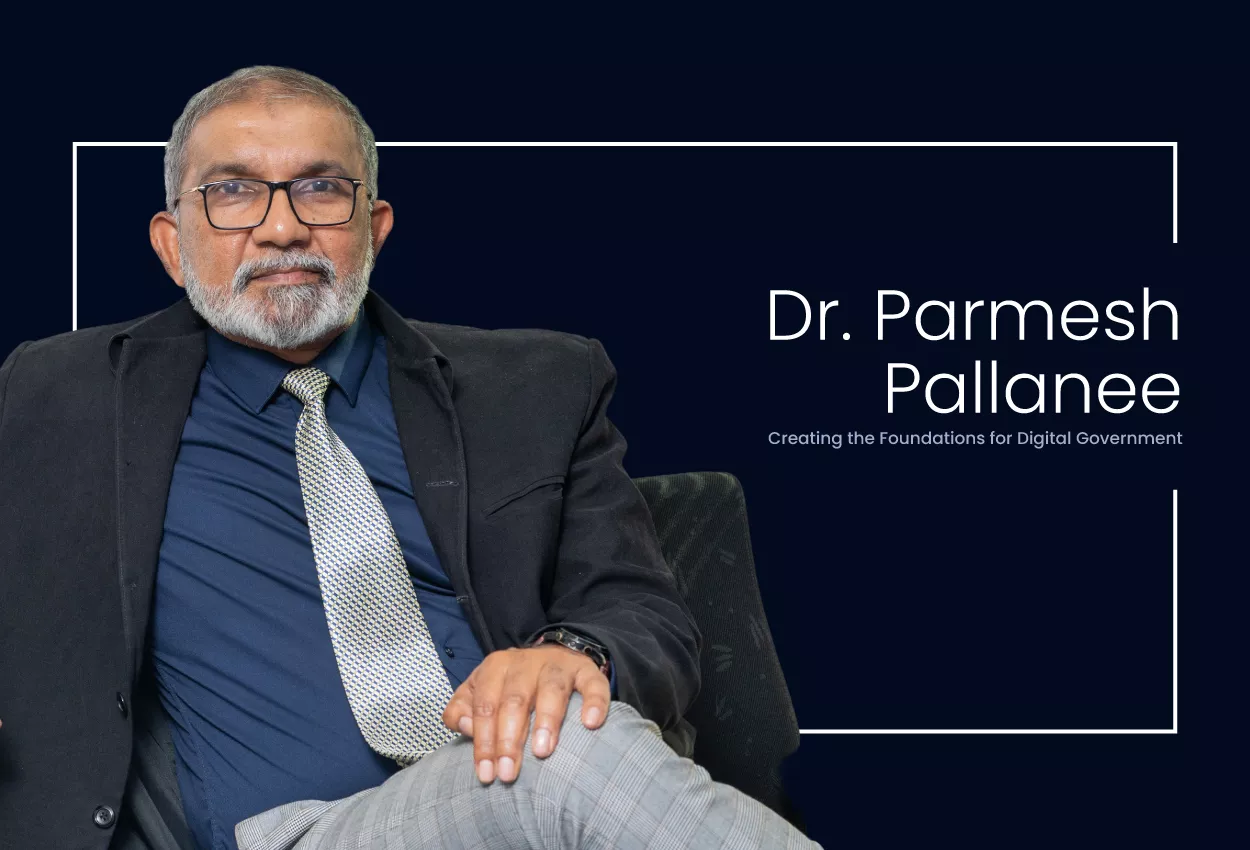
Guiding this evolution is Dr Parmesh Pallanee, whose focus extends beyond technology itself to the systems, people, and structures required to sustain long-term progress. In this feature, he discusses the priorities, lessons, and ambitions driving SIL’s transformation and its contribution to Mauritius’ digital future.
Leading the Next Chapter of Digital Transformation
As Managing Director of State Informatics Ltd (SIL), Dr. Pallanee views his role as both a privilege and a responsibility. Having served as a strategic technology partner to the Government of Mauritius for more than three decades, SIL occupies a unique position within the country’s digital ecosystem. His focus is on preserving this legacy while preparing the organisation for the next phase of national digital transformation.
To achieve this, SIL’s transformation agenda is built around five interconnected strategic pillars: organisational restructuring, technology modernisation, process re-engineering, talent development, and regional expansion. Together, these initiatives are shaping a more agile, data-centric, digitally oriented, and innovation-driven organisation.
For Dr. Pallanee, innovation and operational excellence are inseparable. While embracing emerging technologies is essential, sustainable progress depends on disciplined execution, strategic alignment, accountability, and measurable outcomes. He believes the true measure of technological advancement lies not in the volume of technology deployed, but in its ability to strengthen institutions, improve public services, and create long-term value for Mauritius.
Transforming SIL into a Strategic Digital Partner
Under the leadership of Dr. Pallanee, SIL is evolving from a traditional technology service provider into a strategic digital transformation partner capable of contributing to the architecture of Mauritius’ future digital economy.
With more than 35 years of experience in e-Governance, ERP, CRM, systems integration, and large-scale government platforms, SIL possesses deep institutional expertise. According to Dr. Pallanee, the opportunity now lies in combining this experience with emerging technologies, modern operating models, and a stronger emphasis on data.
As Mauritius advances toward its vision of becoming a Hi-Tech Intelligent Island, SIL is aligning its own transformation journey with national ambitions. This evolution extends beyond upgrading technology infrastructure; it involves reimagining how the organisation operates, manages information, engages with stakeholders, and creates value.
A key element of this vision is the transition toward a data-centric operating model. Government institutions generate vast volumes of information, often stored within separate systems. Dr. Pallanee sees SIL playing a pivotal role in enabling secure data aggregation and supporting the development of a Single Source of Truth across government. Such capabilities can pave the way for more intelligent decision-making, evidence-based governance, and citizen-centric public services.
The Human Side of Transformation
Among the most significant leadership lessons Dr. Pallanee has learned is that transformation is ultimately driven by people rather than technology.
While technology provides the tools and capabilities for change, its success depends on whether individuals embrace, sustain, and translate that change into meaningful outcomes. This understanding has shaped his leadership philosophy and approach to organisational transformation.
He also recognises that leadership often requires making decisions in environments where complete certainty is unavailable. Rapid technological change, evolving expectations, and emerging opportunities demand the ability to assess available information, understand risks, seek diverse perspectives, and make informed decisions with confidence while remaining adaptable when circumstances evolve.
For Dr. Pallanee, successful transformation cannot be designed in isolation. It requires collaboration among employees, clients, and stakeholders. This philosophy is reflected in SIL’s transformation roadmap, which actively incorporates the perspectives, experiences, and aspirations of both internal teams and external partners.
At its core, his leadership approach centres on creating clarity of purpose, fostering accountability, and empowering people to contribute to a shared vision.
Building a Citizen-Centric Digital Government
According to Dr. Pallanee, digital transformation within government should never be pursued solely for the sake of technology. Its ultimate objective is to improve the accessibility, quality, and efficiency of public services.
Drawing on SIL’s extensive experience across government institutions, he believes the organisation is uniquely positioned to support the development of a more integrated, data-driven, and citizen-focused digital ecosystem.
One of the most significant opportunities lies in addressing the fragmentation of information across government agencies. Through secure integration and responsible data aggregation, government institutions can reduce duplication, improve coordination, and enhance decision-making capabilities. The concept of a Single Source of Truth forms an important part of this strategic direction.
However, Dr. Pallanee emphasises that technology alone cannot deliver meaningful transformation. Understanding institutional processes, identifying operational improvements, and aligning services with citizen expectations are equally important. This is why SIL continues to strengthen its advisory and functional consulting capabilities alongside its technology and data expertise.
The goal is to create a digital public-sector ecosystem that is efficient for government institutions, intuitive for citizens, and secure by design.
Preparing Government for the Age of Artificial Intelligence
Artificial Intelligence represents one of the most significant technological shifts of the modern era, and Dr. Pallanee believes it has the potential to fundamentally transform government operations.
He envisions a future where systems move beyond processing transactions to analysing information, identifying patterns, supporting decision-making, and automating increasingly complex activities. Applications such as intelligent document processing, workflow automation, predictive analytics, and enhanced citizen services present considerable opportunities for public-sector innovation.
However, Dr. Pallanee stresses that AI is only as effective as the data that powers it. This reinforces SIL’s focus on data aggregation, data sovereignty, and the development of a Single Source of Truth. High-quality, well-governed data remains the foundation upon which meaningful AI capabilities can be built.
Equally important is the responsible adoption of AI. Government institutions carry significant obligations regarding privacy, security, transparency, and public trust. Recognising these responsibilities, SIL aims to play a leading role in enabling ethical and secure AI implementation.
A key component of this vision is the proposed establishment of the Centre of Excellence for Research and Innovation (CERI), which will serve as a dedicated environment for research, experimentation, and the development of innovative technology solutions. For Dr. Pallanee, the objective is not to adopt AI because it is fashionable, but to identify where it can create genuine public value and deploy it responsibly at scale.
Aligning Innovation with Execution
Managing large-scale government technology initiatives requires careful coordination among numerous stakeholders, each with distinct priorities and expectations. For Dr. Pallanee, successful transformation begins by focusing on strategic objectives rather than technology itself.
His approach centres on understanding the institutional challenge, defining the desired outcome, identifying user needs, and determining the value that should ultimately be delivered to citizens. This perspective ensures that technology serves a clear purpose rather than becoming an end in itself.
Process re-engineering plays a critical role in this approach. Dr. Pallanee believes that digitising an inefficient process does not automatically make it efficient. Instead, existing workflows must be examined, challenged, and redesigned to ensure they are suitable for a modern digital environment.
Strong governance structures, clearly defined responsibilities, disciplined project management, and continuous stakeholder engagement provide the framework needed to translate vision into reality. In his view, successful transformation occurs when innovation is firmly aligned with institutional priorities and delivered through solutions that are practical, sustainable, and measurable.
Through this balanced approach, Dr. Pallanee continues to guide SIL’s evolution as a key enabler of Mauritius’ digital future while ensuring that innovation remains grounded in purpose, accountability, and public value.
Building Digital Trust Through Cyber Resilience
For Dr. Pallanee, cybersecurity has evolved far beyond a traditional IT function. In an increasingly interconnected digital landscape, he views it as a critical pillar of national resilience, economic security, and public trust.
As government services become more digitised, protecting sensitive information and critical infrastructure has become fundamental to maintaining confidence in public institutions. This belief has shaped SIL’s approach to digital transformation, ensuring that security is embedded throughout the architecture and lifecycle of every digital initiative.
To strengthen national cyber resilience, SIL’s roadmap includes the development of enhanced cybersecurity capabilities, most notably through the proposed establishment of a Cyber Security Centre of Excellence. This initiative is envisioned as a hub for cybersecurity specialists, ethical hacking expertise, and strategic collaboration with local and international academic institutions.
According to Dr. Pallanee, the objective extends beyond responding to cyber threats. SIL aims to develop the capability to anticipate emerging risks, continuously strengthen expertise, and contribute to a more secure and resilient national digital environment. Given the constantly evolving threat landscape, he believes cybersecurity must be supported by a combination of technology, skills development, intelligence, awareness, and strategic partnerships.
Ultimately, Dr. Pallanee maintains that digital transformation can only succeed when it is built upon a foundation of digital trust.
Creating a Culture That Embraces Change
While technology often receives the most attention during transformation initiatives, Dr. Pallanee believes lasting innovation begins with mindset and culture.
He argues that organisations cannot successfully modernise their technology without simultaneously transforming the way people think and work. If SIL is to support government institutions in becoming more digitally oriented, the organisation must first embody those principles itself.
This philosophy is reflected in SIL’s transformation roadmap, which envisions the organisation evolving into a fully digital enterprise where innovation and digital thinking are embedded across operations, culture, and decision-making processes.
To achieve this, employees are encouraged to challenge established practices, embrace new approaches, and continuously expand their capabilities. Innovation is also being institutionalised through the proposed Centre of Excellence for Research and Innovation, which will serve as a platform for research, experimentation, knowledge creation, and collaboration with academia and industry.
At the same time, Dr. Pallanee emphasises that innovation must be accompanied by accountability. He believes employees should feel empowered to challenge conventional thinking and explore new ideas while taking ownership of outcomes and performance. In his view, a true culture of innovation is one where individuals are trusted to contribute, expected to deliver results, and encouraged to continuously improve.
Investing in the Leaders of Tomorrow
For Dr. Pallanee, the success of SIL’s transformation ultimately depends on its people. Talent development therefore remains one of the five foundational pillars of the organisation’s strategic roadmap.
When identifying future leaders, he looks beyond technical expertise alone. The qualities he values most include curiosity, integrity, adaptability, resilience, and a genuine commitment to lifelong learning. In a rapidly evolving technology landscape, he believes the ability to continuously learn, unlearn, and reinvent oneself is often more valuable than any individual technical skill.
SIL’s transformation strategy places significant emphasis on attracting, developing, and retaining specialists in disciplines expected to shape the future of digital transformation. These include data engineering, data architecture, machine learning, business analysis, functional consulting, and cybersecurity.
The organisation is also strengthening relationships with universities and research institutions to create stronger pathways between academia and industry. Through these partnerships, SIL aims to build a sustainable pipeline of highly skilled professionals equipped to meet the demands of the digital economy.
Rather than focusing solely on current workforce requirements, Dr. Pallanee sees talent development as a long-term investment in the capabilities that will define SIL’s future success.
Positioning Mauritius as a Source of Digital Expertise
Looking beyond national borders, Dr. Pallanee believes Africa represents one of the most significant growth opportunities for both SIL and Mauritius as a whole.
He sees Mauritius as uniquely positioned to contribute to the continent’s digital transformation efforts, combining extensive digital expertise with a strategic geographical location and the ability to operate effectively across both English- and French-speaking markets.
Building on SIL’s existing regional experience and strategic partnerships, the organisation’s roadmap includes plans to further strengthen its presence across Africa through targeted collaborations and regional initiatives.
According to Dr. Pallanee, the opportunities extend well beyond traditional IT services. Areas such as digital public infrastructure, digital identity, interoperable government platforms, FinTech, RegTech, AgriTech, and cross-border digital services all present significant potential for growth and innovation.
His vision is clear: Mauritius should not merely adopt technology developed elsewhere but should increasingly establish itself as a recognised source of digital expertise, innovation, and transformation across the African continent.
Preparing for the Next Wave of Public-Sector Innovation
Looking ahead, Dr. Pallanee believes the next five years will be shaped by the convergence of several transformative technologies, including Artificial Intelligence, advanced data platforms, cloud computing, automation, digital identity systems, interoperability frameworks, and cybersecurity.
While AI is expected to play a central role in this evolution, he emphasises that its effectiveness will depend largely on the maturity of digital infrastructure and, most importantly, the quality and governance of data.
He anticipates that public-sector institutions will increasingly operate within intelligent digital ecosystems where information can be securely integrated, analysed, and transformed into actionable insights. Such developments have the potential to fundamentally reshape decision-making processes, service delivery models, and citizen engagement.
To prepare for this future, SIL is pursuing a comprehensive transformation strategy that includes technology modernisation, process re-engineering, enhanced data capabilities, cybersecurity investments, talent development, and dedicated structures for research and innovation.
Dr. Pallanee also highlights the importance of proactively addressing technological obsolescence. Legacy systems, he notes, can hinder scalability, innovation, and security, making technology lifecycle management a critical component of long-term organisational resilience.
In his view, the organisations that thrive in the coming decade will not necessarily be those with the most advanced technology, but those with the institutional capacity to continuously adapt, innovate, and transform. That capability, he believes, is precisely what SIL is building today.
A Legacy of Transformation and Lasting Impact
Thinking about his leadership journey, Dr. Pallanee feels that any great leader should not be judged based on achievements but rather on the legacy one leaves behind.
For him, the legacy should be seen when SIL comes out of its current transformation journey as a stronger, agile, innovative, and influential organisation in the region. Besides remaining a respected strategic partner of the Government of Mauritius, he also dreams of making SIL a respected leader in digital transformation in Africa.
Nonetheless, for Dr. Pallanee, legacy is not limited to technology platforms or project success. Legacy can also be seen in terms of talent development, capability building, culture building and instilling confidence in the next generation of leaders.
Dr. Pallanee feels that contributing to the growth of Mauritius through creating a more integrated, data-driven and intelligent public sector and at the same time developing capabilities which could be exported to other parts of Africa would be a great legacy he could leave for the next generation of leaders in the country.
For aspiring leaders, Dr. Pallanee advocates curiosity, courage, and purpose-driven leadership. He encourages future innovators to challenge conventional thinking, remain adaptable in the face of rapid technological change, and never lose sight of the values that underpin effective leadership.
While technology will continue to evolve, he believes qualities such as integrity, accountability, resilience, and the ability to unite people around a common vision will remain timeless. Technology may be an enabler, but leadership, according to Dr. Pallanee, is what transforms capability into meaningful and lasting impact.