Money has always been more than numbers on a screen or notes in a wallet. It is trust exchanged in motion, confidence carried from one hand to another, and systems quietly working in the background so that daily life can move forward. When those systems falter, people adapt quickly, finding new paths to pay, save, and transact. Moments of disruption do not pause economic life; they reshape it, demanding financial models that are faster, clearer, and built around real human behavior rather than rigid structures.
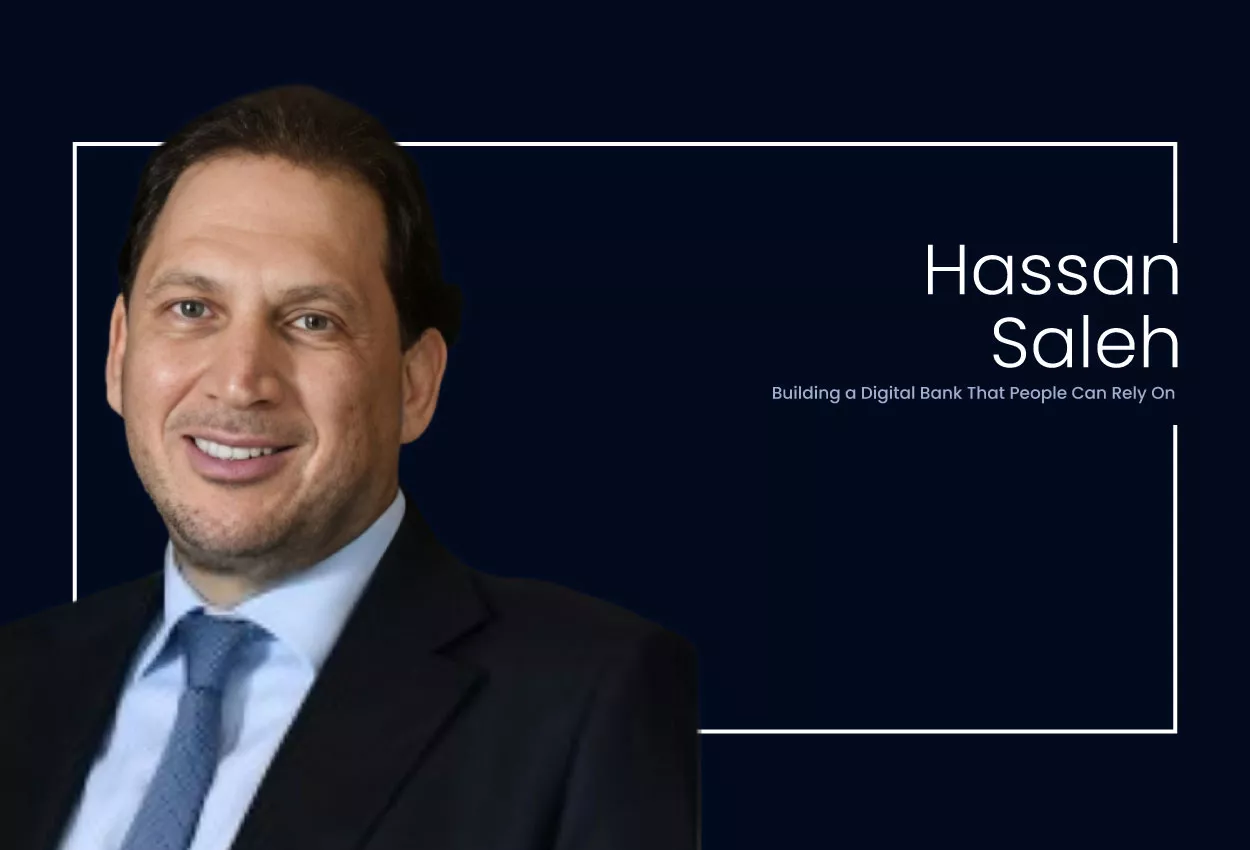
Against this backdrop stands Hassan Saleh, CEO of neo Digital Bank, whose leadership and vision have set both him and the bank apart. Long before the crisis forced change, Mr. Saleh championed a fully digital banking model designed with purpose, discipline, and longevity.
A Vision That Preceded the Crisis
The creation of neo Digital Bank was not a reactionary response to the crisis but the outcome of a vision shaped well before Lebanon’s financial collapse. Mr. Saleh explains that the idea of a fully digital bank was already embedded in Bank Audi’s broader digital evolution, driven by a global shift toward technology-led banking and the institution’s long-standing commitment to innovation. In many ways, neo was inevitable. Had circumstances been different, it would have launched earlier.
However, neo ultimately emerged at a decisive moment in Lebanon’s history. The country had become largely cash-based, with daily financial activity increasingly dependent on money transfer operators rather than formal banking channels. Economic disruption had intensified following the COVID-19 pandemic, and traditional banking models were under extreme strain. The financial sector was not merely under pressure; it was being reshaped in real time.
At that moment of uncertainty, Mr. Saleh and his team made a deliberate choice. Rather than retreating or waiting for stability to return, they chose to lead. The belief was clear. Banking would not disappear, but it would fundamentally evolve. No economy, regardless of circumstance, can function sustainably without a trusted financial system. neo was conceived as an answer to that reality.
Choosing Innovation Over Retreat
Mr. Saleh describes the launch of neo as a conscious decision to avoid standing still while the industry transformed. Digitalization and innovation became the pillars of a new approach to banking. The objective was not simply to digitize existing processes but to rethink the role of a bank altogether.
By investing in modern technology, user-centric design, and new business models, neo set out to redefine what banking could look like in Lebanon. The ambition went beyond transactions. The goal was to create a platform grounded in transparency, speed, and accessibility for both individuals and businesses.
At a time when trust in financial institutions had been severely eroded, there was a clear need for a regulated digital banking alternative. neo was designed to restore structure and reliability to daily financial services. Customers could open accounts, make payments, manage cards, and access lending entirely through their mobile phones.
The experience was built to remove friction. Branch dependency was reduced. Costs were lowered. Banking was reshaped to align with how people live and work today. Meanwhile, the role of physical branches was refocused toward serving businesses and high-net-worth individuals who require personalized advisory services.
Balancing Heritage with Digital First Thinking
Leading Lebanon’s first fully digital bank came with unique leadership challenges. Mr. Saleh emphasizes that digital banking and traditional banking are not opposing models. Instead, they are complementary.
Digital banks are ideally suited for daily financial needs, such as payments, spending, and money management. Traditional banks continue to play a critical role in complex products, long-term financial decisions, and corporate banking, where relationships and advisory remain essential.
The real challenge lies in creating synergy between physical and digital channels. Mr. Saleh’s focus has been on ensuring both models work together to drive sustainable growth rather than competing internally.
Built as a Digital Bank from Day One
neo’s positioning in the regional and global digital banking landscape is rooted in how it was built. Mr. Saleh explains that neo was conceived from the outset as a fully separate digital bank with its own brand, dedicated support teams, and a modern technology stack designed bottom up to support agility and scale.
This approach mirrors leading global digital banks such as Openbank, which was launched by Santander as an independent digital entity, as well as global players like Revolut. Regionally, similar models have been adopted by digital banks such as Wio.
neo differs fundamentally from traditional banks that enhance existing mobile applications. It is not an incremental upgrade. It is a fully digital first bank designed end-to-end to deliver superior user experience, faster time to market, and scalable growth, while still benefiting from the strength and trust of a licensed banking institution.
Three Anchors in a Time of Turbulence
Launching neo during a period of profound economic and institutional stress required clarity and discipline. Mr. Saleh outlines three strategic principles that guided every decision.
The first was clarity of purpose. Despite the crisis, essential financial services do not disappear. Payments, salaries, and daily transactions continue even in difficult economies. neo was designed to support these everyday financial needs with transparency, speed, and trust.
The second principle was talent preservation and capability building. While much of the banking sector was downsizing, Mr. Saleh saw an opportunity to retain talent and invest in digital skills. neo became a platform not only for customers but for repositioning the institution toward the future.
The third principle was disciplined innovation. Innovation was pursued rigorously, without compromising the core pillars of banking such as governance, compliance, cybersecurity, and risk management. Digital onboarding and instant transactions were introduced while maintaining strict controls.
These principles allowed neo to move forward decisively at a time when hesitation was widespread.
Trust Built Through Consistency and Relevance
Customer experience lies at the heart of neo’s value proposition. Mr. Saleh explains that trust in digital banking is rebuilt through consistency, technological reliability, and relevance.
Customers are not seeking novelty for its own sake. They want solutions that simplify daily life. neo focuses on delivering stable technology and products that align with real moments, getting paid, making payments, managing multi-currency balances, and accessing credit.
When the platform performs reliably and addresses genuine needs, confidence follows. Over time, this reliability transforms convenience into trust, and trust into long-term relationships.
An Integrated Digital Experience
What resonates most with neo’s customers is the integrated nature of the experience. Instead of fragmented services, neo brings accounts, payments, cards, and financing together in a single application.
Customers can open and manage multi-currency accounts, send and receive funds, spend locally or internationally using one card that automatically pays in the local currency, and access financing options such as personal loans, car loans, salary advances, and credit cards.
The appeal lies in simplicity. Tasks that once required multiple branch visits can now be completed digitally, efficiently, and from anywhere.
Designing for First-Time Digital Users
Ensuring accessibility for users new to digital banking requires constant attention. Mr. Saleh explains that every customer journey is tested on first-time users. Feedback and behavioral data are monitored continuously.
The product is refined based on actual usage rather than assumptions. Simplicity, clarity, and continuous iteration are central to making digital banking inclusive and intuitive.
Lessons Carried Forward
With over three decades in banking, Mr. Saleh has witnessed the evolution of retail banking firsthand. Physical presence is no longer the defining factor. Relevance and experience now matter more.
What remains unchanged is the importance of governance, customer protection, and financial discipline. What must evolve is how banks engage with customers, listen to their needs, and adapt products accordingly. The future belongs to institutions that combine strong foundations with a product-driven mindset.
Innovation as an Ongoing Journey
neo’s development does not stop at launch. Mr. Saleh describes digital banking as a continuous journey of iteration under real-world pressure. The team is exploring ways to integrate neo more deeply into daily economic life through payments, services, and partnerships.
Ecosystem collaborations are being explored across retail, education, and commerce. The ambition is not just to add features but to become embedded in how people and businesses operate every day.
Growth That Respects the Rules
Regional expansion has reinforced the importance of modular platforms and agile teams. Mr. Saleh highlights that true scalability depends on flexibility combined with full compliance. Speed without governance creates risk. Governance without speed stifles growth.
neo was designed to balance both.
Designing Speed with Safeguards
Risk management is not treated as a final checkpoint. Risk teams are involved from the beginning of product design. This allows business and product teams to move faster within clear boundaries.
For Mr. Saleh, speed without control is dangerous, and control without speed is ineffective. The balance is achieved through intentional design.
Leading Cultural Change
Cultural transformation, Mr. Saleh explains, begins with clarity. People resist change not because of technology but because the purpose is unclear or change feels imposed.
When teams understand why change is necessary and how it benefits customers and employees, adoption follows naturally.
Supporting SMEs Beyond Credit
Mr. Saleh believes digital banks can play a vital role in supporting small and medium enterprises beyond lending. SMEs need infrastructure before financing.
neo supports SMEs by helping digitize payments, collections, and settlements, reducing reliance on cash and high-cost card transactions. By integrating banking systems with suppliers, customers, and marketplaces, SMEs gain visibility, traceability, and improved cash flow management.
This creates a credible financial footprint that enables sustainable growth and future access to financing.
A Digital Bank Designed for the Long Run
Finally, Mr. Saleh emphasizes that neo’s success is not measured solely by market share or user numbers. The global fintech industry has moved beyond growth at all costs.
Profitability, continuity, and long-term sustainability now define success. neo was designed from the outset with disciplined economics, scalable technology, and diversified revenue streams.
The goal is clear. Build a durable digital bank that can thrive over the long term, delivering value not just through scale, but through resilience and trust.