Technology once lived quietly in server rooms, measured by uptime reports, maintenance schedules, and systems that performed best when nobody noticed them. Today, it influences how companies make decisions, create products, engage customers, and discover new opportunities. Cloud platforms, artificial intelligence, and data have shifted technology from a supporting function to a source of business momentum. Yet the greatest challenge is rarely the technology itself. The real challenge lies in translating technical capability into tangible results, ensuring that innovation creates measurable value rather than simply adding another layer of complexity.
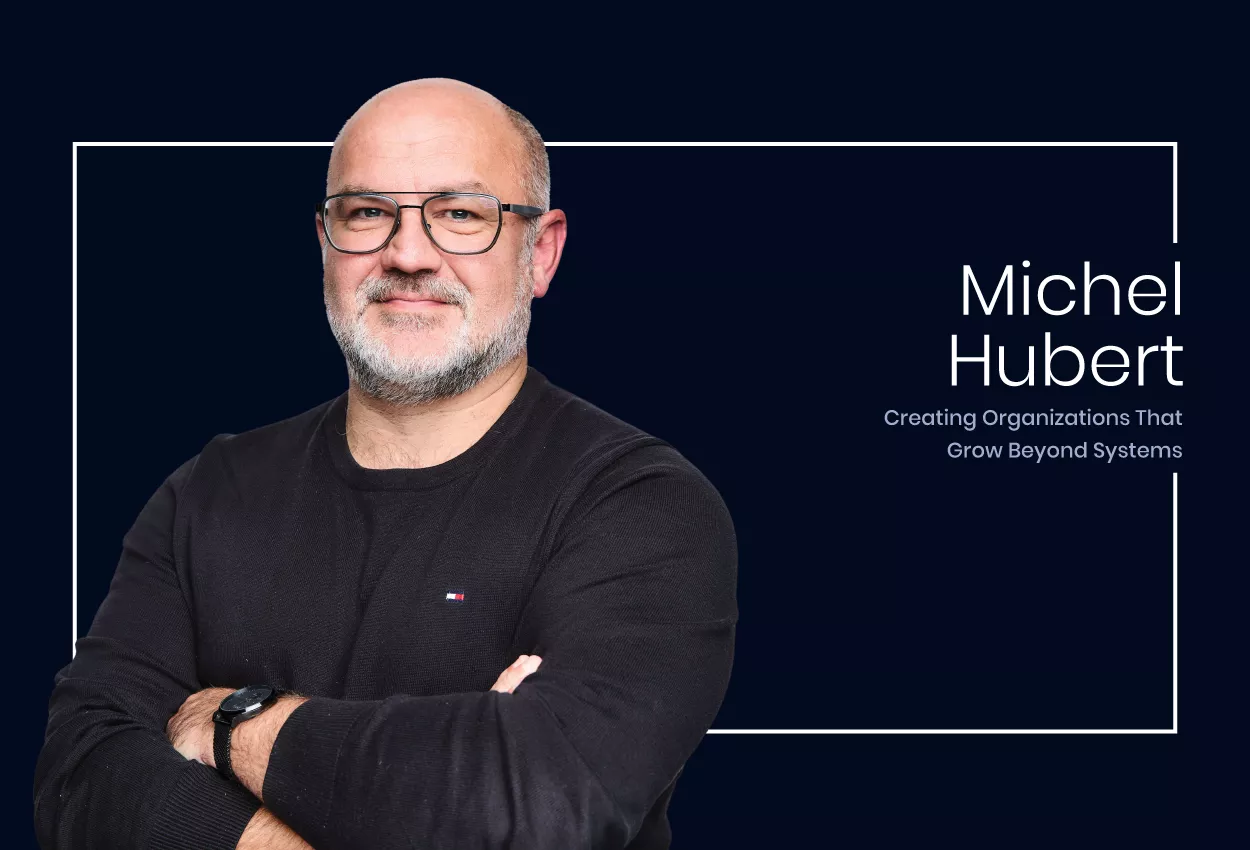
Michel Hubert has dedicated his career to closing this gap between technological possibility and business impact. He helps organizations transform cloud, artificial intelligence, and modern technology practices into practical business outcomes. Through his work in cloud strategy, enterprise transformation, governance, DevOps, and AI adoption, he encourages organizations to build systems that are simpler, more sustainable, and closely aligned with business objectives.
The Pursuit of Measurable Cloud Value
For Michel, cloud transformation is meaningful only when it delivers measurable business outcomes. His focus extends far beyond technical migration projects. He believes that many organizations have completed their cloud journeys in principle, but still struggle to identify the actual value generated by those investments. His role centers on bridging that gap by ensuring that technology decisions directly contribute to business performance.
One of Michel’s primary priorities is aligning Azure adoption with business objectives. He emphasizes that technology should never be implemented simply because it exists. Every initiative begins with clear questions regarding the desired business outcome, the metrics for success, and the most efficient technical approach to achieve those goals. This approach reduces unnecessary investments, improves prioritization, and creates stronger collaboration between business and IT teams. For mature organizations, this evolves into continuous portfolio management that evaluates the business contribution of every Azure investment.
Building Foundations That Scale
Michel strongly advocates for transforming experience into repeatable value. Having encountered similar architectural challenges across numerous engagements, he focuses on converting practical knowledge into reusable accelerators such as reference architectures, Infrastructure as Code modules, governance frameworks, and solution patterns.
These reusable assets significantly reduce project startup times, minimize delivery risks, and lower long-term ownership costs. More importantly, they are designed to empower client teams rather than create dependence on external consultants. By making best practices accessible and transferable, organizations can accelerate innovation while maintaining consistency and quality.
Financial Accountability from the Beginning
For Michel, FinOps is not an activity reserved for cost correction after problems arise. Financial accountability must be embedded into every stage of cloud adoption. He integrates cost considerations into architecture decisions, governance models, operational reviews, and team responsibilities.
Organizations that embrace this approach often achieve substantial cost optimization, but Michel believes the true benefit lies in gaining predictability and transparency. Businesses become capable of making informed investment decisions and understanding when increased spending delivers proportionally greater value. Financial intelligence, in his view, becomes a strategic advantage rather than merely a budgeting exercise.
Creating Confident and Independent Clients
A defining aspect of Michel’s leadership philosophy is client autonomy. He measures success not by the duration of consulting engagements but by the confidence clients develop in operating independently.
Knowledge transfer is embedded throughout every project, accompanied by structured capability development, progressive handovers, and practical documentation that remains valuable after delivery is complete. Michel believes that organizations that feel empowered become long-term partners who return voluntarily for future innovation initiatives. Trust, rather than dependency, forms the foundation of sustainable partnerships.
Azure as the New Engine of Innovation
Michel views Azure as having evolved far beyond its original role as an infrastructure platform. Today, it functions as a unified innovation ecosystem where artificial intelligence, data, security, development tools, and productivity platforms work together seamlessly.
He observes that the distinction between infrastructure and intelligence has largely disappeared. Solutions that once required complex integrations and specialized expertise can now be developed rapidly through integrated services such as Azure AI capabilities, data platforms, and modern development tools. This acceleration fundamentally changes how organizations approach experimentation and innovation.
The reduction in technical barriers allows businesses to move from concepts to prototypes within days and from prototypes to production within weeks. As a result, experimentation becomes an ongoing practice rather than an occasional strategic initiative. Organizations that achieve the greatest value from Azure are those that use it as an innovation platform instead of merely a hosting environment.
Faster Decisions and Broader Innovation
According to Michel, Azure’s evolution has created three significant shifts for organizations.
The first is speed. Businesses can move rapidly from ideas to implementation because technical friction has been substantially reduced. The challenge is no longer whether a solution can be built but whether it should be built and how quickly its value can be validated.
The second shift is democratized innovation. Capabilities once reserved for highly specialized technical teams are now accessible to business users through managed services, low code platforms, and integrated AI tools. Innovation is increasingly distributed throughout the organization rather than confined to the IT department.
The third shift is unified governance. Azure enables organizations to manage security, compliance, costs, data policies, and responsible AI practices through a consolidated control framework. This is especially important for organizations operating within increasingly complex regulatory environments.
Closing the Operating Model Gap
While technology capabilities continue to advance rapidly, Michel believes the greatest challenge facing organizations is not technical adoption but organizational readiness. The pace of innovation often exceeds the ability of businesses to absorb and govern new capabilities responsibly.
This gap appears through uncontrolled experimentation, inconsistent technology choices, rising costs, governance issues, and security concerns. Michel emphasizes the need for strong operating models that balance speed with responsibility.
His approach focuses on building internal developer platforms, establishing effective governance processes, implementing continuous financial management practices, and developing responsible AI frameworks. Equally important is cultivating organizational cultures that can make decisions quickly, learn from experimentation, and innovate confidently within well-defined guardrails.
For Michel, the future of Azure is not simply about technology advancement. It is about helping organizations develop the capabilities, structures, and confidence necessary to transform innovation into sustainable business value.
Architectures That Stand the Test of Time
Michel firmly believes that simplicity is the foundation of resilient and sustainable architecture. In today’s technology landscape, where organizations have access to numerous platforms, services, and frameworks, complexity often becomes the greatest obstacle to innovation and operational efficiency.
For Michel, the KISS principle is not about doing less but about making disciplined choices. He advocates for selecting technologies that teams can understand, maintain, and support over time. Standardized platforms, consistent practices, and straightforward architectures allow organizations to focus their energy on innovation, customer value, and business growth rather than managing unnecessary complexity.
He also believes that artificial intelligence makes simplicity even more important. Since AI solutions already introduce inherent complexity, organizations should avoid adding additional layers that do not create clear value. According to Michel, the best architectures are those that remain understandable, maintainable, and effective years after they are built.
Lessons Beyond Technology
Throughout his career in modernization, enterprise architecture, cloud adoption, and digital transformation, Michel has learned that technology itself is rarely the biggest challenge. Success often depends on people, organizational alignment, and the ability to manage change effectively.
He emphasizes the importance of listening before offering solutions, understanding each organization’s unique culture and challenges, and building trust among stakeholders. Michel also views transformation as a continuous journey rather than a project with a fixed end date. Organizations that embrace constant learning and adaptation gain a lasting competitive advantage.
Another important lesson for Michel is the value of humility. He believes strong leadership comes from encouraging diverse perspectives, remaining open to new ideas, and creating environments where teams can collectively make better decisions.
A Longstanding Connection with Azure
Michel’s relationship with Azure began during its early years when the platform was still establishing itself in the market. He was attracted by Microsoft’s ambitious vision of cloud computing and its strong focus on enterprise needs and hybrid environments.
Over time, Azure’s rapid innovation and continuous evolution have kept him engaged. He particularly values Microsoft’s willingness to adapt, improve, and rethink its products when necessary. This ability to evolve has strengthened his confidence in the platform.
Today, Michel is especially excited by the growth of Azure Arc and the integration of artificial intelligence throughout the Microsoft ecosystem. He believes these developments are transforming Azure from a cloud platform into a comprehensive digital foundation that will help organizations shape their future.
Beyond Migration Toward Transformation
Michel has advised many organizations and discovered that cloud migration challenges are strikingly similar across industries. “Skills shortages, poor governance, legacy operating models and cultural resistance are often barriers to cloud adoption.
He believes organizations must invest in technology, people, processes and organizational readiness. For long-term success, effective governance, continuous learning and clear operating models are also needed. Michel also points out that cloud migration and digital transformation are not the same thing. Some applications need only to be migrated; others require additional transformation to fully leverage the cloud.
“The successful organizations are the ones that view cloud adoption as a business transformation, not just a technology project,” Michel says.
Reimagining IT as a Strategic Asset
Michel believes that transforming IT from a cost center into a value driver requires a fundamental change in mindset. Rather than focusing solely on operations and system maintenance, IT must contribute directly to business growth, innovation, and customer value. He emphasizes that technology leaders should speak the language of revenue, business outcomes, and competitive advantage rather than purely technical metrics.
He advocates for cross-functional teams, outcome-based measurement, and a culture of experimentation. According to Michel, organizations that view IT as a strategic capability rather than an operational expense are better positioned to innovate and create lasting business value.
The Value of Collective Wisdom
Michel’s long time Microsoft MVP and Regional Director status has deeply influenced his leadership and innovation approach. These experiences further fueled his passion for mentoring, knowledge sharing, and giving back to the technology community.
He believes community involvement brings intellectual humility, lifelong learning, and servant leadership. The global community of experts and practitioners has provided important insights that have influenced his leadership style, encouraging collaboration, openness, and lifelong learning.
The Next Era of Intelligent Enterprise
Michel believes that artificial intelligence and cloud computing will increasingly converge over the next decade. He sees cloud platforms evolving into intelligent ecosystems, with AI embedded in applications, operations, security, and business processes.
To remain competitive, organizations need to build AI literacy, strong data governance, and operational AI capabilities, Michel said. He views AI as a fundamental driver of future business transformation, not as a stand-alone technology project. It allows organizations to move faster, make better decisions, and create new forms of value.
Accelerating Innovation Through DevOps
Michel sees DevOps as much more than a set of tools. He calls it a cultural shift that allows organizations to innovate faster, respond to change more effectively, and deliver value on an ongoing basis. “ DevOps promotes shared ownership between development and operations teams, leading to improved collaboration, quicker feedback loops, and greater confidence in change.
Michel says organizations that embrace DevOps will enjoy a big competitive advantage because of faster delivery, continuous learning, and improved agility. He sees DevOps as one of the best indicators of an organization’s ability to innovate sustainably and respond to shifting business demands.
The Next Chapter of Enterprise Transformation
Looking ahead, Michel sees several technology trends reshaping the enterprise landscape, including AI agents, zero trust security, AI-assisted software development, composable architectures, and sovereign cloud models. He expects artificial intelligence to be embedded in the operations of businesses, transforming how organizations function, make decisions, and provide services.
But the key to preparing for those kinds of shifts, Michel stresses, is more an organizational issue than a technology one. He encourages businesses to invest in continuous learning, adaptable culture and strong governance, and organizational agility. He said the organizations that will survive are the ones that can learn, adapt, and evolve in an environment of constant change.