
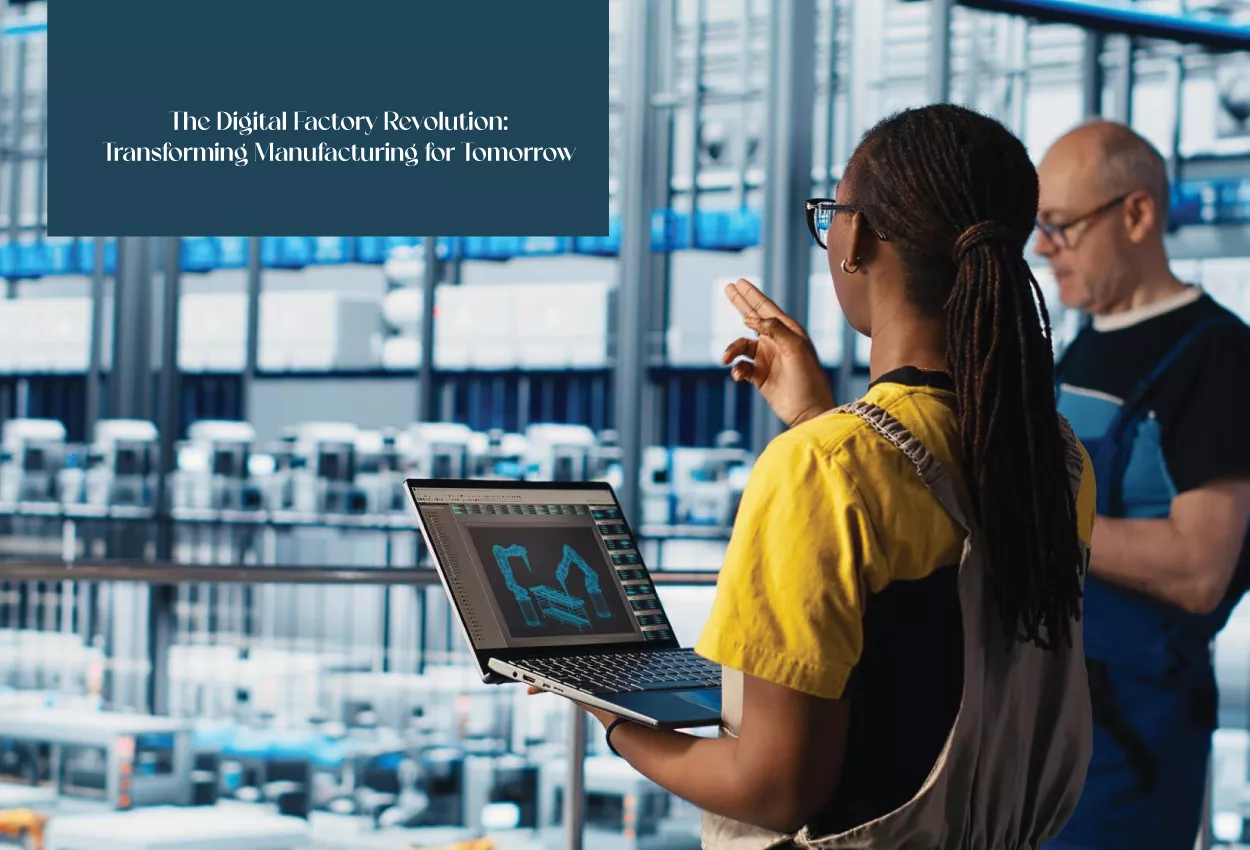
Manufacturing has long served as a driving force behind economic development, technological advancement, and industrial growth. Throughout history, factories have evolved through successive waves of innovation, from mechanization and mass production to automation and robotics. Today, the sector is entering another transformative chapter, one that is redefining how products are designed, produced, monitored, and delivered.
The digital factory is no longer a concept reserved for future planning. It is becoming an operational reality for manufacturers seeking greater efficiency, flexibility, and competitiveness. Through the integration of data, connectivity, intelligent technologies, and advanced analytics, organizations are creating manufacturing environments capable of responding to challenges and opportunities with unprecedented speed and precision.
This transformation represents far more than modernization. It reflects a fundamental shift in how manufacturing organizations think about operations, performance, and long-term growth.
Connecting the Manufacturing Ecosystem
Traditional manufacturing environments often operate through separate systems that perform individual functions efficiently but lack meaningful integration. Production equipment, quality management processes, maintenance systems, and supply chain operations frequently function independently, limiting visibility across the organization.
Digital factories replace these silos with connected ecosystems. Through industrial Internet of Things technologies, sensors, cloud platforms, and intelligent software solutions, information moves seamlessly throughout the production environment.
This connectivity provides leaders with real-time visibility into operations. Performance metrics, equipment conditions, production output, and quality indicators become instantly accessible. Rather than reacting to problems after they occur, organizations can identify emerging issues and respond proactively.
The result is a manufacturing operation that is not only connected but also informed, responsive, and continuously improving.
Unlocking the Value of Data
Data has become one of the most valuable resources within modern manufacturing.
Every machine, process, and production activity generates information that can reveal opportunities for improvement. For years, much of this information remained unused or inaccessible. Today, advanced analytics allow organizations to convert raw data into actionable intelligence.
Manufacturers can identify inefficiencies, predict maintenance requirements, optimize resource utilization, improve product quality, and strengthen operational performance through data-driven decision-making.
Predictive maintenance offers a particularly powerful example. Instead of waiting for equipment to fail, organizations can analyze performance indicators and identify maintenance needs before disruptions occur. This reduces downtime, lowers operational costs, and improves asset reliability.
When manufacturers harness data effectively, they move beyond reacting to events and begin shaping outcomes before problems emerge.
The Next Evolution of Automation
Automation has always played an important role in manufacturing. However, digital factories are expanding their capabilities far beyond traditional productivity improvements.
Today’s automation systems are intelligent, adaptive, and capable of supporting complex decision-making processes. Artificial intelligence, machine learning, advanced robotics, and autonomous technologies are enabling manufacturers to create production environments that adjust dynamically to changing conditions.
Production lines can respond to fluctuations in demand, optimize workflows, and support customized manufacturing without sacrificing efficiency or quality.
Most importantly, automation is creating opportunities for people to focus on work that delivers greater strategic value. Rather than spending time on repetitive tasks, employees can dedicate their expertise to innovation, problem-solving, continuous improvement, and customer-focused initiatives.
The future of manufacturing is not about replacing people. It is about enabling them to contribute at a higher level.
Agility as a Competitive Advantage
Manufacturers are facing increasing pressure to respond quickly to changing customer expectations, market conditions, supply chain disruptions, and regulatory requirements.
Traditional operating models often fall short of keeping up with these demands. Digital factories are the answer. They build organizations that are more agile, informed and adaptable.
Real time visibility helps leaders make quicker decisions. Interlinked systems enhance the accuracy of planning and distribution of resources. Intelligent forecasting helps organisations predict challenges before they become disruptions.
This level of responsiveness helps manufacturers to continue operating and improve their competitive position.
“Agility is not a capability you desire any more. It has become a core requirement for ongoing success.
Driving Sustainability Through Technology
Sustainability has become a strategic imperative across industries. Manufacturers are facing mounting pressure to reduce their environmental impact while remaining profitable and operationally performing.
Digital factory technologies are powerful tools to achieve both objectives.
Connected systems allow organizations to better monitor energy consumption, reduce waste, optimize material usage and improve production efficiency. Advanced analytics can find opportunities for emission reduction and resource management.
Shaping the Future of Manufacturing
The digital factory revolution is not a single innovation. “It’s the convergence of multiple technologies coming together to create smarter, more efficient and more resilient manufacturing environments,” he said.
Organisations that embrace this transformation are increasing productivity, improving competitiveness, enhancing sustainability and creating new opportunities for growth.
But technology alone is not enough. Success depends on leadership, vision, an engaged workforce and a commitment to continuous improvement.




