
There’s a short window right after moving into a new home where decisions are easier to execute and far less disruptive. Many homeowners underestimate how valuable this phase is and end up postponing improvements that later become inconvenient and expensive.
As data from Statista notes, the global home improvement market is forecasted to be worth over $600 billion next year. That’s double the size of what it was in 2008. They also noted that the most common choices were interior room remodels and home system upgrades, particularly IoT-related tech.
This level of spending reflects how central home improvement has become, but it also highlights a pattern where people invest heavily over time instead of making strategic decisions early on. In this article, let’s look at some of the most important home upgrades to make as soon as you move in.
#1. Adjust the Visual Tone Before the Home Feels Settled
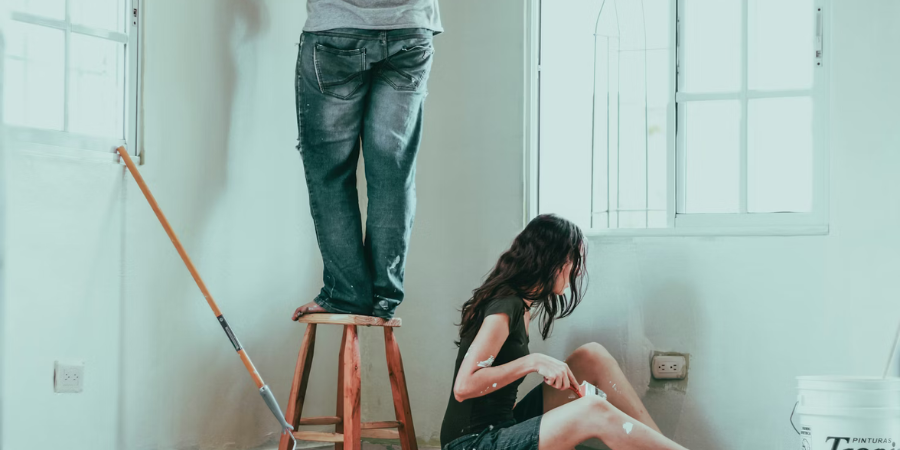
It’s debatable, but aesthetic changes carry more weight at the beginning than most people expect. It’s much easier to make decisions that define how the home will feel long-term, before furniture is in place and routines take over. Some improvements, like wall paint, in particular, become significantly more complicated once a space is fully lived in.
Interestingly, there’s a lot of thought and insight that you can put into your walls. As an interior designer, Kathryn Hufton explains, you want to stick with soft, neutral palettes for high-traffic areas. However, that doesn’t mean you can’t go wild. She points out that punchier colors fit smaller rooms better. Likewise, Andrea Goldman, another interior designer, recommends being bold with color in your entryway.
These choices help create balance, where larger spaces feel cohesive while smaller areas introduce personality. That said, it’s a good idea to see if you have the required skills before undertaking any painting project. There are a surprising number of factors at play that many people aren’t aware of. So, for instance, if you live near the sea, that should affect the kind of paint choices you use.
Look at cities like Everett, Washington. It’s a coastal city with an average humidity of 71%. That’s significantly higher than inland areas and makes problems like condensation and mold far more likely. EA Pro Painters notes that extreme humidity levels can affect the integrity of your paint and even cause it to crack, peel, and blister.
So, it makes sense to hire a painting company in Everett, WA, if you live there. The same goes for any other city with tricky weather. Having a professional take over such aspects of your project will also save you money in the long run. You won’t be spending money later to fix major mistakes you made and address accelerated wear and tear.
#2. Address Security Gaps Left Behind by Previous Owners
Security is often treated as something to think about later, but moving into a new home introduces a layer of uncertainty that is easy to overlook. Previous owners, contractors, or even neighbors may still have access in ways you cannot fully account for. Addressing this early removes unknowns instead of reacting to problems after they arise.
You may want to get one of those fancy doorbell cameras, but do some research and explore the recent discussions on them first. Ring, the popular option by Amazon, is getting increasingly cozy with a mass surveillance strategy. As CNBC reported last year, the Ring Community Requests feature will allow police to request video directly from Ring users. A similar effort that would have shared data with 2,500 police agencies was proposed in 2024. However, it was shut down due to privacy concerns.
This introduces a different kind of decision-making process. Security is no longer limited to locks and physical barriers. It now includes digital systems that collect and store data, often with broader access than homeowners initially expect. Choosing what to install involves weighing convenience against control over personal information.
Regardless, the benefit of handling security early is that it allows you to take a more deliberate approach. Instead of rushing into systems later, you can decide how much visibility and access you are comfortable with. At the same time, you can also ensure that basic entry points are properly secured from day one.
#3. Focus on Practical Changes That Pay off in Daily Living
Some of the most important upgrades are the ones that rarely get attention at first. Daily use areas shape how comfortable and efficient a home feels. Yet they are often pushed aside in favor of more visible improvements.
If there’s one aspect of your home that is used every day, it’s power. Thus, it’s surprising that more people don’t consider it a higher priority for home improvement projects. Today, options like solar panels make a lot more sense than they used to.
As Consumer Affairs explains, solar panels can save homeowners between $41,000 and $62,000 over a period of 25 years. In terms of installation costs, you’re looking at about $13,962 for a 5kW system. They do note that this doesn’t include the solar storage battery, which can cost anywhere between $7,000 and $18,000.
If you take these numbers at face value, sure, they may seem a little expensive. However, if you look at it as a long-term investment, it’s certainly worth looking into. Delaying installation can lead to missed savings and additional adjustments later, especially if structural or electrical changes are needed.
Beyond solar, you can consider smaller improvements that shape everyday life, such as better lighting placement, updated outlets, and improved fixtures. These changes may not stand out visually, but they reduce friction and make the home easier to live in from the moment you settle in.
Frequently Asked Questions
1. What home improvements are easiest to do before unpacking?
Painting, replacing flooring, and updating light fixtures are much easier before unpacking since rooms are empty and accessible. It’s also a good time to handle deep cleaning, minor repairs, and even small electrical updates, so you don’t have to move furniture or disrupt your setup later.
2. How do you decide between DIY and hiring professionals for home projects?
It usually comes down to skill, time, and risk. If the project involves structural work, electrical systems, or anything that could cause long-term damage if done wrong, hiring a professional makes sense. Simpler cosmetic tasks can be DIY if you’re confident and willing to invest the time.
3. What should you inspect before starting any renovation work?
Before starting, check the condition of the wiring, plumbing, walls, and flooring. Look for signs of moisture, cracks, or outdated systems that could complicate your plans. It’s also smart to review permits and local requirements so you don’t run into compliance issues midway through the project.
All things considered, the first improvements you make after moving in tend to influence everything that follows. Aesthetic choices shape how comfortable the space feels, security decisions determine how protected and private it remains, and upgrades to daily use areas affect how smoothly everything functions.
With home improvement spending continuing to rise globally, the difference often comes down to timing. Handling the right projects early allows you to avoid any unnecessary complications later while creating a space that feels intentional from the start.




