
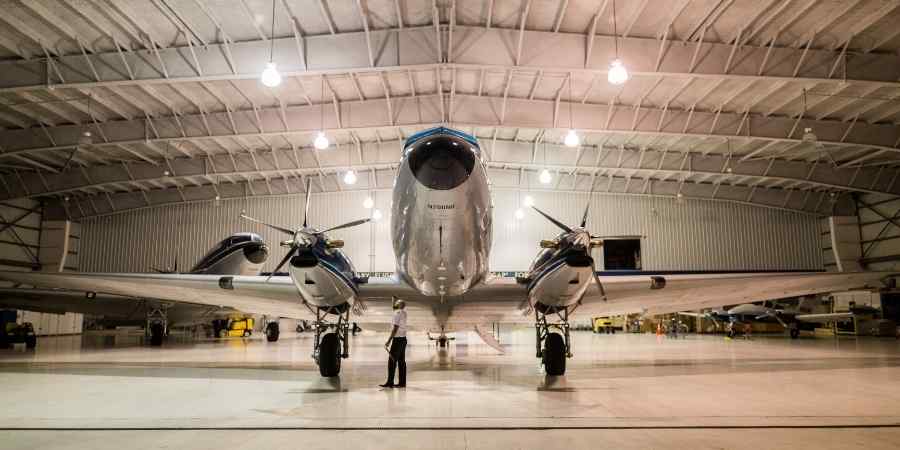
In the aerospace industry, quality assurance isn’t a marketing buzzword or a secondary checkbox—it is a life-or-death requirement. When an aircraft operates at 35,000 feet, or a launch vehicle breaks through the upper atmosphere, every single component is subjected to extreme thermal cycles, intense vibrational stress, and immense pressure changes. There is absolutely no room for a “minor” component failure.
Because of these high-stakes conditions, the aerospace supply chain is governed by some of the strictest regulatory frameworks on earth. If your team cannot prove absolute traceability, repeatable precision, and proactive risk management, you will find yourself locked out of defense and commercial aviation contracts completely.
Whether you are an established defense contractor or an expanding hardware startup, mastering the core compliance frameworks is vital to your operational survival. Here are the six primary quality standards every aerospace team must know inside out.
1. AS9100: The Global Framework for Aerospace Quality
What is the AS9100 standard? AS9100 is the international Quality Management System (QMS) standard specifically written for the aviation, space, and defense industries, expanding on standard industrial quality rules to enforce strict product safety and configuration management.
Think of AS9100 as the foundational bedrock of all aerospace manufacturing compliance. It takes the standard corporate frameworks you find in general manufacturing and scales them up to handle the intense demands of flight-critical hardware.
The standard places a heavy emphasis on structural configuration management—ensuring that every single change to a part’s design blueprint is documented, tested, and approved before execution. When fabricating high-precision hardware that must withstand extreme atmospheric pressures, utilizing standardized cnc machining ensures that component dimensions match tight engineering tolerances exactly, providing the absolute structural repeatability required by AS9100 audits.
2. Nadcap: Industry-Wide Validation for Special Processes
What does Nadcap certify in aerospace manufacturing? Nadcap (National Aerospace and Defense Contractors Accreditation Program) certifies “special processes”—such as chemical processing, heat treating, non-destructive testing, and welding—where the final quality cannot be verified by surface inspection alone.
Many industrial steps change the molecular or internal structure of a metal component without altering its outward appearance. For instance, if a titanium wing spar is heat-treated incorrectly, it may look completely flawless on the outside while possessing hidden internal brittle points that will snap under flight loads.
Nadcap avoids individual prime contractors (like Boeing or Lockheed Martin) constantly auditing the same supplier independently. Instead, industry experts pool their resources to execute deep technical audits on specific material transformations. Earning a Nadcap accreditation proves to the entire global market that your chemical and thermal processes are completely stable and controlled.
3. ISO 9001: The Baseline Architecture for Quality Systems
While AS9100 governs the aerospace specificities, it cannot exist without its underlying architectural parent: ISO 9001.
ISO 9001 is a generic quality management system framework used across dozens of global industries, from automotive production to medical devices. It focuses on macroscopic organizational health:
- Establishing clear leadership accountability.
- Enforcing data-driven decision-making models.
- Operating an active, continuous improvement loop based on customer feedback.
When your team builds an aerospace-ready environment, you do not create a separate system for AS9100. Instead, you build your specialized aviation protocols directly on top of your existing ISO 9001 foundation, ensuring your business operations and engineering metrics speak the same universal language.
4. AS9110 and AS9120: Compliance for MRO and Distribution
The aerospace ecosystem extends far beyond the original production lines. Once an aircraft is delivered, it requires decades of continuous mechanical upkeep, parts replacement, and global logistics coordination. To regulate these specialized secondary sectors, the international aerospace quality group designed distinct subsets of the AS9100 framework.
The Aerospace Compliance Matrix
| Standard Designation | Primary Industry Focus | Core Operational Priority |
| AS9100 | Original Equipment Manufacturers (OEMs) and component fabricators. | Safe design execution, structural precision, and manufacturing repeatability. |
| AS9110 | Maintenance, Repair, and Overhaul (MRO) facilities. | Airworthiness tracking, component refurbishment validation, and technician licensing checks. |
| AS9120 | Aerospace parts distributors and warehouse stockists. | Counterfeit part mitigation, chain of custody protection, and split-lot traceability. |
5. FAA Part 21: Government Regulatory Airworthiness Certification
While standards like AS9100 are industry-driven certifications, government regulations carry the absolute force of law. In the United States, the Federal Aviation Administration (FAA) governs civil aviation safety through the Federal Aviation Regulations (FARs).
What is FAA Part 21 certification? FAA Part 21 regulates the approvals required to legally manufacture aircraft, aircraft engines, and propellers, governing both design approvals (Type Certificates) and production approvals.
You cannot legally sell a component to a commercial airline unless your production facility holds an active FAA Production Certificate under Part 21 rules. This regulatory framework ensures that your manufacturing facility has the inspection systems and structural tools required to replicate the government-approved master design perfectly every single time, keeping the global transportation network uniform and safe.
6. AS9146: Foreign Object Debris (FOD) Prevention Protocols
How does AS9146 prevent aviation accidents? AS9146 establishes strict operational processes to identify, eliminate, and document Foreign Object Debris (FOD)—such as stray bolts, rags, or metal shavings—from entering an aircraft assembly where they could jam mechanical systems or short-circuit electronics.
A single loose rivet or forgotten wrench left inside a wing panel during final assembly can slide into a control cable pulley during flight, locking up the aircraft’s physical steering mechanics.
Enforcing AS9146 requires a complete cultural shift on your facility floor. Teams must implement shadow boards for absolute tool accountability, clear workstations at every shift change, use dedicated visual inspection mirrors, and install specific debris barriers over open assemblies. Turning clean workspaces into a continuous habit removes physical hazards before they can compromise an airframe.
Myth vs. Fact: Aerospace Compliance Realities
- Myth: If you purchase certified raw materials from an approved supplier, you do not need to execute internal material validation testing.
- Fact: Supply chain fraud and counterfeit materials are severe industry challenges. True compliance requires teams to deploy robust risk mitigation strategies, including regular chemical and physical testing of inbound raw stock to verify that mill sheets match the metal’s true composition.
- Myth: Earning your AS9100 certificate once guarantees you are permanently compliant for future contract bidding.
- Fact: Compliance is an active status. Certification bodies conduct rigorous annual surveillance audits and complete recertification checks every three years to verify that your processes are actively functioning rather than just sitting in a manual on a shelf.
Summary
Navigating the complex landscape of aerospace manufacturing requires a disciplined commitment to structural precision and continuous verification. Start by aligning your organizational workflow with the baseline rules of ISO 9001 and the specific aviation controls of AS9100. Secure your chemical and thermal transformations through Nadcap accreditation, and select the correct maintenance or distribution frameworks if your focus shifts down-funnel. Finally, bind your entire operation within the legal boundaries of FAA Part 21 rules while enforcing strict AS9146 debris control loops on the active floor space.
Ultimately, achieving elite quality status isn’t about passing a single annual inspection. By embedding rigorous tracking, material validation, and clean-floor discipline into your daily work cultures, you transform compliance from an administrative hurdle into a powerful competitive moat built to outlast the competition.