
Data says that more than 60 million EVs are now running on roads worldwide. That’s a huge number. The sales grew by 35 percent in 2025. You can see how electric mobility has gained immense popularity amongst the masses.
As electric vehicles gain popularity, there is a corresponding increase in the need for EV charging stations. After all, they provide the fuel to keep EVs running.
Searching for EV charger installation near me is something most EV owners do frequently. But, is it a smarter choice to have it installed at home or in a nearby public area? The right choice between home vs public charging depends on various factors. Your lifestyle, budget, driving habits, and housing facilities play a huge role.
Let’s get to know about home charging and public charging in detail. This will help you make an informed decision for your EV.
Understanding Home Charging From a Practical Lens
Home chargers fall under Level 1 or Level 2 categories. Now what are these levels? Very simple.
Level 1 chargers can plug into standard outlets. But they charge the EV rather slowly. Level 2, on the other hand, requires professional installation. As a result, they deliver seamless results. If you are commuting to work daily, this is something you must bookmark.
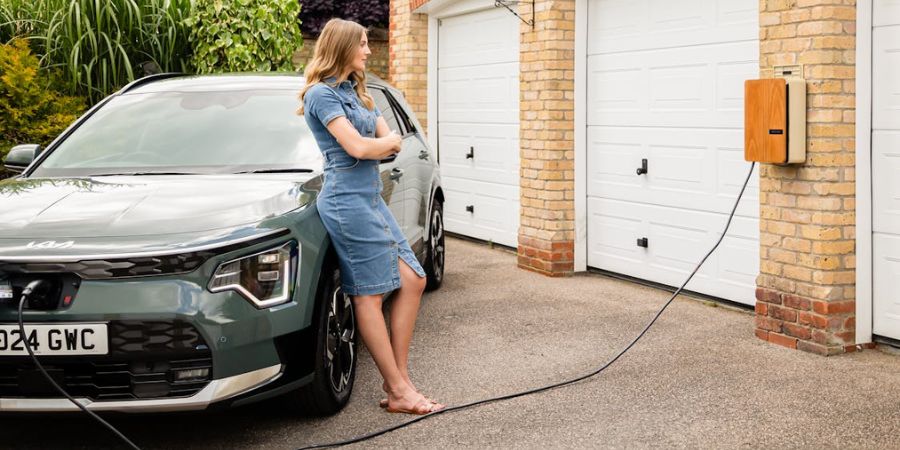
Data shows that nearly 85 percent of EV charging takes place at home. Charging at home allows drivers to plug in overnight. They can start each day with a full battery. There is no waiting, no app hopping, and no detours. If you take advantage of off-peak electric charges, you can also save more on bills.
The Shocking Truth of Public Charging
Suppose you are off on a roadtrip and there’s less power in your EV. What will you do? In this case, public charging stations work the best. DC fast chargers can replenish up to 80 percent of a battery in under 40 minutes.
Sounds cool? Well, speed can’t solve everything.
A study reveals that long queues and inadequate infrastructure often test EV users in public stations. 53 percent of EV users are unable to charge at all. 48 percent of existing charge stations have stopped responding. The worst is, 47 percent had lost the data altogether.
Hence, public charging works best as a supplement instead of a foundation. It is good for road trips and emergencies. It should not be a daily solution for commuting.
Cost Comparison That Actually Matters
It ultimately boils down to your budget. Let’s be real. Home charging requires a good initial investment for all the equipment and its installation. Studies show that Level 2 home chargers recover their cost within two to three years. It is due to the low electricity cost.
Public charging may feel cheaper. But frequent fast charging increases the cost in the long term. This may further affect the battery’s wear and tear. Always go for the smarter option that incurs a lifetime benefit.
Lifestyle Makes the Final Call
Charging decisions reflect human behavior more than technical specifications.
Homeowners with private parking benefit the most from home charging. They gain routine, reliability, and lower stress. Families with multiple EVs see even greater advantages, since shared home chargers reduce dependency on external networks.
Apartment dwellers and urban residents often rely more on public charging, at least initially. However, many housing societies now install shared EV infrastructure to meet rising demand. As access improves, the home versus public gap continues to narrow.
Professionals who drive long distances daily may combine both solutions. Home charging handles routine needs. Public fast chargers support extended travel days.
Safety, Reliability, and Peace of Mind
As EV sales increase, there’s one thing you need to keep in mind: Safety. If your home chargers are not installed properly, then they can pose life-threatening risks. Public chargers, on the other hand, are not maintained regularly.
If you are getting a professional installation, you have to comply with certain guidelines. Electrical codes and load capacity should be considered.
Professional installation ensures compliance with electrical codes and load capacity requirements. Certified installers assess panel capacity, grounding, and future scalability. This step protects both the vehicle and the home.
Steel T Home Services highlights the importance of expert installation for your new EV station at home. An expert will install your new EV, tailored to individual power needs and driving habits. They assess charging infrastructure that not just upgrades your lifestyle but also provides maximum value to the purchase.
Environmental Impact Beyond the Plug
Charging choices also shape environmental outcomes. Home charging reduces carbon footprints. EVs charged using residential solar or low-carbon grids reduce lifecycle emissions significantly. It contributes greatly towards the planet without compromising on your lifestyle needs.
Public charging stations rely on clean grids. Many draw from mixed energy sources. Without transparency, drivers cannot always measure their environmental footprint. Hence, home charging offers clearer accountability and better alignment with sustainability goals.
Final Verdict
Home and public charging both play an integral role in the EV ecosystem. The smarter choice depends on the 3Cs: Control, Cost efficiency, and Consistency.
Do you want to lead a sustainable, convenient life and save money? Then, home charging is the best solution for you. If you are always on the go, public charging works well.
Home charging solutions have made it easier for people by ensuring their vehicles are fully charged without having to worry in the middle. Choose wisely for a better tomorrow.




