
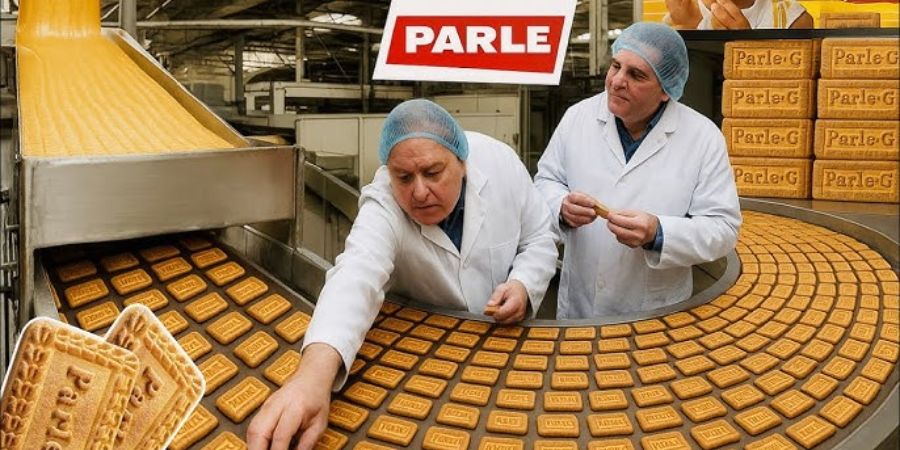
Mumbai woke up to an unmistakable headline: the old biscuit works in Vile Parle Parle-G factory is set for demolition and redevelopment. That site has been tied to the story of Parle-G for nearly a century. The decision to move forward with redevelopment is practical. It is also emotional. For millions of Indians, the Parle-G factory shutdown signals the loss of a physical place that anchored childhood rituals, tea stall memories, and the simple comfort of a biscuit and a cup of chai.
Let us break it down.
A Legacy That Began in 1929
Parle Products was founded in 1929 in the suburb of Vile Parle by industrialist Mohanlal Dayal Chauhan. It originally produced candies and toffees before moving into the biscuit business in 1939. Over the decades, Parle would grow from a small regional manufacturer into a national household name. Alongside Parle-G, the company introduced other popular products such as Monaco, Hide & Seek, Krackjack, Melody and Kismi.
One of the most memorable aspects of the brand was the image printed on every Parle-G packet. The illustration of a smiling baby girl was created in the 1960s by artist Maganlal Dahiya and was meant to reflect innocence, purity and family values. Although there was widespread speculation about the model’s real identity over the years, the brand always maintained that she was an artistic creation, not a real child, and that ambiguity only added to the image’s memorable appeal.
Shutdown and Redevelopment
While the factory stopped biscuit production around 2016, it remained an iconic symbol of Mumbai’s manufacturing heritage long after ovens stopped burning. Now, the Maharashtra State Environment Impact Assessment Authority has approved plans to redevelop the 13.54-acre site in Vile Parle East. The approval allows the demolition of 21 old structures on the property to make way for a modern commercial complex.
The closure of the factory site reflects broader changes in how urban space in Mumbai is being used. Once at the centre of daily life and a source of local identity, the old industrial site is now being absorbed into a city increasingly shaped by high-rise offices and commercial development.
The Parle-G factory shutdown refers specifically to the Vile Parle manufacturing campus that gave the brand its name and its earliest identity. Production at the site had already been curtailed years ago as manufacturing shifted to larger, modern facilities. The recent environmental clearance for redevelopment of the 13.54 acre plot clears the path for demolition of ageing structures and new construction. Those approvals explain why the Parle-G factory shutdown became the dominant story this month.
What this really means is threefold. First, there is the business reality. Land in central Mumbai carries value that changes the calculus for decades old factories. Converting industrial land into commercial or mixed use projects is common across major cities. Second, there is the operational reality. The brand itself is not going away. Production has been moved to other, higher capacity plants and supply chains remain intact. Third, and most important to people, there is memory. The Vile Parle Parle-G factory closure severs a tangible link to family tables, roadside stalls, and small rituals that stitched together daily life.
The human reaction has been swift. Social media posts, local conversations, and nostalgic threads are filled with the same line of recollection: the factory was not merely a workplace, it was part of the streetscape. People describe the sight of trucks, the smell of fresh biscuits, the image of the Parle-G girl printed on packets. The Vile Parle Parle-G factory closure strikes a chord because it is not only about built form. It is about identity and place.
For planners and local stakeholders the immediate questions are practical. How will traffic patterns shift once redevelopment starts. Will construction lead to disruption for nearby residents. What provision will be made for any remaining staff or nearby small businesses that depended on the mill.
Those are valid concerns that must be part of the public consultation process as the Vile Parle Parle-G factory closure progresses. Municipal notices and planning documents will be important reading for neighbours and city watchers.
A short reality check for readers who worry about the biscuits themselves. The brand continues. Parle Products has reassured markets and consumers that production has been relocated and that the supply chain remains robust. That means shelves will continue to carry the familiar pack. Still, there is a difference between the brand’s continuity and the loss of the factory site. The Parle-G factory shutdown removes a physical chapter of a brand story that once belonged to the city as much as it belonged to the company.
There are also opportunities in the change. Redevelopment of a site with such deep cultural resonance could include a public element that preserves memory. Even a small museum corner, an interpretive plaque, or a public plaza that tells the story of the factory would offer continuity. If planners and developers make space for memory, the Vile Parle Parle-G factory closure could become a transformation rather than an erasure.
The legal and environmental paperwork will be the best place to watch for commitments. The environmental clearance documents and municipal planning approvals will reveal whether heritage considerations were factored in, what demolition procedures will be used, and whether public consultation was completed. Citizens and journalists should check the specific phrase Parle-G factory redevelopment Vile Parle environmental clearance 2026 to find those records quickly.
At a deeper level the Parle-G factory shutdown is a reminder of how cities evolve. Industrial economies move, manufacturing consolidates, and urban zones reassign uses. That can be good for efficiency and for growth. It can also feel like loss to those who carry memories of the old city. The challenge for civic leaders and developers is to manage change in a way that is efficient and humane.
In practical terms here is what to do if this story concerns you. Follow official notices from the municipal corporation and the state environment authority. Track reporting from credible outlets for updates on the redevelopment plan. If you care about heritage, contact local representatives and ask whether a memory or heritage element will be included in the design.
This is a moment to be intentional. The Parle-G factory shutdown will not erase the place the biscuit holds in kitchens and on trays. What it will do is change a physical skyline that has been familiar for generations. If the redevelopment honors the past while making space for the future, the site may become a new kind of landmark. If it does not, the Vile Parle Parle-G factory closure will remain, for many, a small civic sorrow.
For reporting and records, the most useful early documents appear in January 2026 approvals and local press summaries. For readers who want the facts rather than memory, official filings and reputable coverage provide the answers. For everyone else the story will live in small things: the biscuit tin, the tea stall, a family memory. The Parle-G factory shutdown is both an ending and an invitation to decide how to remember.




