
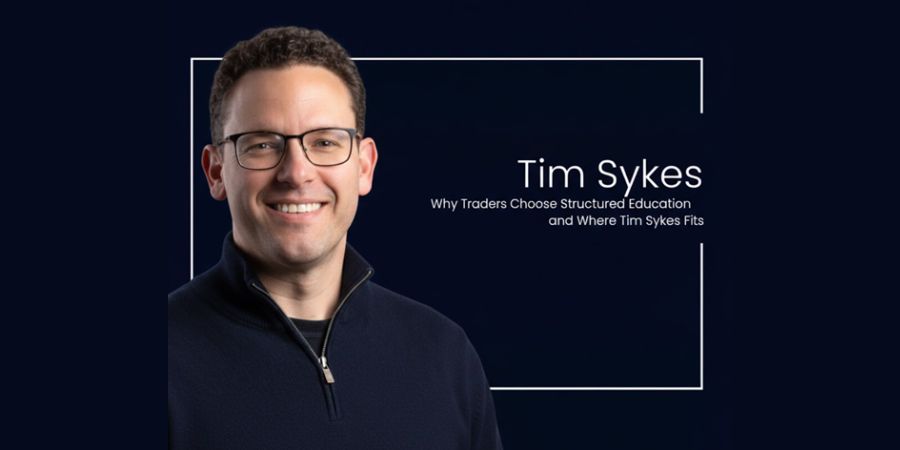
Over the past decade, Tim Sykes has become a recognizable entry point for individuals seeking to explore the volatile world of penny stocks. His educational approach centers on structure: extensive video archives, documented trade examples, and a community designed to reinforce a defined methodology.
Yet in an era in which information is freely available across numerous platforms, a natural question arises. If markets can be studied independently, why do some traders deliberately choose structured education over self-directed learning?
The answer often has less to do with charts and more to do with psychology, discipline, and how individuals respond to risk.
Learning Under Pressure
Trading compresses decision-making into short windows. Capital is on the line. Feedback is immediate. Emotional responses surface quickly.
In that environment, some individuals perform best when operating within predefined rules. A structured framework reduces ambiguity. It minimizes internal debate during volatile moments. When the market moves rapidly, having rehearsed setups and predefined risk parameters can create stability.
Others respond differently. Some traders prefer autonomy. They believe experimentation sharpens intuition and that direct exposure to risk accelerates growth. For these individuals, building a system independently feels more authentic and empowering.
Both approaches are valid reflections of personality rather than technical superiority.
Why Structure Appeals to Certain Traders
Structured education tends to attract individuals who value clarity and repetition. Rather than navigating the vast universe of trading styles, they narrow their focus to a specific niche.
In the case of Sykes’ model, that niche is small-cap momentum trading. Concentration within a single segment enables repeated exposure to similar price behaviors. Over time, pattern recognition becomes less theoretical and more instinctive.
Structure also introduces accountability. Many structured ecosystems integrate tools for tracking trades and reviewing performance. Public logging systems such as Profit.ly encourage transparency and self-evaluation. When results are documented rather than remembered selectively, progress becomes easier to measure.
For personalities who thrive on measurable benchmarks and consistent feedback, this environment can be stabilizing.
The Case for Independence
Not everyone thrives within a defined curriculum. Some traders are motivated by discovery. They prefer to explore multiple asset classes, experiment with different timeframes, and refine a personal style through trial and error.
Independent learning can cultivate resilience. Building a strategy without guidance forces traders to confront mistakes directly and refine systems without external validation. For certain personalities, that autonomy is essential.
However, independence can also produce fragmentation. Without a structured review process, it becomes harder to distinguish between market randomness and flawed execution. Beginners, in particular, may struggle to diagnose recurring errors without comparison or mentorship.
The difference is not about intelligence. It is about how individuals internalize feedback.
The Limits of Both Paths
Neither structured education nor independent learning eliminates uncertainty. Markets remain probabilistic systems influenced by liquidity, volatility, and human behavior.
Structured programs provide guardrails, predefined entry and exit criteria, and risk-management principles. They reduce the likelihood of impulsive decision-making by encouraging preparation before execution.
Self-directed traders retain full autonomy but must design those guardrails themselves. When discipline is strong, this can be highly effective. When discipline weakens, experimentation can drift into inconsistency.
Long-term improvement in either case depends less on the educational format and more on emotional regulation, honest self-assessment, and adaptation to changing conditions.
Where Tim Sykes Fits in the Landscape
Within this broader discussion, Tim Sykes occupies the structured end of the spectrum. His framework emphasizes repetition, documented trade history, and a clearly defined niche within penny stocks.
For traders drawn to fast-moving markets but seeking an organized learning path, that structure can provide direction. It centralizes resources and reduces the overwhelming noise of conflicting strategies found online.
What it does not provide is certainty. No educational model can remove market risk. The presence of structure does not guarantee profitability; it simply organizes exposure to opportunity and risk.
Understanding that distinction is critical. Education shapes the process. Execution determines outcome.
Choosing an Environment, Not Just a Strategy
Ultimately, traders choose more than strategies. They choose learning environments that align with their temperament.
Some individuals perform best under conditions of repetition and accountability. Others thrive in autonomy and experimentation. The effectiveness of either approach depends on how well it matches the trader’s personality and tolerance for uncertainty.
Markets remain indifferent to the path chosen. What consistently differentiates outcomes is discipline, risk management, and the ability to review mistakes objectively.
Structured education and self-direction are simply two routes toward that same objective.




