The talent acquisition function has been one of the slowest corporate disciplines to fully embrace artificial intelligence. While marketing, finance, and operations teams adopted AI-powered tools at scale years ago, recruiting remained largely human-driven, dependent on manual sourcing, hours of CV review, and outreach campaigns built one message at a time. That picture is now changing rapidly, and the change has implications that go well beyond efficiency gains. For executives building scalable hiring pipelines, the rise of autonomous AI recruiting agents represents one of the most significant operational shifts of the past decade.
This article examines what these tools actually do, why they have moved from experimental to enterprise-grade so quickly, and what the shift means for HR leaders, founders, and CIOs trying to align talent acquisition with broader business goals.
The Bottleneck That Forced the Industry to Move
For most companies, the recruiting bottleneck has always sat in the same two places: sourcing qualified passive candidates at scale, and screening high volumes of inbound applications without losing the good ones in the noise. Both tasks are time-intensive, repetitive, and prone to human inconsistency. A recruiter reviewing the 200th application of the day applies different mental criteria than they did at application number five, even unconsciously.
Traditional recruiting platforms attempted to address these bottlenecks with better filters, keyword matching, and ATS integrations. The results were mixed. Filters miss qualified candidates whose CVs do not contain the exact terms searched. Keyword matching surfaces too many false positives. ATS systems organize data well but do not actually evaluate it. The combined effect is that even well-equipped recruiting teams spend the majority of their time on low-leverage activities while the strategic work, like building relationships with key candidates and aligning with hiring managers, gets squeezed.
What AI Recruiting Agents Actually Do Differently
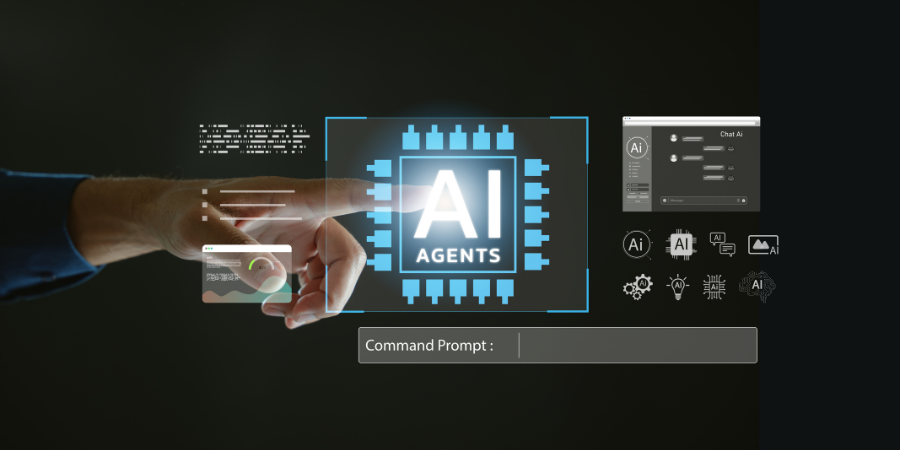
The current generation of AI recruiting platforms has fundamentally rethought the recruiter’s workflow. Tools like the GoPerfect AI recruitment software operate as autonomous agents rather than as enhanced search engines. The distinction matters considerably.
A search engine returns results based on a query. An autonomous agent receives an objective (find ten qualified candidates for a specific senior engineering role within two weeks) and then independently decides how to source, evaluate, prioritize, and engage candidates to achieve that objective. It learns from the recruiter’s feedback what good looks like for that specific role, refines its scoring model accordingly, and adapts its outreach strategy based on response patterns.
The practical consequence is that the recruiter shifts from operator to supervisor. Instead of manually building Boolean searches across LinkedIn, screening hundreds of profiles, and crafting individual messages, the recruiter defines the role, reviews the agent’s recommendations, provides feedback that improves future iterations, and steps in only at the points where human judgment genuinely adds value, typically the qualification call and beyond.
The Numbers Behind the Shift
The economic case for AI-driven recruiting has become difficult to ignore. Companies adopting these tools report meaningful reductions in time-to-hire, often in the range of 40 to 60 percent for sourcing-heavy roles. Cost-per-hire drops as the proportion of internal sourcing increases relative to external agency fees. Recruiter productivity, measured in qualified candidates moved into the pipeline per week, can multiply by factors of three to five.
Beyond these direct metrics, the qualitative impact may be even more significant. Recruiters who spend less time on mechanical tasks have more time for strategic conversations with hiring managers, candidate relationship building, and improving employer brand initiatives. Hiring managers receive more relevant shortlists faster, which speeds up decisions and reduces the risk of losing top candidates to competitors with quicker processes. Candidates themselves often report better experiences because outreach becomes more personalized (paradoxically, because it is generated with full context rather than being copy-pasted under time pressure).
The Bias Question Cannot Be Ignored
One of the most legitimate concerns surrounding AI in recruiting is the risk of encoded bias. Algorithms trained on historical hiring data can perpetuate the patterns embedded in that data, including patterns that disadvantaged underrepresented groups. This concern is real and worth taking seriously.
The current generation of AI recruiting agents has responded to this concern with mixed but improving approaches. The strongest platforms now apply consistent evaluation criteria to every candidate regardless of background, removing some of the cognitive shortcuts that human screeners apply (often unconsciously) when reviewing CVs. They surface candidates that pattern-matching humans might overlook, particularly those with non-traditional career paths. And they provide auditable reasoning for each recommendation, making it easier to identify and correct biased patterns when they emerge.
This is not a solved problem, and serious HR leaders continue to monitor the question carefully. But the trajectory is clear: well-designed AI screening tools are demonstrably less biased than typical human screening at scale, primarily because they apply the same criteria consistently rather than drifting throughout the day.
Implications for HR Leadership and Function Design
For C-level executives and HR leaders, the rise of AI recruiting agents raises strategic questions that go beyond tool selection. If a single recruiter equipped with the right AI agent can manage the workload that previously required three or four people, what does that mean for team sizing? If sourcing becomes effectively unlimited, where does the new bottleneck appear, and how does the organization redesign its hiring process to address it?
Most companies that have integrated these tools at scale report that the bottleneck shifts from sourcing to interview capacity and decision speed. With more qualified candidates entering the pipeline, hiring managers must allocate more time to interviews, and decision-making cycles need to compress to avoid losing candidates to faster-moving competitors. This often requires structural changes to the hiring process itself, including more disciplined interview scheduling, clearer decision criteria, and faster feedback loops.
The recruiting team itself evolves toward higher-value work. Less time on mechanical tasks frees recruiters to focus on strategic workforce planning, executive search, employer brand development, and candidate experience. The role becomes more consultative, more analytical, and frankly more interesting for the people in it.
What to Look for When Evaluating AI Recruiting Platforms
Not all AI recruiting tools deliver equal value. For executives evaluating options, several factors separate the genuinely transformative platforms from the incrementally useful ones.
First, depth of profile coverage matters. The best platforms search across hundreds of millions of profiles globally, not just within a single network like LinkedIn. This dramatically expands the addressable candidate pool, particularly for roles where the strongest candidates are not actively visible on a single platform.
Second, quality of personalization in outreach makes the difference between low and high response rates. Generic mass outreach has been ineffective for years. The current generation of tools generates messages with full candidate context, referencing specific career patterns, recent achievements, and relevant alignment with the open role.
Third, integration with existing ATS and HRIS systems determines how easily the tool fits into existing workflows. The strongest platforms integrate with 50+ ATS systems and operate as enhancements to existing processes rather than as parallel systems requiring duplicate data entry.
Fourth, learning capability separates static tools from genuine agents. The best platforms learn from recruiter feedback over time, improving their recommendations for each role and each company. Static tools that apply the same scoring model regardless of context plateau quickly.
The Strategic Question for 2026 and Beyond
The question facing HR leaders today is no longer whether to adopt AI recruiting tools, but how quickly to do so and how to redesign the function around them. Companies that move early are building meaningful advantages in time-to-hire, candidate quality, and recruiter productivity. Companies that delay are watching competitors fill key roles faster, often with stronger candidates.
For executives building organizations that will scale through 2026 and beyond, getting the recruiting infrastructure right is one of the highest-leverage decisions available. The talent that companies hire over the next two years will determine the trajectory of those companies for the decade that follows. Equipping the people responsible for finding that talent with the best tools available is no longer a competitive nice-to-have. It has become foundational to operational excellence in modern business.