
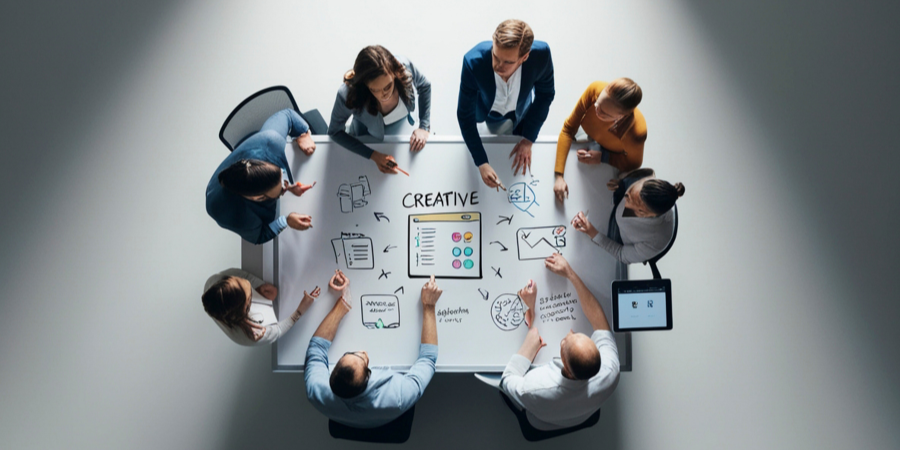
Hybrid working has revolutionized the way teams communicate, work together, and build trust among each other. When some workers telecommute, and others work from the office, conventional team-building methods rarely produce the expected results. What used to be useful for purely face-to-face teams cannot always apply to hybrid teams because the ways people communicate with each other, their time zones, and level of involvement might differ.
It is not about getting people together; it is about developing an experience for them that they find engaging, fun, and rewarding. The best team-building ideas should combine both remote and in-person components and provide opportunities for interaction and collaboration according to the way people operate today.
Below are ten innovative team-building suggestions for hybrid teams.
1. Story-Based Interactive Experiences
One of the best methods to involve a mixed team in the process of development is the organization of interactive and story-based events, which integrate collaboration, problem-solving, and communication into a fun and entertaining experience for all participants.
An excellent illustration would be virtual murder mystery team building games, when the employees have an opportunity to get into different roles, search for hints, and investigate the case in order to find out the criminal.
The beauty of such an activity is that there is absolutely no place left for any hierarchies in the workplace, since everyone has a role and should make an effort to contribute to the success of the game.
2. Problem-Solving Challenges in Hybrid Environments
Problem-solving is an integral part of team-building exercises, and such activities should be strategically planned in hybrid environments for equality in participation.
Challenges can be set whereby teams have to work collaboratively from different locations in order to solve puzzles, finish tasks, or construct something. For instance, those within the office environment may engage in handling physical components, while others off-site concentrate on strategy or researching.
3. Skill Swap Sessions
All teams have some hidden wisdom within them. Skill swaps enable team members to learn from each other by teaching others something new, whether work-related or personal.
Hybrid skill swaps can take place on live video, too, with in-room participation. The content could vary widely, such as productivity tips and hacks, learning software, cooking techniques, photography skills, or even a few languages.
Such sessions go a long way towards breaking down the silos and making team members more humanized. They change the perspective of being colleagues to individuals with different talents and interests.
4. Coffee Chats on the Go With a Twist
Hybrid settings often limit opportunities for casual communication, particularly for remote workers. Coffee chats can play an important role in closing this gap.
Unlike regular pairings, spice things up a bit with some challenges. Participants could share a personal travel experience, talk about a book they recently read, or respond to questions designed to make them think.
Doing this in rotation will help make sure all members of staff connect not only with old acquaintances but with a variety of other people as well.
5. Creative Collaborations Projects
Creativity could serve as an excellent bonding mechanism. Planning activities like forming a group music playlist, building a virtual mural, or making a short film allows workers to have something else to bond over other than work-related tasks.
People working remotely and those working at the office could play various roles in the project. Remote workers could be responsible for handling the digital part, whereas those in the office could look after the physical aspect of the project.
6. Wellness and Mindfulness Exercises
Team building is not always about engaging in highly physical activities. Sometimes, those exercises focusing on wellness and mindfulness can leave lasting impressions.
Take into account such team-building exercises as guided meditation practices, online yoga workouts, or walking challenges involving both home-based and office employees. Such initiatives will demonstrate that the company cares about the overall well-being of its employees.
7. In-Office and Remote Game Show
It is always helpful to add some element of healthy competition to increase employee participation. Organizing a game show event where office and remote team members are grouped will bring some fun and excitement to this kind of event.
Various kinds of games, ranging from simple trivia quizzes to challenge and puzzle-based games, can be organized at such events.
8. Hybrid Volunteer Programs
Volunteering as a group can be very rewarding. With hybrid volunteer programs, employees get the opportunity to give back to a common cause, regardless of where they are situated.
For remote employees, volunteering could be done through mentoring sessions, fundraising events, and online activism, whereas office-based employees do their volunteering in the local community.
9. Monthly “Show & Tell” Events
The concept behind the practice is fairly basic and powerful. Each team member presents anything important or interesting, ranging from hobbies to projects or experiences they have had.
If employees work in a hybrid manner, video conferencing will be used with participants also present at the workplace physically. Storytelling must be preferred over any kind of presentation, with other employees asking questions and interacting.
10. Innovation Sprints
For groups that love solving problems, innovation sprints can be very beneficial and stimulating. In such sessions, individuals are encouraged to create solutions for an identified issue.
A hybrid group can utilize technology and engage face-to-face when required. During the completion of the process, the team presents its findings, giving a feeling of achievement and appreciation.
Conclusion
The future of work is hybrid, and this means that team-building practices must evolve to accommodate this change in the way we work. Successful team building is, therefore, dependent on finding ways to integrate the digital space as well as physical spaces in the process.
Creativity, inclusivity, and interaction all become important factors that make team-building practices successful when used effectively.




