Companies are spending $670 billion on AI infrastructure in 2026 alone. OpenAI burned through $100 billion in investment and made $15 billion in revenue. Microsoft lost $440 billion in market value in a single day in January 2026. And a University of Michigan professor just compared the AI bubble to the size of Jupiter.
This is the AI bubble warning that serious investors, economists, and even the people building AI are issuing right now.
5 things this article answers:
- What are the real signs the AI bubble is slowing down
- What experts like Erik Gordon are actually saying
- How this compares to the dot-com crash
- Who gets hurt if it bursts
- What the numbers actually show
What is the AI Bubble Warning?
An AI bubble warning refers to signals that AI investment has grown far beyond what the actual returns justify.
Simple version: companies are spending trillions. Most are earning billions. The math does not work.
At its core, J.P. Morgan Chase analysts anticipate $5 trillion of spending on AI infrastructure between now and 2030, while actual spending by users and companies on AI products remains a fraction of that.
That gap between what is being invested and what is being earned is the heart of every ai bubble alarm being raised in 2026.
The AI Bubble Warning from Erik Gordon
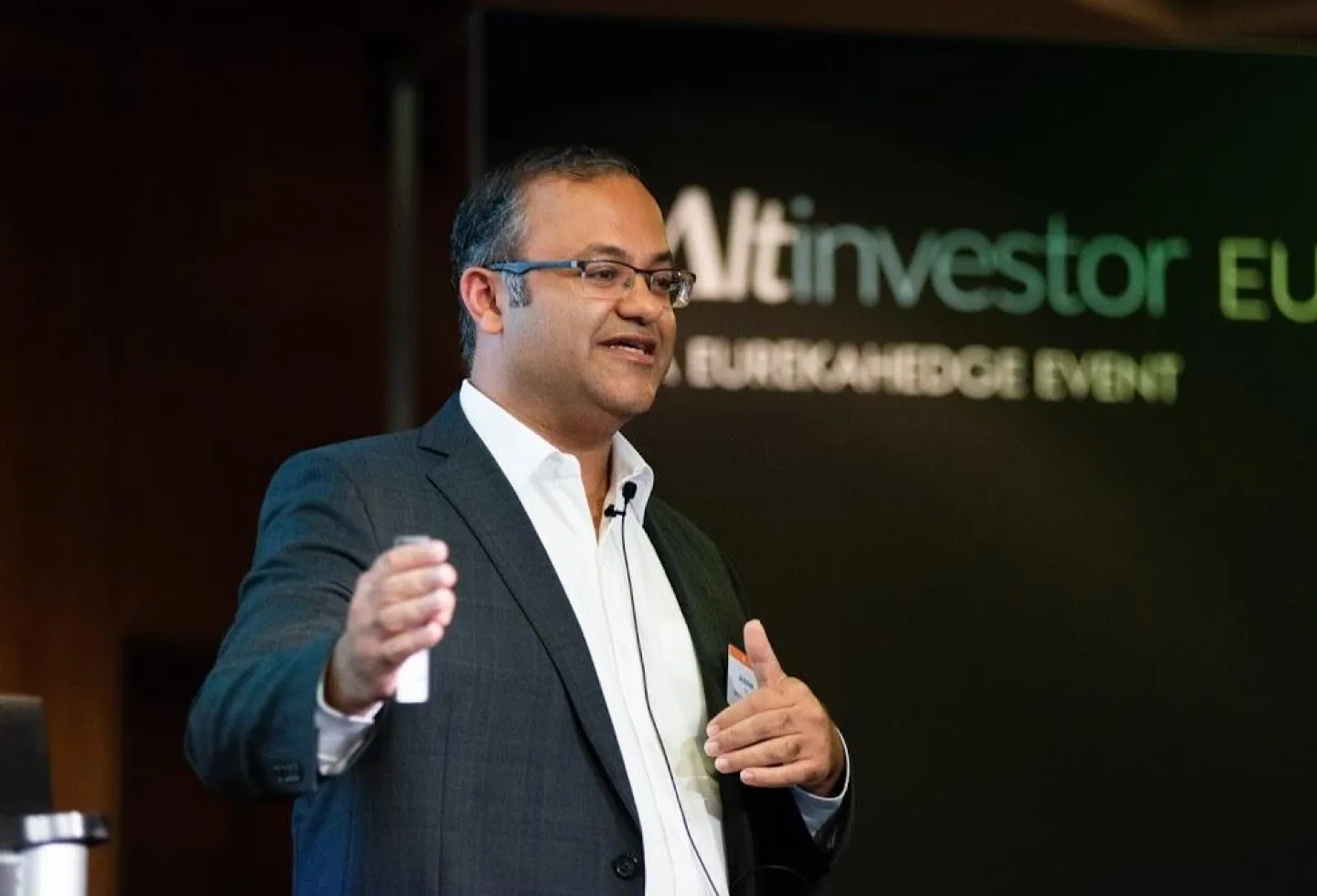
Erik Gordon, an entrepreneurship professor at the University of Michigan’s Ross School of Business, described the AI bubble as “almost as big as the planet Jupiter,” and warned that when it bursts, “the debris will be everywhere,” hitting big institutional investors and individual investors alike.
Gordon pointed specifically to Microsoft’s stock tumbling more than 6% following its earnings report as evidence, calling it “a warning of the burst to come,” attributing the decline directly to Microsoft’s enormous AI investment commitments.
This ai bubble warning from Erik Gordon is not new. He previously called AI an “order-of-magnitude overvaluation bubble” and warned that when it pops, the suffering would be more painful for investors than the aftermath of the dot-com bubble.
10 Critical Signs the AI Bubble is Slowing Down
Sign 1: The AI Stock Bubble Has Already Burst – According to Economists
John Higgins, chief markets economist at Capital Economics, concluded that the AI stock bubble has already burst. He found that the price-to-earnings ratio for information technology and Big Tech, which had risen sharply over several years, fell from around October 2025 and is now the smallest it has been since the pandemic.
That is the ai bubble burst warning most people missed. It did not happen with a loud crash. It happened in the numbers.
Sign 2: 95% of Companies Are Getting Zero ROI From AI
This one is hard to ignore.
An August 2025 report by MIT’s Nanda research group found that despite $30 to $40 billion in enterprise investment into generative AI, 95% of organisations were getting zero measurable return.
Zero. Not low returns. Zero.
That is the definition of an ai spending bubble warning, capital flowing in, results not flowing out.
Sign 3: OpenAI is Running Out of Money
OpenAI missed its internal goal of one billion weekly active users and its 2025 revenue targets. CFO Sarah Friar openly warned the company might not be able to pay for future computing contracts.
OpenAI has been projected to run out of money by mid-2027, while spending $5.02 billion on inference with Microsoft Azure in just the first half of 2025 alone.
The company that started this entire AI wave cannot sustain its own costs. That is an ai bubble alert no one should ignore.
Sign 4: Microsoft Lost $440 Billion in a Single Day
The January 2026 selloff, in which Microsoft alone lost $440 billion in market value in a single day, provided a stark preview of how quickly AI-related losses can materialise.
Microsoft beats earnings. Stock drops 12%. Why? Because investors are no longer just cheering AI investment, they are asking when it returns money.
Sign 5: Circular Funding is Keeping the Numbers Artificially Inflated
OpenAI signed a $100 billion deal with Nvidia. Nvidia spends money on data centers. Oracle builds those centers. Then OpenAI runs out of cash, creating a circular chain where the same money flows between the same companies, inflating the appearance of a functioning market.
This is what an ai market bubble warning looks like from the inside. Not fraud. Just companies funding each other and calling it growth.
Sign 6: The Google AI Bubble Warning is Already Visible in Its Valuations
In late 2025, 30% of the US S&P 500 was held up solely by the five largest companies, the greatest market concentration in half a century. Share valuations were reportedly the most stretched since the dot-com bubble, with the S&P 500 trading at 23 times forward earnings and the Shiller price-to-earnings ratio exceeding 40 for the first time since the dot-com crash.
The google ai bubble warning is built into that number. When five companies hold up 30% of the entire index, a correction in any one of them does not stay contained.
Sign 7: Consumer Interest in AI Marketing is Fading
Dell’s decision to relaunch its XPS laptop brand at CES 2026 without any emphasis on AI features was seen as a stark sign that consumer interest in AI marketing is already fading, shifting the focus back to performance, longevity, and design.
Companies that spent years adding “AI-powered” to everything are quietly removing it. That is not a positive sign for the ai bubble alarm coming from the market.
Sign 8: The Energy Math Does Not Add Up
The market is pricing in 114 gigawatts of power capacity, but only 15.2 gigawatts is actually under construction. That is a 750% gap between what the AI infrastructure build-out requires and what physically exists.
Silicon Valley’s accelerating spending on data centers and chips has already outpaced what even the largest tech companies can afford, with companies like Amazon, Google, Microsoft, Meta, and Oracle spending a record 60% of operating cash flow on capital expenditures.
You cannot run AI at scale without energy. The energy is not there.
Sign 9: The Dot-Com Comparison is Getting Harder to Dismiss
At today’s AI valuations, an equity crash similar to the early 2000s dot-com collapse would wipe out approximately $33 trillion of value, more than the entire US GDP. Harvard economist Jason Furman estimated that AI-driven infrastructure investment accounted for 92% of US GDP growth in the first half of 2025.
In other words: if AI investment reverses, it does not just hurt tech stocks. It risks pushing the entire economy into recession.
Ray Dalio of Bridgewater Associates said in early 2025 that current AI investment levels are “very similar” to the dot-com bubble.
Sign 10: Even AI Leaders Are Warning People
This is the clearest ai bubble burst warning of all, when the people building AI tell you to be careful.
| Who Said It | What They Said |
| Sam Altman, OpenAI | “People will overinvest and lose money.” |
| Jamie Dimon, JP Morgan | “There is a higher chance of a meaningful drop in stocks than the market reflects.” |
| Jeff Bezos | Called it an “industrial bubble.” |
| Mark Cuban | “Companies are spending in a winner-take-all race that could become obsolete within a decade.” |
| Erik Gordon, University of Michigan | “The AI bubble is almost as big as the planet Jupiter. When it bursts, the debris will be everywhere.” |
When insiders warn you, the ai spending bubble warning is real.
AI Bubble vs. Dot-Com Bubble: How Similar Is It?
| Factor | Dot-Com Bubble (2000) | AI Bubble (2026) |
| Market concentration | High | Higher |
| Unprofitable companies funded by hype | Hundreds | Thousands |
| Shiller P/E ratio | ~44 at peak | Exceeded 40 in 2025 |
| Total value at risk | ~$6 trillion wiped | Estimated $33 trillion at risk |
| GDP dependence | Low | AI = 92% of US GDP growth (H1 2025) |
| Warning from insiders | Some | Widespread |
The scale is bigger. The dependence is deeper. The ai market bubble warning carries more weight this time.
Who Gets Hurt If the AI Bubble Bursts?
Around 62% of Americans who reported owning stocks in 2025 could be affected if the AI bubble pops, and approximately 54% of people with incomes between $30,000 and $80,000 have investment accounts.
A burst does not stay in a boardroom. It travels through pension funds, retirement accounts, and everyday savings.
Frequently Asked Questions
What is the AI bubble warning? It is a set of signals, from economists, market data, and AI company financials, suggesting that AI investment has grown far beyond what current revenue and returns can justify. Multiple analysts and AI leaders have issued this warning publicly in 2025 and 2026.
What did Erik Gordon say about the AI bubble? Erik Gordon, professor at the University of Michigan’s Ross School of Business, called the AI bubble “almost as big as the planet Jupiter” and warned it would be more damaging than the dot-com crash when it bursts. He pointed to Microsoft’s sharp stock decline as an early warning sign.
Has the AI bubble already burst? Partly. Capital Economics’ chief markets economist John Higgins said the AI stock bubble has already burst based on price-to-earnings ratios falling from October 2025. A deeper infrastructure bubble, however, may still be building.
What is the biggest sign of an AI spending bubble? The clearest sign is the gap between capital deployed and returns generated. MIT found that 95% of organisations investing in generative AI are getting zero measurable return, despite tens of billions being spent.
Could the AI bubble crash be worse than dot-com? Economists at Oliver Wyman calculated that an equity crash at today’s AI valuations could wipe out $33 trillion, more than the entire US GDP and roughly five times the damage of the dot-com crash.
Conclusion
The AI bubble warning is not coming from pessimists. It is coming from the people running the biggest AI companies, the economists tracking market valuations, and the professors who have seen this pattern before.
The signs are visible:
- Revenue does not match investment
- Energy infrastructure is not there
- Consumer enthusiasm is cooling
- Circular funding is masking real fragility
- AI market concentration mirrors dot-com levels
AI is real technology. It will matter long-term. But the money flowing into it right now has outpaced what reality can support, and that gap is exactly what every serious ai bubble alarm is pointing at.