
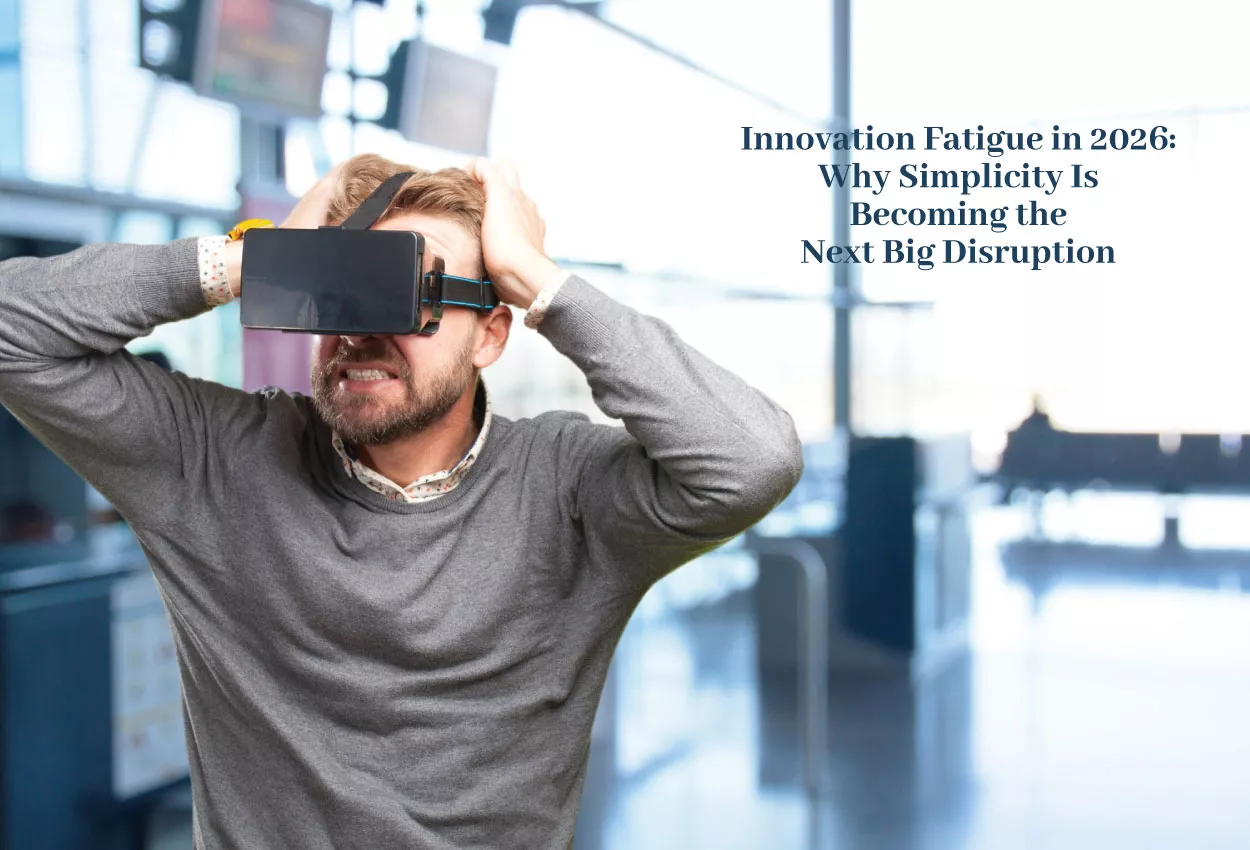
For years, innovation has been associated with speed, complexity, constant upgrades, and the endless pursuit of what comes next. Businesses competed to introduce smarter technologies, faster systems, more features, and increasingly sophisticated digital experiences. Consumers embraced innovation enthusiastically as new devices, platforms, and tools promised convenience, connectivity, and efficiency.
Yet by 2026, a different conversation is beginning to emerge across industries and consumer markets. Many people are no longer overwhelmed by the absence of innovation. They are overwhelmed by the excess of it.
Continuous notifications, endless software updates, crowded applications, feature-overloaded products, and increasingly complicated digital ecosystems have created a growing sense of fatigue among consumers and businesses alike. Technology designed to simplify life has, in many cases, made daily experiences more fragmented, distracting, and mentally exhausting.
The Rise of Innovation Fatigue
Innovation fatigue reflects the growing exhaustion people experience from constant technological change and digital overload. Consumers are being asked to adapt continuously to new platforms, interfaces, devices, subscriptions, updates, and communication channels.
The pressure to remain digitally connected at all times has blurred the boundaries between work, entertainment, communication, and personal time. Businesses face similar challenges as employees navigate increasingly complicated software ecosystems, data platforms, automation tools, and digital workflows.
Instead of creating efficiency, excessive complexity can reduce productivity, increase stress, and weaken engagement. Users often spend more time learning systems than benefiting from them.
Consumers are also becoming less impressed by innovation for innovation’s sake. Many no longer associate additional features with greater value. Instead, they increasingly prioritize products and services that feel intuitive, accessible, and effortless to use.
This shift is changing how businesses think about innovation itself.
Why Simplicity Is Becoming More Valuable
Simplicity is no longer seen as the lack of complexity. It is fast becoming a strength.
The innovations that will be most successful in 2026 will be those that decrease friction instead of adding features. People are placing greater importance on experiences that save them time, effort, and offer clarity amid the digital clutter.
It is being recognized that people do not need more choices; they need better experiences.
From technology to banking, health care to retail, transportation to entertainment, organizations are designing products and processes to feel more human and more psychologically comfortable for users.
Minimalist designs, simpler user experiences, concise communication, and function-focused designs are becoming increasingly appealing to both consumers and companies.
Technology That Works Quietly
Another very prominent trend in 2026 is the increasing popularity of “invisible technologies.” While traditional systems required users to interact with them all the time, today’s innovations seek to run behind the scenes while helping people in their daily routines.
It seems that customers appreciate the technologies that do not require them to pay constant attention or make additional efforts to master the system. It is evident that smart automation, voice interfaces, prediction, and adaptation technologies become even more important when they help save effort rather than complicate life.
Thus, the priority of innovation moves from being noticeable to being effortless.
Similarly, businesses are developing ecosystems based on digital solutions that streamline the work processes and minimize confusion.
In most cases, the more technologically advanced the innovation is, the less visibility it has.
The Psychological Need for Simplicity
Not only is the rise of simplification technological, but it is also very much psychological.
Modern-day consumers find themselves in environments that are flooded with information, digital distractions, and decision-making. Notifications, updates, subscriptions, apps – everything fights for our attention.
This information overload leads to mental exhaustion. People become more and more attracted to solutions that are simple and easy to digest.
Simpler solutions help avoid decision fatigue and provide more control. Effective communication, minimalistic design, intuitive interaction, and functionality are crucial for reducing mental load.
This consumer behavior becomes more and more important.
The Future of Human-Centered Innovation
The move towards simplicity is part of a trend towards more human-centric innovation. Technology becomes more valuable to us when it conforms to human nature rather than requiring humans to always change their behavior according to technology.
Individuals want products that are intuitive, less disruptive, and emotionally stable. This is not an attempt by society to abandon innovation. On the contrary, it is calling for innovation that enhances our lives without adding extra pressure on our minds.
Simplicity as the Next Competitive Advantage
As businesses evolve into more complicated entities in their respective domains, simplicity emerges as a potent form of disruption in the current era. Companies that are able to decrease friction, enhance clarity, and introduce a sense of tranquility in these systems have significant value.
It may be the case that the innovations of the future do not come at such a volume nor speed but may rather be subtle, quiet, and more intuitive.
Given the prevalence of information and stimulation in our present-day era, simplicity has become less of a design approach and more of a strategy in light of the psychological nature of the era.




