
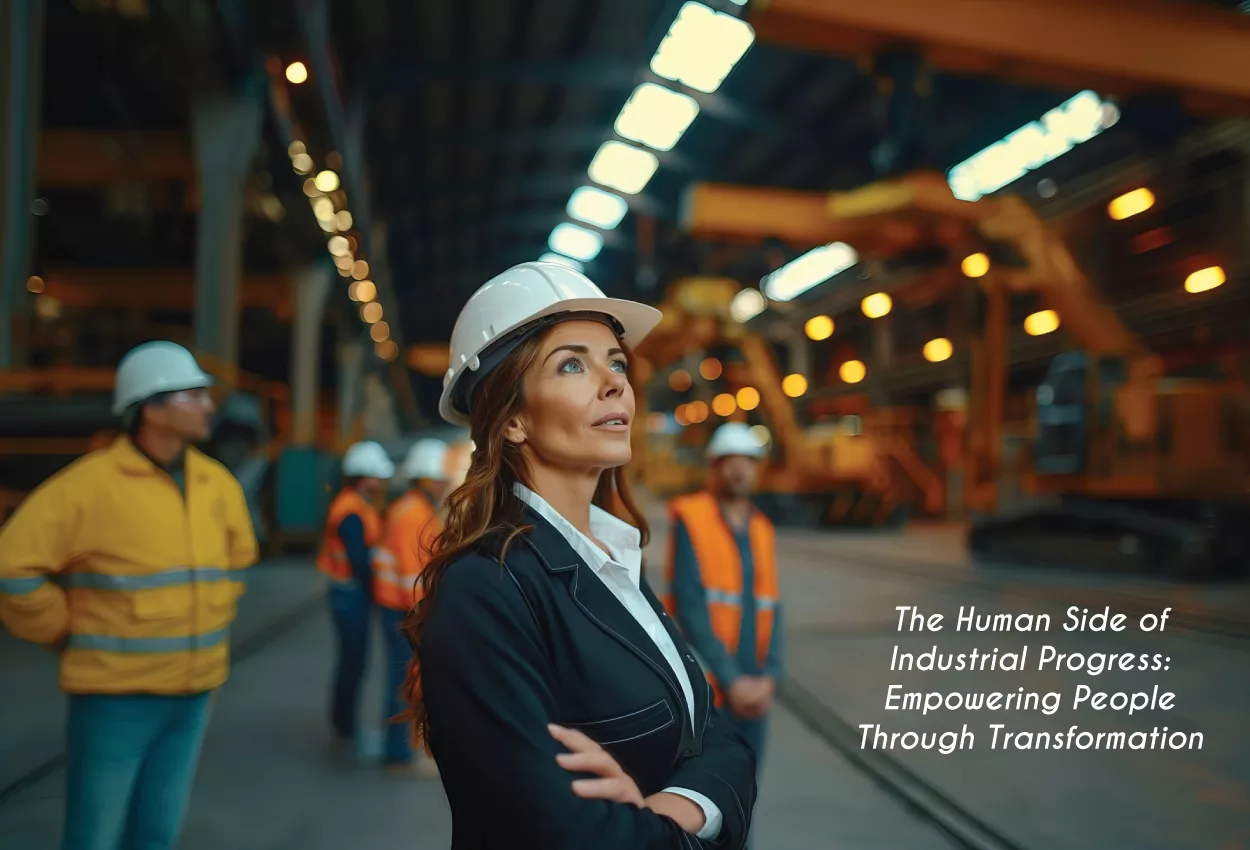
Industrial progress is often measured through tangible outcomes: higher productivity, advanced technologies, smarter factories, and stronger economic performance. Discussions surrounding industrial transformation frequently focus on automation, artificial intelligence, digitalization, and operational efficiency. While these advancements undoubtedly play a critical role in shaping the future of industry, they represent only part of the story.
Behind every innovation, every production line, and every technological breakthrough are people. Employees, engineers, technicians, operators, and leaders remain the driving force behind industrial success. The most impactful industrial organizations understand that sustainable progress is not achieved through technology alone. It is created when innovation and human potential evolve together.
As industries continue to transform, organizations must recognize that empowering people is not separate from industrial advancement; it is fundamental to it.
Transformation Starts with People
The success of any industrial transformation initiative depends largely on the people responsible for implementing and sustaining it. New technologies may introduce opportunities for greater efficiency, but their effectiveness ultimately relies on how well individuals understand, embrace, and utilize them.
Resistance to change is often misunderstood as opposition to progress. In reality, resistance frequently reflects uncertainty about what change means for employees, their roles, and their future. When organizations focus exclusively on systems and processes while overlooking human concerns, even the most sophisticated initiatives can struggle to achieve their intended outcomes.
Successful transformation begins with communication, engagement, and trust. Employees need to understand not only what is changing but also why it matters and how they can contribute to the organization’s future success.
When people feel informed, valued, and included, transformation becomes a shared journey rather than a top-down directive.
Building a Culture of Adaptability
Industrial sectors are experiencing unprecedented shifts driven by technological innovation, sustainability requirements, changing customer expectations, and global competition. As a result, adaptability has become one of the most valuable organizational capabilities.
Creating an adaptable workforce requires more than technical training. It requires cultivating a culture that encourages learning, experimentation, and continuous improvement.
Organizations that thrive during periods of change are those that empower employees to develop new skills, explore innovative ideas, and contribute to problem-solving efforts. Rather than viewing transformation as a disruption, these organizations position it as an opportunity for growth and development.
A culture of adaptability enables businesses to respond more effectively to emerging challenges while strengthening employee confidence and engagement.
Technology as an Enabler, Not a Replacement
One of the most important discussions concerning industrial development is the relationship between technology and jobs. Automation, artificial intelligence, robotics, and advanced analytics are transforming how work is done across industries.
Though the fear of losing jobs often dominates the conversation, the most progressive organizations see technology differently. They see it as a tool for amplifying human abilities, not supplanting them.
Automation is most effective when it can handle repetitive, time-consuming and highly predictable tasks. Technology frees employees from the drudgery of routine activities so they can focus on what human strengths deliver the most value: critical thinking, creativity, collaboration, innovation, and decision-making.
The real power of industrial transformation is leveraging technology to augment, not replace, human contribution.
Developing Skills for the Future
As industries change, the demand for new capabilities increases. While technical expertise will continue to be important, future-ready organizations are increasingly recognizing the importance of broader competencies such as problem-solving, adaptability, communication, and leadership.
Workforce development has thus become a strategic priority and not a human resources function.
Organizations that invest in continuous learning bring huge benefits to both employees and the business. Upskilling and reskilling initiatives help individuals stay relevant in changing environments and ensure organizations have the talent they need to meet long-term goals.
More importantly, investing in employee development sends a powerful message. It is faith in the capacity of people to grow, to contribute, and to succeed as technology advances.
The Future of Industry Is Human-Centered
Technological innovation will no doubt determine the future path of industrial progress. Smart manufacturing, artificial intelligence, advanced robotics, predictive analytics, and sustainable production methods will continue to reshape industries across the world.
However, the organizations that will have the greatest impact will be those that remember a simple but powerful principle: technology transforms operations, but people transform organizations.
Those industrial leaders who invest in workforce development, adopt inclusive cultures, support continuous learning, and put employee well-being first will be better prepared to navigate future challenges and opportunities.
Machines will not write the next chapter of industrial progress alone. The winning organization will be the one that knows how to combine innovation with human potential, operational excellence with empathy, and technological advancement with meaningful purpose.
At the end of the day, it’s not only part of transformation, but it’s the basis of sustainable industrial success to empower people.