
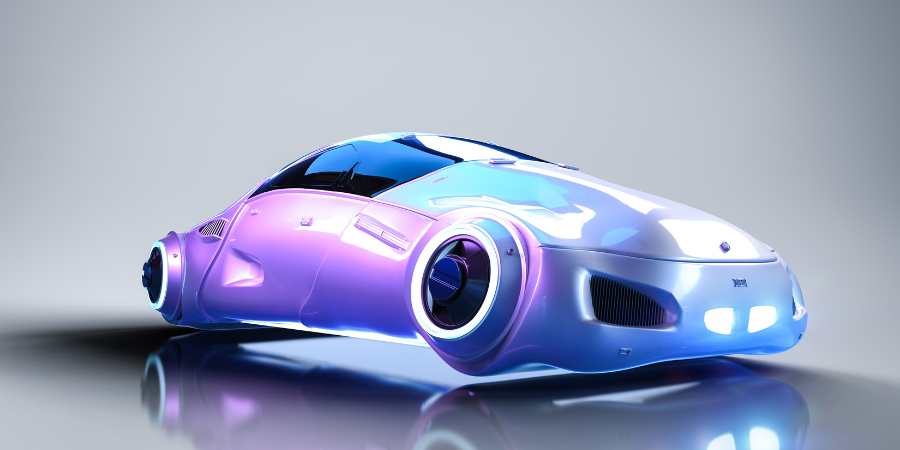
The automotive industry is rapidly evolving beyond the era of software-defined vehicles (SDVs) into a new paradigm: AI-defined vehicles (AIDVs). While SDVs introduced the concept of vehicles whose features and functionality could be controlled and updated through software, AIDVs take the concept further by placing artificial intelligence at the center of vehicle operations, decision-making, and user experiences.
In an AIDV, AI enhances existing software applications as an intelligence layer that analyzes data, learns from real-world conditions, and optimizes vehicle performance in real time throughout its lifecycle. AI is reshaping how vehicles are built, operated, and maintained.
AI in Automotive Manufacturing
Today’s manufacturing facilities leverage AI in cars to improve efficiency, product quality, and production flexibility. One of the most common uses is AI-powered quality inspection. Computer vision systems equipped with machine learning models analyze thousands of vehicle components and assemblies in real time, identifying defects that may be difficult for human inspectors to detect consistently. High-resolution cameras and AI algorithms can detect paint imperfections, welding inconsistencies, alignment issues, and component defects with remarkable accuracy.
Predictive maintenance is another area where AI is delivering significant value. Manufacturing facilities generate massive amounts of operational data from robots, assembly equipment, conveyor systems, and industrial sensors. AI models continuously monitor this data to identify patterns associated with equipment degradation or potential failures.
Instead of relying on fixed maintenance schedules, manufacturers can predict when machinery requires servicing and address issues before they cause costly production disruptions. This approach reduces downtime, improves operational efficiency, and helps maintain consistent production quality.
AI also plays a growing role in production planning and supply chain optimization. Automotive supply chains involve thousands of suppliers, components, and logistics processes. Machine learning algorithms can analyze historical demand patterns, inventory levels, supplier performance, and market conditions to improve forecasting accuracy and optimize resource allocation.
As a result, manufacturers can reduce inventory costs, improve production scheduling, and respond more effectively to supply chain disruptions.
Accelerating Vehicle Development
Beyond factory operations, AI is transforming vehicle design and engineering processes. OEMs use AI-driven simulation and digital twin technologies to evaluate vehicle performance before physical prototypes are built. Engineers can simulate crash scenarios, aerodynamic behavior, battery performance, and ADAS functionality in virtual environments, significantly reducing development time and costs.
Generative AI is also beginning to assist engineering teams by analyzing design requirements and proposing optimized component structures. This capability can help manufacturers identify lightweight materials, improve structural performance, and accelerate product development cycles.
By enabling faster testing and validation, AI supports the rapid deployment of new vehicle technology without compromising safety and regulatory compliance.
The Foundation of Vehicle Intelligence
Once deployed, AI becomes a core component of the vehicle’s operational intelligence. AIDVs constantly process data from cameras, radar, liDAR, GPS, vehicle sensors, and cloud-connected services. This information enables advanced driver assistance systems (ADAS), driver monitoring systems, and intelligent vehicle controls to function more effectively.
Machine learning algorithms can identify driving patterns, monitor environmental conditions, and make real-time adjustments to vehicle systems. For example, AI can optimize regenerative braking in electric vehicles, improve energy management, or adapt suspension settings based on road conditions and driver behavior.
Unlike rules-based software, AI systems continuously improve their performance as they encounter new scenarios and receive updated training data. This adaptive capability sets AIDVs apart from their SDV counterparts.
Personalizing the Driver Experience
A key feature of AIDVs is their ability to provide personalized user experiences long after a new owner drives off the lot. Vehicles generate huge amounts of data about driver preferences, habits, routes, and usage. AI systems analyze this information to create personalized settings that automatically adjust based on the driver. Among them are seat and mirror positions, climate control preferences, navigation recommendations, driving modes, and infotainment settings. Over time, AI can anticipate user needs to minimize manual adjustments and distractions.
Generative AI and natural language processing technology has dramatically improved driver assistance. Rote command structures have been replaced by AI that understands conversational language, answers complex questions, and even provides contextual support.
Post-Sales AI Applications and Predictive Maintenance
Predictive maintenance represents one of the most significant benefits of AIDV technology. Traditional vehicle maintenance typically relies on predefined service intervals regardless of actual component condition. AI changes this model by continuously monitoring vehicle health through onboard sensors and diagnostic systems.
Machine learning algorithms detect subtle changes in component performance and identify issues before they become serious failures. Drivers receive maintenance recommendations based on real-time vehicle usage and operating conditions–an approach that improves vehicle reliability, reduces repair costs, and minimizes breakdowns.
For manufacturers and dealerships, predictive maintenance also creates opportunities to deliver proactive service experiences for improved customer satisfaction and long-term relationships.
Continuous Improvement Through Over-the-Air Updates
AIDVs offer another key advantage: over-the-air (OTA) software updates. These allow manufacturers to deploy new features, improve existing functionality, enhance cybersecurity protections, and optimize AI models without a scheduled service visit. As AI learns from aggregated fleet data, manufacturers can refine algorithms for ADAS, energy management, navigation, and driver assistance features.
Vehicle performance and functionality, therefore, improve throughout the ownership lifecycle for a dynamic and proactive user experience.
The Future of AI-Defined Mobility
AIDVs represent a fundamental shift in automotive innovation. By integrating AI throughout manufacturing, operations, and post-sales services, automakers are creating vehicles that can learn, adapt, and improve over time in the hands of a single owner.




