
Coming home does not automatically mean the working day feels finished. Emails may still be on your phone, tomorrow’s tasks may be running through your head, and a room that doubles as an office can make it difficult to feel that anything has changed except your location.
Your home cannot eliminate work-related pressure, but its layout and atmosphere can make the transition into personal time easier. Small changes to lighting, comfort, technology, and evening routines can create clearer signals that work is over and the rest of the day has begun.
Create a Clear End-of-Work Routine
One of the hardest things about working from home or staying digitally connected after leaving the office is the absence of a clear stopping point.
Create one deliberately. Shut down the computer rather than leaving it open. Put notebooks and work documents away. Change clothes, make a drink, take a shower, or go for a short walk before settling into the evening.
The routine does not need to be complicated. Its purpose is simply to create separation.
Personal care can become part of that transition too. An evening shower followed by skincare or a body-care routine using something familiar from Medterra can create a comfortable ritual that belongs to personal time rather than the working day.
Repeating the same sequence regularly can make the change from work mode to home mode feel more deliberate.
Stop Letting Work Take Over the Whole House
A laptop on the dining table can gradually turn an entire room into an extension of the office.
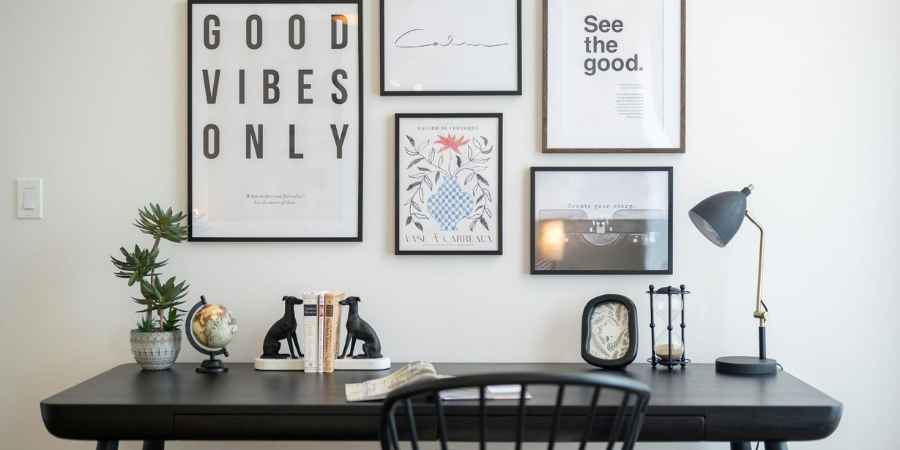
If possible, keep work within one defined area. A separate home office is ideal, but it is not essential. A particular desk, corner, or even a storage box for work equipment can establish a useful boundary.
At the end of the day, remove visible reminders. Put the laptop away, close the office door, clear papers from shared surfaces, and silence unnecessary work notifications.
This becomes particularly important in small homes, where the same room may need to serve several purposes. Physical separation may be limited, but visual separation can still make a difference.
Your living room should not continue reminding you about tomorrow’s workload while you are trying to enjoy tonight.
Give the Living Room a Natural Focal Point
A room feels more inviting when there is somewhere for the eye, and the people in it, to settle.
Televisions often become the automatic focal point, but they do not have to dominate every evening. A fireplace can shift attention toward something slower and more atmospheric. Designs from The Great Fire Company can make the fireplace a deliberate part of the room’s character, creating a central feature around which seating and quieter evenings can be arranged.
Even without a fireplace, the same design principle applies. Arrange furniture around conversation, a view, bookshelves, or another feature that makes the room feel like a place to spend time rather than simply somewhere to watch another screen.
The goal is to give the room an identity that has nothing to do with productivity.
Change the Lighting After Work
Photo by Andy Bob on Unsplash
Bright overhead lighting may be useful when answering emails or completing household tasks, but it can make an evening room feel unnecessarily functional.
Use several smaller sources of light instead.
Table lamps, floor lamps, wall lights, and other softer options can create distinct areas within a room. Turning off the main light after work can even become part of the transition between daytime responsibilities and the evening.
Warm, indirect lighting also makes ordinary activities feel different. Reading on the sofa, having dinner, listening to music, or talking with someone can feel more intentional when the room no longer resembles a workspace.
You do not need an elaborate lighting system. Sometimes moving a neglected lamp into the right corner changes the atmosphere more than buying another decorative object.
Make Comfort Easy Rather Than Aspirational
A relaxing home should not require twenty minutes of preparation before you can enjoy it.
If you like reading, keep the current book somewhere accessible. If evenings on the sofa are your preferred way to unwind, keep a blanket nearby rather than hidden in a cupboard. If music helps change the atmosphere, make it easy to play without navigating several devices.
The same applies to furniture.
A beautiful chair that nobody enjoys sitting in contributes less to relaxation than a comfortable one positioned exactly where you naturally want to spend the evening. Coffee tables should be reachable, lighting should work from where you sit, and frequently used objects should not require constant searching.
Good design supports the way you actually live rather than the version of home life that looks best in photographs.
Reduce the Number of Things Asking for Attention
Visual clutter can make a room feel unfinished even when it is perfectly clean.
That does not mean adopting extreme minimalism. The aim is to reduce unnecessary competition for attention.
Give everyday objects a consistent place. Keep surfaces reasonably clear. Hide cables where practical. Store work equipment when it is not being used and reconsider decorative items that no longer contribute anything to the room.
Digital clutter matters too. A peaceful living room will not feel particularly peaceful if a phone is producing work notifications every few minutes.
Consider setting boundaries for work apps after a certain hour or leaving the phone somewhere other than directly beside you during dinner and other parts of the evening.
Build Your Home Around the Evenings You Actually Want
The most useful question is not, “What does a relaxing home look like?” It is, “What do I actually want to do when work is finished?”
For one person, that might mean cooking without rushing and having a proper dinner. Someone else may want to read, watch a film, exercise, spend time with family, work on a hobby, or simply sit somewhere comfortable without doing very much at all.
Design around those activities.
If you want to read more, create a genuinely comfortable reading spot. If conversation matters, arrange seating so people naturally face one another. If evenings outside help you unwind, make the balcony or garden somewhere you actually want to use.
A home that helps you switch off does not need to resemble a spa or a perfectly styled interior. It needs clear boundaries between work and personal time, comfortable places to spend the evening, fewer unnecessary distractions, and routines that make slowing down feel natural.
When the environment supports the way you want to spend your time, leaving work behind becomes much easier than simply telling yourself to stop thinking about it.