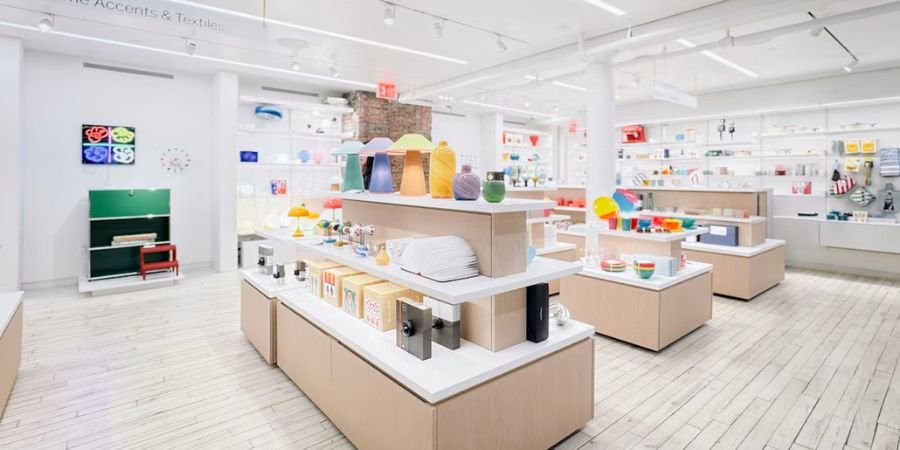
Physical stores give brands something a website can’t fully reproduce: a place where customers can see scale, feel materials and interact with products before making a decision. Recent findings on the return to physical retail show that stores remain relevant even as digital shopping grows. The strongest brands connect both channels, using online tools for convenience and physical spaces for discovery, service and memorable human contact.
The Real Value of Tangible Touchpoints
A storefront turns an abstract brand promise into a direct experience. Customers can test a chair, compare fabric colors under real lighting or ask an employee how a product works. Those moments reduce uncertainty and can increase confidence in a purchase.
Stores also support the personal relationships discussed in this article on the human side of digital marketing. A helpful conversation in a store may lead to an online order later, while a digital campaign can encourage someone to visit in person. Treat each touchpoint as part of one customer relationship. Keep prices, product details and brand language consistent across your website, social accounts and sales floor.
Designing Environments That Drive Dwell Time
A customer needs a clear reason to stay. Start with an open entrance, visible product categories and enough space to move without squeezing around displays. Place a compelling product story near the front, then use lighting and signs to guide people deeper into the store.
Current research on the modern retail experience highlights the growing mix of technology, thoughtful layouts and entertainment inside stores. A beauty retailer might add a product testing station, for example, while a home brand could build a small room setting that shows several items working together.
When these concepts require new fixtures, branded environments or a temporary pop-up, professional retail installations can help retailers complete the work while limiting disruption to active sales.
Executing Flawless Display Upgrades
Plan display changes around what customers and employees will encounter during the work. Map the installation zone, delivery route and storage area before materials arrive. If a busy store needs to replace six wall fixtures, an overnight schedule may prevent blocked aisles and lost daytime sales.
Give every contractor and store manager the same plan. It should identify fixture locations, electrical needs, finish details and the person authorized to approve adjustments. Photograph the space before work begins so the team has a record of existing conditions.
Test the completed display from a customer’s perspective. Check that signs are readable from several feet away, shelves sit level and key products remain within comfortable reach. Remove packaging, dust and temporary labels before reopening the area.
Measuring Offline Footprint Performance
Foot traffic alone offers an incomplete view of store performance. Track how many visitors make a purchase, how long they stay and which displays encourage interaction. Compare results before and after each upgrade using the same days and time periods. A Friday evening should be measured against another Friday evening, not a quiet weekday morning.
Connect physical activity to digital behavior where possible. Store-specific QR codes, appointment bookings and buy-online-pick-up-in-store orders can show how customers move between channels. Staff observations add useful context too. If visitors repeatedly ask where a featured item is located, the display may look attractive while still failing as a sales tool.
Review the data after two or three weeks, then change one element at a time. Moving a sign, opening a sightline or simplifying a product table can produce clearer evidence than rebuilding the whole area at once.
The best storefronts keep earning attention after opening day. Regular checks for worn graphics, empty displays and confusing pathways protect the experience customers came to see. When each update has a defined purpose and measurable result, the store becomes a working expression of the brand instead of a static showroom.