
Some buildings tell stories. Others hold them. But the most meaningful spaces do something far more powerful—they listen. They listen to the rhythms of tradition and the urgencies of modern life. They listen to how a mother whispers comfort in a crowded hospital room or how silence feels in a prayer niche at dawn. In this quiet conversation between form and feeling, architecture becomes more than shelter; it becomes a shared language—fluent in culture, emotion, and care.
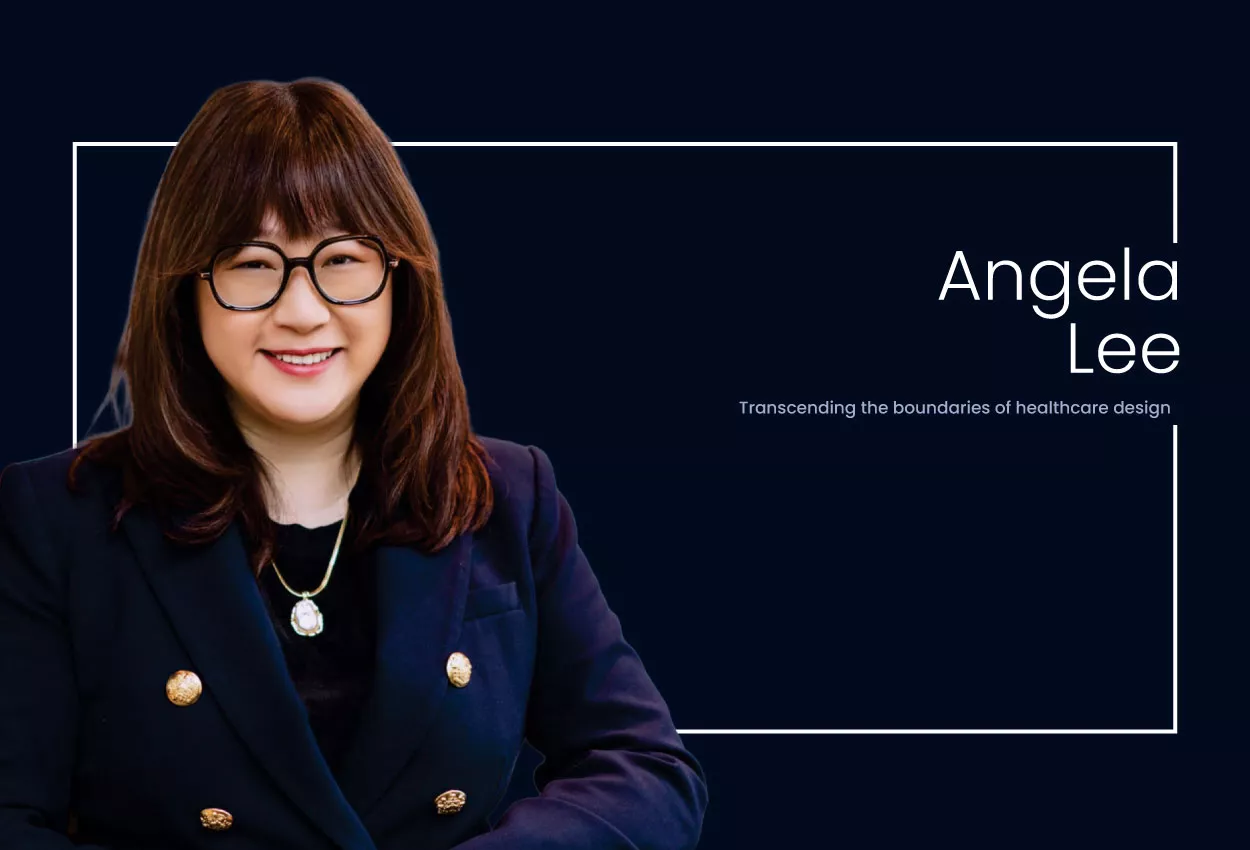
At the forefront of this philosophy is a leader whose work reshapes how we think about healing spaces across continents. As Managing Director for Asia Pacific, Europe, and the Middle East and a Partner at HKS, Angela Lee has spent nearly three decades transforming the boundaries of healthcare design.
Growing up in Hong Kong during British rule, she witnessed the coexistence of colonial and Chinese architecture, where neoclassical buildings like the Court of Final Appeal stood alongside structures built with bamboo scaffolding and simple stone and wood. Later, as a teenager in Oklahoma, she encountered a completely different architectural landscape, marked by both traditional and experimental designs. These early experiences instilled in Angela the understanding that space profoundly shapes community identity.
This foundation informs Angela’s approach to architecture as a bridge between cultures and human needs. When leading HKS’s Asia-Pacific expansion, Angela was intentional in selecting a traditional shophouse at 51 Duxton Road for the firm’s Singapore office rather than a modern office tower. The project became a model of cultural fluency—respecting the heritage of Singapore’s architectural past while aligning with modern environmental goals. The office became the first shophouse in the country to achieve the GreenMark Gold Plus certification.
Angela’s cultural sensitivity extends beyond commercial design into healthcare. Early in her career, a powerful moment at Obici Hospital in Virginia left a lasting impression. An elderly man shared a poem he had written for his dying wife, and the emotional resonance of that experience underscored for Angela that healthcare spaces must support not just clinical outcomes, but emotional ones as well. This belief has guided projects such as the Vietnam Cancer Hospital, where family gathering courtyards were intentionally designed to support communal healing traditions.
From Macau’s Central Library—which merges Portuguese Azulejo tiles with contemporary functionality—to emotionally attuned healing environments in Southeast Asia, Angela consistently demonstrates that architecture can and should connect worlds: past and present, East and West, structure and soul.
Where Science, Soul, and Culture Converge
For Angela, architecture was less a career choice and more a calling— “architecture chose me,” she reflects. What resonated most deeply was the field’s rare fusion of logic and humanity. During the early years at HKS, Angela became particularly captivated by the power of evidence-based design to influence healing outcomes. She recalls how research demonstrating the role of daylight in reducing patient recovery times began to shape the way she envisioned and designed patient rooms, where science met soul.
Angela’s academic journey laid the foundation for architecture with a mission. Her studies on behavioral health units evolved into tangible design solutions, coming to life most notably at St. Rose Dominican Hospital in 2000. There, working within the client’s request for Spanish Mission style, she learned how to weave spiritual symbolism into spaces of care, bringing a sense of calm and reverence to the environment. She applied decentralized nursing stations that placed caregivers closer to patients, while thoughtfully framing views of the surrounding mountains to evoke psychological relief and support healing.
Angela’s commitment to merging scientific insight with cultural sensitivity continued to grow. In 2017, while lecturing at Gadjah Mada University, she emphasized the importance of “design intelligence”—an approach that integrates rigorous data with local context and human empathy. Drawing from research conducted within HKS, proposed to the National University of Singapore on nursing home environments, Angela helped guide students in understanding how architecture must respond to both metrics and meaning.
This balance was fully realized in Parkway Health’s Chengdu Hospital project, where Angela led the transformation of a half-constructed shopping mall into a pandemic-resilient hospital. The result was a space that met the demands of local needs and traditions while embracing sustainable design through the adaptive reuse of an existing structure
Across her career, Angela has remained steadfast in her belief that architecture sits at the intersection of art, science, and the human experience—and that great design must serve all three.
A Life Built Within HKS
Angela’s 31 years journey at HKS is a testament to the firm’s dynamic and inclusive culture—one that has consistently embraced unconventional thinking. What has kept her inspired all these years is HKS’s entrepreneurial spirit and flat organizational structure. As a young architect, Angela found herself engaging directly with senior leadership who invested time in mentoring and empowering the next generation. That culture of trust and encouragement helped shape her into the leader she is today.
Early in her career, Angela was given the freedom to pitch bold ideas—one of which was HKS’s pro bono project, Reba’s Ranch House, in 1996. Its success marked a turning point, not just professionally, but personally. It was then that she began devoting more time to designing for communities, seeing architecture as a vehicle for social impact. Around the same time, she became active on two charity boards: Mosaic Family Services, Inc., a Dallas-based nonprofit that provides a safe haven for survivors of human rights abuses, and Global Health Charities, a Detroit-based organization focused on improving maternal and newborn health in underserved communities. This deepened commitment to purpose-led design would later shape her leadership style—most notably during her appointment as head of HKS’s Asia-Pacific expansion in 2014. Under her leadership, the office maintained a workforce that was 60% women, and brought together talent from 12 nationalities.
For Angela, the firm’s mission has always aligned with her own values. HKS has supported her in merging Western healthcare design standards with the cultural contexts of Asia. From Ethiopia’s first JCI-accredited hospital design to pandemic-ready emergency rooms in Macau, and most recently, the biophilic “Hospital-in-a-Park” design for Singapore’s Tengha Hospital Competition, Angela continues to push boundaries while staying grounded in purpose.
Design Without Borders
Angela’s global design portfolio has taught her that while the need for care is universal, how that care is expressed and received is deeply rooted in local customs and emotional frameworks. Across continents, she’s learned that the human need for dignity, particularly in the care of the sick and elderly, is a shared value.
In Saudi Arabia’s Etoile Wellness Center, Angela and her team applied Islamic geometric aesthetics and the guiding principles of the Wellness Wheel to create an environment rooted in holistic healing. Meanwhile, in India, working closely with local partners helped the team understand the critical need for efficient crowd flow at Aster Medcity, where seasonal patient loads can triple. In multiple locations, where the hospital sits in a flood-prone zone, Angela adopted strategies to maintain service continuity.
Through these projects, Angela has remained committed to respecting the unique ways each community heals, while ensuring healthcare spaces remain deeply functional and emotionally resonant.
Vision for Emotionally Intelligent Healthcare Spaces
For Angela, healthcare spaces are not just buildings—they are emotional ecosystems. With years of experience across diverse healthcare environments, she has honed a Design thinking approach rooted in empathy, cultural awareness, and patient dignity.
Angela believes that hospitals must offer patients a sense of control and choice to counteract the often dehumanizing nature of medical treatment. At Parkway Shanghai Hospital, for instance, her team’s design brought patient room controls closer to the bedside, enabling greater autonomy and improving overall satisfaction. Elsewhere, dementia care design was enhanced using research that showed how racetrack-style corridors—allowing for continuous movement without dead ends—could help reduce patient agitation. These insights have gone on to influence the layout of future memory care facilities.
Angela also places great importance on cultural comfort, especially in more conservative regions. In Doha, she ensured that there were multiple prayer rooms distributed throughout the hospital to accommodate both families and staff. Such thoughtful integrations reflect her belief that healing is not only physical, but also spiritual and emotional.
Through each project, Angela continues to uphold a vision where design meets humanity—where form, function, and feeling are seamlessly interwoven.
Bold Path to Empowering Future Leaders
Angela has built her leadership journey in a traditionally male-dominated field by choosing courage over comfort and leading with both conviction and empathy. Early in her career, she was mentored by a senior architect who empowered her to speak up and offer solutions. Angela has carried that spirit forward by mentoring younger professionals, particularly within HKS and the firm’s Singapore office.
Her commitment to advancing underrepresented voices was evident during her time as Chair of AIA Dallas Women in Architecture from 2008 to 2009. In that role, she worked to foster a more inclusive and supportive professional community, advocating for initiatives that promoted mentorship, visibility, and leadership opportunities for women in the field. Her focus was on building confidence and connection—ensuring emerging designers had access to networks, role models, and the tools to grow their presence in the profession.
Angela’s advocacy for equity continued as she helped establish HKS’s presence in the Asia-Pacific region. There, she championed progressive policies—such as more inclusive parental leave—and worked to create a culture where both women and men could thrive professionally without compromising personal priorities. Her intentional leadership has contributed to a visible shift in the region’s culture, where a growing number of women now hold senior roles and are shaping the firm’s future.
Approach to Inclusive Global Leadership
Leading teams across Asia Pacific, Europe, and the Middle East requires cultural fluency, and Angela has refined her leadership to balance HKS’s inclusive ethos with deep local respect. She makes it a point to understand and honor the norms, values, and sensitivities of each culture she engages with, while maintaining HKS’s flatter organizational structure that encourages open dialogue and collaboration.
Angela’s leadership style is both nuanced and adaptive, shaped by years of working across diverse cultural contexts. She values the importance of listening first, building trust, and understanding local norms before introducing change. Whether navigating the formality of Japanese business culture or responding to shifting dynamics in fast-paced environments like the Middle East, Angela leads with cultural intelligence, flexibility, and a steady focus on shared goals.
In situations of resistance, Angela combines cultural understanding with a clear, values-led approach to change. When one of her clients initially opposed adding isolation elevators, she presented SARS outbreak models to demonstrate the importance of pandemic preparedness. That foresight proved invaluable during COVID-19, highlighting her ability to anticipate future needs through culturally aware data storytelling.
Blueprint for Inclusive Healthcare Spaces
Angela believes that inclusive design begins with empathy—walking in the shoes of those who will use the space. She champions a human-centered process that involves listening closely to both patients and frontline staff to identify unmet needs and eliminate barriers.
Angela’s approach to healthcare design is grounded in empathy, practicality, and a deep respect for the people and cultures each project serves. In Qatar, she worked on a military hospital where internal courtyards were used to bring natural light deep into the building, enhancing patient recovery and staff well-being. In Australia, she contributed to healthcare projects that honored the needs and traditions of Aboriginal communities, integrating culturally respectful design features and community input. For Angela, inclusivity is not an add-on—it is a foundational principle of good design, with lasting impact on health outcomes, cultural connection, and workplace dignity.
Designing for a Greener Tomorrow
Angela is acutely aware of the tension between healthcare’s intensive resource demands and the urgent need for environmental responsibility. Her strategy lies in long-term thinking and adaptive design—creating solutions that are sustainable not just environmentally, but operationally and financially.
As part of its commitment to sustainability and thoughtful design, HKS Singapore has achieved BCA Green Mark certifications for both its past and present studios. The firm’s former home at 51 Duxton Road—a carefully restored heritage shophouse—was the first of its kind to receive Green Mark Gold Plus, setting a precedent for sustainable conservation in the city. Today, HKS continues that legacy at its new office in The Quadrant at 19 Cecil Street, which has also been awarded Green Mark Gold. Both spaces reflect the firm’s dedication to adaptive reuse, energy efficiency, and human-centered environments, proving that heritage and high performance can go hand in hand.
Angela also believes in reimagining what already exists. In 2018, her team worked on Ghana’s visionary “Wastescraper” concept, transforming e-waste landfills into modular healthcare clinics. The project showcased how a circular economy can thrive even in constrained environments, turning waste into wellness infrastructure.
Whether planning for pandemics or transforming existing structures into healing spaces, Angela continues to champion sustainability as a core tenet of healthcare design—one that respects both people and the planet.
Innovation Rooted in Purpose
Through this blend of inquiry, openness, and purposeful design, Angela continues to shape environments that are not only innovative but also profoundly human.
Designing for a Brain-Healthy Workplace
HKS Singapore’s new office at The Quadrant has been designed as Asia’s first “Brain Healthy” workplace—a living lab born from collaboration with the Center for BrainHealth. The 5,000 ft² heritage space is thoughtfully zoned to support key brain-affording behaviors: focus, ideation, collaboration, socialization, and rest. From acoustically controlled private workstations with abundant daylight to spontaneous mural-inspired breakout zones and a peaceful wellness room, every element supports cognitive well-being. Research-driven interventions—such as modular layouts, biophilic accents, and circadian lighting—help reduce distractions, restore mental energy, and foster creativity. Acting as a prototype for future workplaces, this brain-health-first approach signals HKS’s commitment: designing environments where humans, not just spaces, thrive.
Legacy of Preparedness and Human-Centered Vision
Angela’s career has been punctuated by projects that exemplify her belief in thoughtful, emotionally resonant, and forward-looking design. Among her most meaningful achievements is the Dell Seton Medical Center, which proved that even high-performing academic hospitals in dense urban environments can retain a human scale and warmth.
Another pivotal project was Macau Hospital, where Angela’s team implemented advanced isolation protocols as early as 2016. When the COVID-19 pandemic struck, these strategies were instrumental in controlling contagion, validating years of preparation and solidifying the hospital’s resilience. For Angela, moments like these reveal the full impact of her work: when design is not just beautiful or efficient, but life-saving.
Wisdom for the Next Generation
Angela offers practical, grounded advice to the next generation of architects, especially those interested in healthcare design. Her first piece of guidance: design with, not for. She encourages young professionals to shadow nurses, observe patient routines, and spend time inside the spaces they’re designing—whether that means overnight hospital stays or quiet observation of how people interact with care environments.
She also urges them to embrace discomfort. Her own career took a transformative turn when she moved to Singapore at age 45—a leap that pushed her out of her comfort zone but ultimately propelled her growth and leadership in global healthcare design. Angela’s message is clear: the most meaningful evolution happens when you dare to move beyond the familiar.
Angela’s message is clear: the most meaningful evolution happens when you dare to move beyond the familiar. It’s in these moments—of uncertainty, of humility, of listening deeply—that architecture transcends structure and becomes service. For Angela, great design isn’t just about innovation or efficiency; it’s about empathy in action. And as the world continues to face unprecedented healthcare challenges, her legacy is a reminder that truly human-centered spaces don’t just heal—they prepare, protect, and uplift.
The following examples offer a window into Angela’s legacy and the ethos of the firm, where design is not just a profession, but a responsibility to people, place, and possibility.
51 Duxton Road, Singapore
A source of nostalgia, “shophouses” are distinct to Singapore’s architectural and cultural heritage. The design for HKS’ Singapore office was driven by the desire to respect and preserve this unique historical building type while balancing it with the pragmatic requirements of a functional modern office. Working within the traditional narrow footprint of 15 feet x 55 feet, 51 Duxton Road is the first “shophouse” in Singapore to receive Greenmark Gold Plus certification.
St. Rose Dominican Hospital
Siena Campus, Las Vegas, Nevada, USA
The 320,500-square-foot hospital takes full advantage of the majestic views of the mountains and city. The inpatient area provides transitional care, critical care, intermediate care, 19 labor/delivery/recovery/postpartum (LDRP) units, antepartum rooms, and pediatric units.
By decentralizing and moving services closer to the patient, caregivers are able to provide a majority of patient care at bedside. The patient towers flow seamlessly behind the main entry, serving as a backdrop for the entry rotunda, chapel, and a 100-foot bell tower.
Reba’s® Ranch House. Denison, Texas, USA
Reba’s® Ranch House, a service of the Texoma Health Foundation, is a homeaway-from-home for families traveling from out of town to be near loved ones who are hospitalized at Texoma Medical Center. Families of all patients, including but not limited to those hospitalized in the ICU, are welcomed at the Ranch House with a hospital referral. The Ranch House is conveniently located immediately behind the hospital for ease of patient visitation.
The New Etoile Wellness Center, KSA
Health is a state of complete physical, mental and social well-being, not just the absence of disease, with constant awareness and effort to choose and practice a lifestyle that achieves wellness in a holistic manner. The New Etoile Wellness Center developed the Wellness Wheel Model to illustrate the 6 components of holistic wellness: Physical, Mental, Emotional, Spiritual, Social, and Environmental. The design preserves identity, culture, and traditions of Islamic civilizations that flourished for centuries. Every detail of the design has a role in promoting healing in patients, adopting a holistic approach of caring for the mind, body, and soul.
Dell Seton Medical Center at the
University of Texas, USA
The University of Texas Medical Center sought to anchor a new teaching, patient care, and research district with Austin’s
sole Level 1 trauma hospital located on a sloped site in a dense urban setting. The 517,000-square-foot, 195-bed teaching hospital maximizes a small footprint and creates an accessible gateway to the UT Medical Center campus. The facility is part of a vibrant, diverse, dense urban district with human-scaled architecture. The hospital is the first new academic medical center on an undergraduate campus in the United States.
Wastescraper
The Wastescraper, built atop the world’s largest e-waste landfill, acts as a recycling center, housing community, and filtration plant. It questions conventional notions of waste and resource, transforming what is considered waste into the basis for a new system of architecture, altering and inversing the one-way stream of resource to product to waste. Out of a landscape that once lay
waste in Agbogbloshie emerges a new architectural icon that regenerates and re-engages the ground.
Their new workspace is in a 1920s-era building, The Quadrant, which was formerly home to the Kwangtung Provincial Bank. They selected a heritage building instead of a modern glass structure to build on their history and expertise in adaptive reuse and help preserve their cultural identity.
Their design for the 5,016-square-foot space prioritizes adaptability, to allow users to customize their environments based on their needs. The office features dedicated zones for collaboration, rest, socialization, focus and ideation, in keeping with HKS’ pioneering research into designing workplaces to support brain health.
Asan GI Hospital, Dubai, UAE
Asan Gastroenterology Hospital’s new facility in Dubai Healthcare City Phase 2 marks its first venture beyond South Korea—an extension of a legacy defined by medical leadership and innovation. As the largest hospital in Korea and consistently ranked the highest among its peers, Asan’s new 21,150-square-meter, 65-bed center signals a commitment to shaping a global benchmark in gastroenterology, oncology, surgical, and liver care.
The design is conceived as an inner sanctuary for restoration and recovery – an immersive healing environment rooted in elegance, clarity, and precision. Drawing inspiration from the geometry and purity of crystals, the architecture employs techniques of faceting and serration to define a language of layered thresholds and refracted light. Spaces unfold in carefully composed sequences, offering a range of emotional experiences: from the quietude of intimate waiting areas to the dignified grandeur of central corridors. At every turn, the design emphasizes a sense of care, calm, and craft, supporting Asan’s vision of excellence not only in medicine, but in the human experience of healing.
Fakeeh Medical Hospital, Obhur KSA
Rising beside the shimmering Obhur Creek, Fakeeh Medical Hospital stands as a 66,000-square-meter vertical landmark – its 26 levels shaped by the natural rhythms of the Red Sea and the surrounding wadis. As Fakeeh’s new flagship, the 300-bed facility is envisioned not only as a center of advanced care, but as an experience that honors the coastal heritage of the Hejazi region.
The architectural concept draws from the fluidity of water and the layered topography of valleys, translating them into contemporary geometries and a soft material palette rooted in local vernacular. A central “wadi”, a four-story atrium carved into the podium, acts as the hospital’s heart, promoting intuitive wayfinding while flooding the interiors with light and visual access to nature. This internal street anchors all patient journeys, with clinics, waiting areas, and recovery spaces designed around key sightlines to the creek, elevating both orientation and emotional well-being.
Verticality serves both function and symbolism: the tower becomes a beacon on the Obhur skyline, reflecting Fakeeh’s forward-thinking spirit while remaining deeply embedded in place. By merging clear spatial planning, cultural resonance, and biophilic design, the hospital reimagines the patient journey as one of clarity, dignity, and healing.
Confidential Outpatient Clinic in Sharma, Kingdom of Saudi Arabia
With a design that seamlessly integrates screens, layers, and traditional architectural elements such as arches, details, and textures, the new building will tell the story of the land and its people. The building’s coastal location is imbued with a sense of healing, as the rhythm of the sea and the charm of the coast come together to create an uplifting atmosphere of rejuvenation and regeneration. The architecture and placemaking are deeply rooted in a strong sense of cultural identity and heritage, offering patients a unique and transformative healing experience, while elevating its healthcare services as well.
The new outpatient health facility stands as the epitome of advanced medical care in the Sharma region, boasting state-of-the-art technology and services. Its design, which seamlessly blends physical, visual, and abstract connections to its natural surroundings, creates an atmosphere of serenity and tranquility that is palpable throughout the building. The connection to nature has a palpable impact on patients and visitors, reducing feelings of anxiety and stress, and fostering an environment that promotes health and healing in every sense of the word.
Her Excellency 5 Most Empowering Business Women Everyone Should Know




