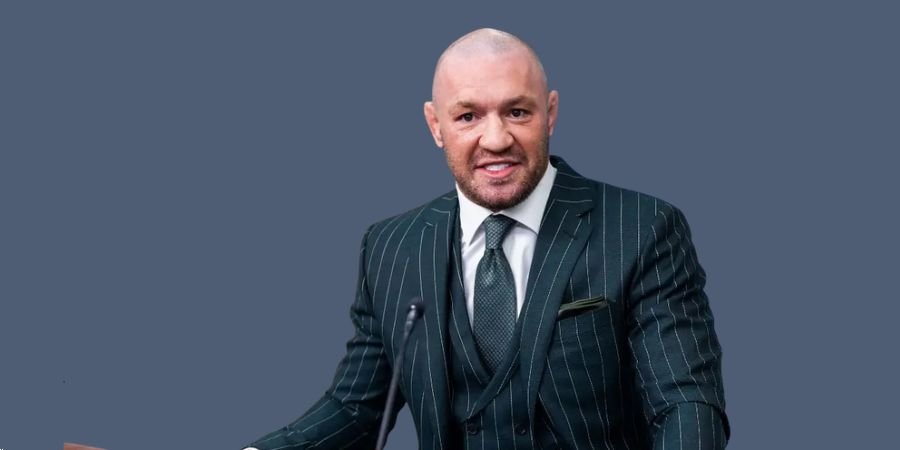
The Conor McGregor business empire is the group of drinks, hospitality, fitness, apparel, media and entertainment ventures that the Irish mixed martial artist built on top of his UFC fame. Its centrepiece is Proper No. Twelve Irish Whiskey, a brand McGregor co-founded in 2018 and sold to Proximo Spirits in a deal reported at up to $600 million. That sale helped make him the highest-paid athlete in the world in 2021, according to Forbes.
Early Life and UFC Journey
Conor McGregor was born in Crumlin, Dublin, in 1988. He worked as a plumbing apprentice before turning to professional mixed martial arts, and he first competed in smaller promotions such as Cage Warriors, where he won titles at featherweight and lightweight.
His UFC debut came in April 2013 against Marcus Brimage. From that point, he gained a reputation for aggressive striking, confident interviews and a rare ability to generate attention before a fight.
Three milestones shaped his commercial value:
- 2015: He defeated José Aldo at UFC 194 to win the featherweight title, finishing the fight in 13 seconds.
- 2016: He defeated Eddie Alvarez at UFC 205 and became the first UFC fighter to hold two divisional titles at the same time.
- 2017: He crossed into professional boxing to face Floyd Mayweather Jr., an event that became one of the largest commercial attractions in boxing and widened his audience far beyond mixed martial arts.
These results made him more than a successful fighter. He became an entertainment personality whose press conferences, interviews, clothing and promotional appearances reached people who never watched a UFC card. That wider audience later became the foundation of his business strategy.
How Did Conor McGregor Build His Personal Brand?
Personal branding is the deliberate shaping of a public identity so that an audience recognises it and attaches value to it. McGregor understood early that a professional fighter competes for more than belts. A fighter also competes for attention, sponsorship, media coverage and commercial opportunity.
Three elements defined his brand:
- A recognisable identity. His Irish background, fighting style and outspoken personality gave audiences a figure they could identify immediately. His nickname, The Notorious, reinforced it.
- A consistent narrative. He presented himself as an ambitious outsider who believed he could reach the top of combat sports, and he kept that story consistent for years.
- Commercial visibility. His promotional appearances gave sponsors and business partners access to an audience already interested in him.
His tailored suits, distinctive language and confident predictions made him stand out in a crowded market. Social media extended that reach. Instead of depending on traditional advertising, he spoke directly to millions of followers, showed products and shared news about his businesses.
The commercial principle is simple: an audience becomes valuable when its attention can be connected to a product, service or experience. The risk is just as simple. When a company uses a celebrity as its main marketing asset, events in that person’s public life can change how customers see the product.
How Did Proper No. Twelve Become the Centrepiece of the Conor McGregor Business Empire?
Proper No. Twelve Irish Whiskey launched in 2018. McGregor co-founded it with his manager, Audie Attar, and spirits industry entrepreneur Ken Austin. The brand drew on his Irish roots and his link to Crumlin, and his promotion gave it immediate visibility with his existing audience.
The growth was fast. One report states that the brand sold more than six million bottles in about two and a half years. The brand also benefited from timing, because the build-up to UFC 229 in 2018 gave the whiskey a place in the promotion around his fight with Khabib Nurmagomedov.
In 2021, Proximo Spirits acquired a majority stake. Proximo, which also owns Jose Cuervo and Bushmills, had already held 49 percent of the brand. McGregor was expected to remain a stakeholder and to keep promoting the brand. Proximo has since described itself as the full owner. Its own statement says it has held 100 percent of Proper No. Twelve since 2021.
The sale shows how celebrity entrepreneurship can speed up customer awareness when a founder has an established audience and the product has a clear market identity.
How Much Did Conor McGregor Actually Earn from the Proper No. Twelve Sale?
McGregor did not receive $600 million. That figure is the reported value of the whole transaction, and several reports present it differently from each other.
| Figure | What it means | Source detail |
| Up to $600 million | Total reported value of the deal | The figure includes $250 million that Proximo had already paid during the earlier partnership. |
| Shared among founders | The proceeds were divided among the co-founders | The money went to McGregor, Attar and Austin. |
| About $130 million | McGregor’s reported personal share | The Irish Times reports that he was said to have received $130 million. |
| $158 million | Forbes estimate of his 2021 earnings outside competition | Forbes placed him first on its 2021 list of highest-paid athletes, with most of the income coming from the whiskey sale. |
The gap between the headline number and the personal share is the real lesson. A reported valuation, an amount paid over time and a founder’s take-home are three separate things, and a reader who treats them as one will misjudge how the deal worked.
A second lesson comes from the aftermath. Former training partner Artem Lobov sued McGregor and claimed he was owed a share of the sale. Lobov asked for 5 percent of the proceeds, which would have been roughly $30 million. The Irish Times reported in April 2026 that the dispute had been resolved. The case shows why founders need written ownership agreements before a brand grows, not after.
What Other Businesses Has Conor McGregor Started or Invested In?
The Conor McGregor business empire expanded beyond whiskey into hospitality, fitness, apparel, recovery and media. The table below sets out each venture and the role McGregor plays in it.
| Venture | Category | What it is |
| Proper No. Twelve | Spirits | Irish whiskey, launched in 2018 and sold to Proximo Spirits in 2021 |
| Forged Irish Stout | Beverages | A stout associated with his public identity |
| The Black Forge Inn | Hospitality | A pub in Crumlin, Dublin |
| Porterhouse Brewery | Brewing | A 2023 agreement to acquire the Dublin brewery, reported by the Irish Independent |
| TIDL Sport | Recovery | Sprays, creams and other performance and recovery products |
| McGregor FAST | Fitness | A training programme built on his methods |
| August McGregor | Apparel | A menswear collaboration with custom clothier David August |
| The Mac Life | Media | A digital platform covering fighting, training and his professional activities |
| Road House (2024) | Entertainment | A film appearance that extended his reach into mainstream entertainment |
The pub gave him a physical presence in his home market, and the stout added a second consumer product tied to his name. Together, the ventures show a business built across several consumer categories instead of relying only on fight earnings.
A diverse portfolio is not the same as a successful one, however. Public information does not show that every venture has reached sustained profitability, and readers should treat the list as a map of activity, not a record of results.
How Did Conor McGregor Market His Businesses?
McGregor’s marketing depended on the link between entertainment and commercial visibility. His fights and promotional appearances produced attention that spilled over onto his products. He used five main techniques:
- Audience ownership. Social media let him reach followers directly instead of relying on paid media.
- Product integration. His businesses became part of his public lifestyle and promotional content.
- Storytelling. His journey from Dublin to international recognition gave every product a founder-led story.
- Cross-industry exposure. Fighting, entertainment, fashion and hospitality introduced him to different consumer groups.
- Event-driven marketing. Major fights created chances for product visibility and media coverage.
This was a powerful personal branding strategy, especially for a consumer business entering a competitive market. The limits of the strategy became clear in the years that followed.
What Happens to a Celebrity-Led Brand When Reputation or Regulation Goes Wrong?
A celebrity-led brand carries the founder’s reputation as a business risk. McGregor’s case shows two different ways that risk can appear.
The first is reputational. In 2024, a civil jury ruled against McGregor in a case brought by Nikita Hand. Proximo announced that it was dropping his name and image from Proper No. Twelve. Retailers also withdrew associated products.
Because Proximo owned the brand, it could remove McGregor without dismantling the product. A founder who still owns the brand cannot make the same separation, which means the ownership decision made years earlier decided how much damage the brand could absorb.
The second risk is regulatory. In February 2026, Ireland’s Competition and Consumer Protection Commission published a compliance notice about McGregor’s Instagram promotion of Forged Irish Stout. The notice said that paid promotional content had not been labelled correctly, and it directed him to use clear disclosure labels on future paid promotions.
Reach does not replace advertising compliance. A founder who is also the main advertiser carries the legal duty for every post.
Lessons Entrepreneurs Can Learn from Him
McGregor’s career offers five practical lessons for founders who want to build a business around a personal identity.
1. Build recognition before expanding into products. His sporting results created the audience that later introduced his consumer brands. That visibility took years to build and did not come from a single campaign.
2. Give the product an identity beyond the founder. Proper No. Twelve had an Irish identity and a clear product category. Its scale and eventual sale showed the value of a product that can operate inside an established industry.
3. Understand the difference between attention and ownership. An endorsement creates awareness, but equity, distribution agreements and brand rights decide how much value a founder keeps. The gap between $600 million and roughly $130 million is a direct example.
4. Put ownership agreements in writing early. The Lobov dispute, which ran for years before it was resolved, shows what an unclear early understanding can cost.
5. Treat reputation and compliance as business assets. A public identity can build customer trust, and it can also expose a company to risk. Transparent advertising, legal compliance and responsible public conduct belong in any long-term brand plan.
Conclusion
McGregor helped show how an athlete’s commercial value can grow through sporting performance, media visibility and consumer businesses combined. His influence on celebrity entrepreneurship and sports marketing is clear, even though the results of individual ventures vary.
His story also teaches a distinction that matters to founders. A famous name can speed up a company’s entry into the market, but operating performance decides whether the company survives. His commercial record includes a major brand sale, new product categories, hospitality investments and serious setbacks, which makes it more useful than a simple tale of sporting success.
For business leaders, the central lesson is that personal branding can create an extraordinary starting advantage. A lasting business still needs independent product value, sound partnerships, transparent marketing and management that can work without the founder’s public image.