
The heart of healthcare has always been, and will always remain, rooted in compassion. From the earliest healers who tended to the sick with simple remedies and kind words to modern practitioners delivering complex treatments, the guiding principle has been the same. It is the empathy that fuels care, the patience that restores hope, and the dedication that turns science into healing. Throughout history, this human connection has defined medicine more than any procedure, technology, or discovery.
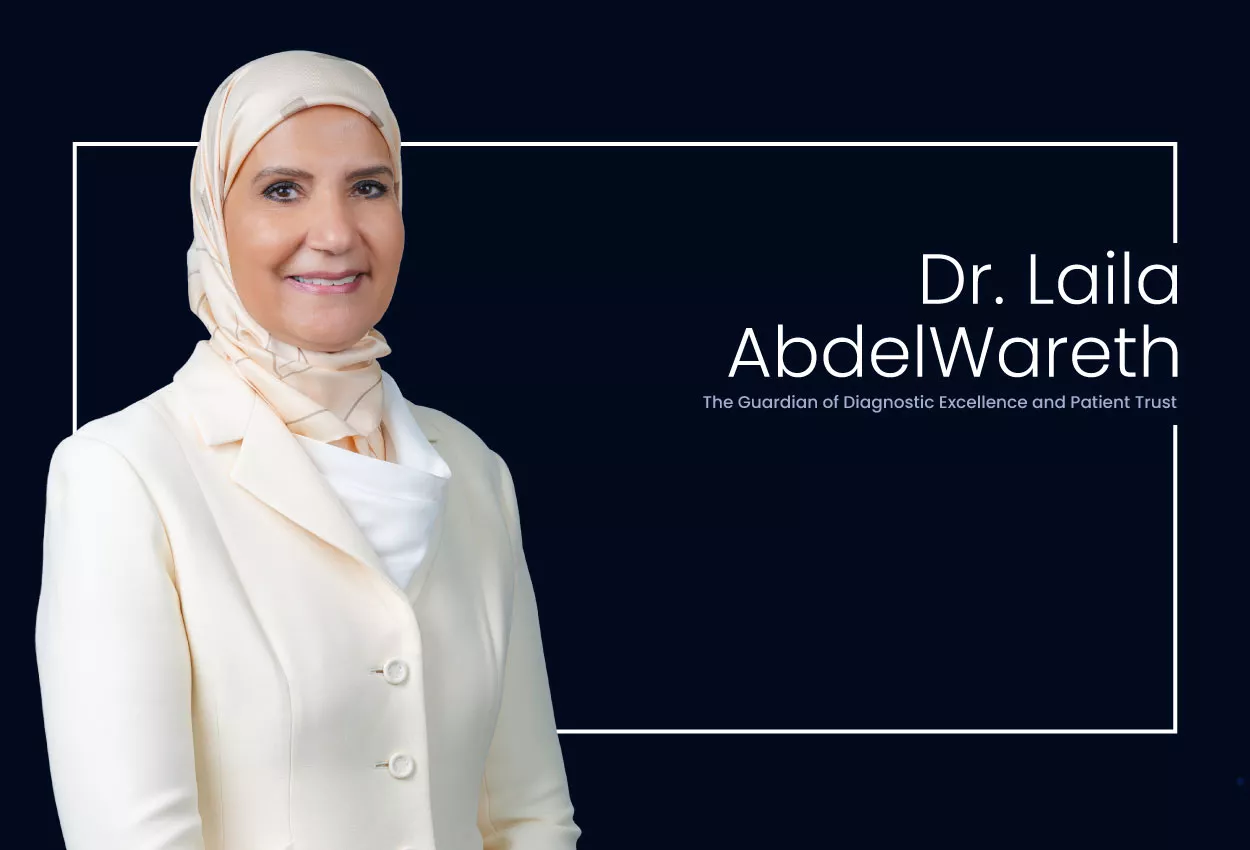
This essence of compassion continues to thrive when guided by leaders like Dr. Laila AbdelWareth. Her commitment to patient care, her ability to empower teams, and her dedication to quality ensure that the human side of healthcare remains at the forefront. It is the presence of individuals like her that elevates the field, making it vital to recognize and celebrate their contributions to the well-being of countless lives.
A Journey Written in Healing and Hope
Dr. Laila’s journey began during her fourth year of medical school in Cairo, where she often practiced with pediatric residents, particularly in pediatric oncology. As a medical student, she was tasked with duties such as taking samples to the lab, following up on results, or assisting with blood bags. During these visits to the clinical laboratory, she became fascinated by the biomedical scientists working there and the crucial role their test results played in guiding diagnoses and treatment protocols, especially for children with haematological oncology conditions.
Dr. Laila then applied and was offered a position at the University of British Columbia; the program was referred to as medical biochemistry rather than clinical pathology. Reflecting on her path, Dr. Laila believes it was destined to happen that way, and if given the chance, she would make the same choice again.
Dr. Laila explained that her early motivation was rooted in her childhood experiences. As a young girl, she deeply admired her own pediatrician, who became a powerful influence and role model in her life. She recalled how transformative it felt to walk into his office feeling miserable and unwell, only to receive care that made her feel better by the next day. To her, it seemed almost magical, and it left a lasting impression that inspired her to pursue a similar path.
She reflected on how, even as a child, she often imagined herself playing doctor and patient, carrying the idea of becoming a physician from a very early stage of her life. This early inspiration planted the seed that grew into her lifelong passion for medicine.
Bridging Hierarchies and Horizons
Dr. Laila reflected on how her leadership style has been shaped by working across very different systems in Canada and the UAE. Her international experience, especially in Canada, taught her much more than medicine and laboratory science. It also instilled in her the importance of teamwork, patient care, handling challenges with professionalism, and committing to continuous learning and development. She emphasized that what is learned a decade ago can quickly become outdated, making self-investment in education and growth essential.
When she came to the UAE in 1997, she considered herself fortunate to arrive at a time when the country was preparing for a major transformation in healthcare. She witnessed the UAE’s shift from sending patients abroad to building its own robust medical infrastructure. Guided by the vision of the late Sheikh Zayed, the focus was placed on quality, advanced healthcare practices, and world-class institutions. For Dr. Laila, being part of this phase of rapid growth and transformation was both rewarding and inspiring, offering her the opportunity to contribute to a national journey of progress.
Fate and the First Step into Leadership
Dr. Laila described how her shift from practicing as a medical biochemist to moving into healthcare leadership unfolded. She arrived in Abu Dhabi in 1997, when healthcare services were still provided through the Ministry of Health. Her first appointment was at Mafraq Hospital, where the medical director wanted to introduce a transplant program and high-complexity testing. Having just returned from Canada, she was given the responsibility to lead these initiatives. She embraced the challenge with pride, but soon realized a critical gap in the hospital’s quality management system. Drawing on her training, she recognized the need to establish a strong quality infrastructure to ensure accurate laboratory results. This realization marked the beginning of her journey from laboratory medicine to executive leadership.
Crafting a Vision for Comprehensive Care
As Dr. Laila worked on strengthening quality within the laboratory, she came to see that labs did not function in isolation. They were part of a larger healthcare ecosystem that required structures such as infection control committees, transfusion committees, and medical executive committees. She shared her insights with the medical director of Mafraq Hospital, who encouraged her to propose new models. Drawing from international standards such as the Joint Commission International for Hospital Accreditation, she introduced frameworks that shaped hospital operations. Her contributions were quickly recognized, and she was appointed deputy medical director at the young age of 30. When the director was away, she would serve as acting medical director, a responsibility that pushed her to pursue formal education in healthcare management. She later completed an Executive Master’s degree in Healthcare Administration at Zayed University, which gave her a broader perspective on managing hospitals and leading healthcare transformation.
Turning Unfamiliar Standards into Shared Success
When asked about the challenges of taking on senior responsibilities so early, Dr. Laila explained that she did not encounter hostility or competition. Unlike other areas of medicine at that time, very few people in the hospital were advocating for quality systems. Her training in laboratory medicine had equipped her with a deep understanding of quality management, something that was not common among traditional physicians. She recalled that many colleagues initially found her references to Joint Commission standards unfamiliar, but she developed a collegial and collaborative relationship with her peers. The nursing and pharmacy teams, in particular, resonated with her approach, as they too recognized the importance of structured quality practices.
The Unsung Heroes of Medicine
Reflecting on the broader role of laboratories, Dr. Laila emphasized their centrality to modern healthcare. She highlighted that nearly 70 to 80 percent of medical decisions depend on diagnostic and laboratory results. She agreed that laboratory professionals often remain the unsung heroes of the medical world, working behind the scenes to provide the critical data that guides physicians’ choices and ultimately shapes patient care.
Uniting Diverse Teams Under One Diagnostic Vision
At M42, Dr. Laila AbdelWareth oversees diagnostics across multiple centers. She explained that the greatest challenge lies in bringing together different units, each with its own culture and ways of operating. None of these approaches is inherently better or worse, but they are different. Her focus has been on creating a unified M42 identity, a new diagnostic culture. She often refers to this effort as building a “power coalition,” where distinct teams and entities come together to act as one.
The Dual Force of Innovation and Excellence
When asked how she balances operational excellence with innovation, Dr. Laila shared that the two are inseparable. To her, they are two sides of the same coin. Innovation drives excellence, and excellence demands innovation. A system cannot improve by repeating the same methods endlessly. Continuous exploration of new ideas, she noted, is what fuels both progress and quality outcomes.
Artificial Intelligence as Assistant Intelligence
One example that captures this balance is a project recently introduced at the Capital Health Screening Centre. There, artificial intelligence was deployed to support radiologists in reviewing chest X-rays. Instead of each radiologist reviewing around 200 films daily, the system now scans and filters 2,000 images per day, identifying which ones are normal and which require closer evaluation. This is a 10-fold increase on conventional methods, transforming tuberculosis (TB) detection, intervention and detection to help meet the WHO’s ambitious target. Dr. Laila described it as a powerful demonstration of how innovation can enhance efficiency.
Dr. Laila often refers to AI as “assistant intelligence” rather than artificial intelligence. The system does not replace medical expertise but instead serves as an efficient assistant, learning from human input to become faster and more reliable.
A Life Built on Quality
Quality, for Dr. Laila, is more than certifications; it is everything. From the earliest stages of her career, her path was guided by a determination to establish rigorous quality systems that ensure accurate outcomes for patients. She championed Abu Dhabi’s first accreditation from the College of American Pathologists, an effort many initially thought impossible. Reflecting on that achievement, she once remarked, “There is nothing impossible about it.” To this day, she describes herself as someone who lives, breathes, and advocates for quality in every aspect of her work.
Standards That Never Stand Still
When asked whether quality standards are fixed or constantly evolving, Dr. Laila explained that they are dynamic and updated continuously as new technologies emerge. She cited examples such as digital pathology and molecular genomics, which have each introduced new sets of regulations in response to rapid advancements. This constant evolution, she emphasized, is vital to keeping laboratory practices aligned with scientific progress.
Building a Team Aligned with CAP Standards
Early in her journey, Dr. Laila did encounter skepticism. During the first accreditation process, some questioned the need for new systems, pointing out that their methods had always worked. Others asked why accreditation should come from the College of American Pathologists rather than another body. Yet, once the process was completed and its value became clear, the skeptics transformed into advocates. Today, she notes, it is often her own teams who remind her to align with CAP standards, a testament to how deeply quality has become embedded in their culture.
Working with laboratory scientists, biomedical experts, and pathologists has made this process smoother, she added. With their scientific mindset, they are open to evidence and more easily convinced by data-driven improvements.
Crafting Commitment in Every Corner of Care
Reflecting on her journey, Dr. Laila acknowledged that one of the most significant hurdles came during her first accreditation process. She described it as a daunting undertaking, where her role as a leader meant guiding the team through an unfamiliar and challenging path to eventual success. The true difficulty, she explained, was not in the process itself but in creating a critical mass of believers who shared the same mission and vision.
It was not enough for her to carry the message alone. The nursing teams, pharmacists, surgeons, and operating room staff all had to embrace the same commitment. Only when this collective alignment was achieved did the tipping point emerge, when skeptics gradually shifted to supporters, drawn by the momentum of those who already believed. To her, building this shared commitment was the real test of leadership, and one she feels proud to have overcome.
Sweeping Obstacles for Team Triumph
When asked about her leadership philosophy, Dr. Laila described herself as a servant leader. In her words, her role is to remove obstacles standing in the way of her teams, to empower them, and to create an environment where their best work can shine. She emphasized that leadership is not about personal glory but about collective achievement. For her, the true satisfaction comes when the organization succeeds as a whole.
she referred to this mindset as being “someone who clears barriers so innovation, morale, and productivity can thrive. Without this approach, she noted, frustration and stagnation can quickly set in. But when obstacles are removed and teams are trusted to think freely, the results are often extraordinary.
An Eye for Talent
Dr. Laila also shared her perspective on spotting and nurturing leadership potential within her teams. She explained that she has always had an eye for talent, often noticing the strengths and capabilities of individuals before they see it in themselves. While some leaders focus on shortcomings, she prefers to highlight what people do well and help them build upon those strengths.
She believes that weaknesses should not define an individual. Instead, by recognizing and amplifying each person’s innate abilities, leaders can unlock their true potential. Her goal is to enable individuals to not only perform their roles effectively but to elevate their skills to the next level. For her, leadership is about empowering the younger generation to discover their internal capabilities and supporting them in realizing those strengths to their fullest.
Echoes of Progress in Healthcare
Dr. Laila expressed her excitement about the future of medicine, particularly the integration of artificial intelligence in diagnostics and pathology. She explained that AI has the potential to shift healthcare from a reactive approach to a more proactive and preventive one. By identifying risks before diseases fully develop, medicine can become more personalized and rewarding. She highlighted that AI would not only enhance diagnostic accuracy but also make the work environment for young pathologists and technologists far more engaging and innovative.
Reflecting on emerging technologies, she pointed to the promise of generative AI, unsupervised AI, and the application of multi-omics in laboratory medicine. She explained that these tools can uncover new disease subtypes, improve treatment strategies, and provide insights that were previously unimaginable. For instance, AI has already revealed multiple subtypes of type 2 diabetes, helping explain why patients with seemingly similar conditions can have very different outcomes. She sees multi-omics, combined with AI, as the “holy grail” of laboratory medicine in the years ahead.
Speaking about her work at M42, Dr. Laila noted that the organization is uniquely positioned to lead the shift toward preventive care. With access to comprehensive medical records through Malafi, genomic data from the Emirati Genome Project, and advanced AI tools, M42 is able to link genetic and clinical data to predict disease risks and create personalized care plans. She emphasized that the diagnostics division collaborates closely with the AI and digital transformation team, driving several innovative projects every year.
When asked about breaking barriers in a male-dominated field, Dr. Laila credited authenticity, discipline, and faith in one’s abilities as the most important factors for success. She stressed that women often underestimate themselves, balancing multiple social and family roles while hesitating to take on leadership positions. She encouraged women to trust their capabilities, manage their time wisely, and embrace their natural strengths, such as emotional intelligence and multitasking. For her, these qualities give women an advantage in leadership and collaboration.
Looking back on her career of more than 25 years, Dr. Laila reflected with gratitude. She takes pride in bringing advanced diagnostic capabilities to the UAE through her role as CEO of the National Reference Laboratory. For her, the most rewarding part of her journey has been contributing to the transformation of healthcare in the country. She hopes her legacy will be remembered as someone who worked to bring about positive change, ensuring that the UAE continues to have access to world-class diagnostic solutions.
Dr. Shweta Narang: A Voice of Preventive and Compassionate Care
Behind every diagnosis handed to a physician lies an unseen universe of precision, patience, and expertise. Laboratories hum quietly, far from the patient’s bedside, yet their work often determines the very course of treatment. The numbers, images, and reports may appear simple on paper, but they are the result of countless careful examinations. This vital work rarely reaches the spotlight, even though it is the foundation on which medicine stands.
Amid this often-unnoticed world of diagnostics stands Dr. Shweta Narang, carrying with her the essence of what healthcare was always meant to be. A physician, leader, and advocate, she has devoted her journey to ensuring that diagnostics is not just accurate but also valued, integrated, and forward-looking.
Dr. Shweta Narang stands as a distinguished figure in healthcare, with over two decades of expertise in clinical practice, laboratory medicine, and organizational leadership. An American board-certified Anatomic and Clinical Pathologist, she has seamlessly blended her medical knowledge with her ability to lead, innovate, and inspire. Her career reflects a consistent pursuit of excellence in both patient care and healthcare systems management, making her an influential voice in diagnostics and laboratory services across the UAE and beyond.
The Roots of a Medical Calling
Her journey began at Goa Medical College in India, where she pursued her Bachelor of Medicine and Bachelor of Surgery. Early in her training, she was drawn toward pathology, recognizing its quiet yet vital role in guiding treatment decisions and influencing patient outcomes. Her academic pursuit led her overseas, where she further refined her expertise through fellowships in Oncopathology and Cytopathology at prestigious institutions such as Memorial Sloan Kettering Cancer Center and Hartford Hospital in the United States. During her time in the US, she also served as Chief Resident at the University of Medicine and Dentistry of New Jersey, a role that strengthened her leadership capabilities and cemented her passion for pathology.
Expanding Horizons in Pathology
After her advanced training, Dr. Shweta began to establish herself in senior roles. She served as Director and Head of Histopathology and Cytopathology at SRL Diagnostics, where she spent more than five years building robust systems that ensured accuracy, quality, and efficiency in diagnostic services. This experience provided her with a platform to merge her scientific knowledge with the management of large-scale laboratory operations, a skill that would prove indispensable in her later roles.
Laying Foundations of the Future
One of her most impactful chapters unfolded when she became Chair of Laboratory Services at United Eastern Medical Services in Abu Dhabi. For nearly a decade, she played a pivotal role in setting up and expanding laboratories within Danat al Emarat Hospital and the HealthPlus Network of Specialty Centers. Her work was not limited to establishing functional labs but extended to introducing cutting-edge advancements, including the launch of Next Generation Sequencing and Cytogenetics laboratories. These initiatives positioned the institutions at the forefront of personalized medicine and molecular diagnostics in the UAE.
The Architecture of Innovation at NRL
Her leadership journey continued at the National Reference Laboratory, where she assumed roles of increasing responsibility, culminating in her position as Medical Director and Director of Clinical Operations. At NRL, she worked on scaling operations, driving innovation, and fostering collaboration across departments. She emphasized the importance of aligning medical excellence with operational efficiency, ensuring that laboratories could meet both clinical and commercial goals.
Strategic Stewardship in Healthcare Delivery
Today, as Executive Director of Medical and Commercial Operations at Diagnostic Cluster, M42, Dr. Shweta holds a position that allows her to influence healthcare delivery at a strategic level. She integrates her clinical expertise with managerial insight to optimize diagnostic services across a wide network. Her focus extends beyond diagnostics alone, encompassing the commercial and operational aspects that are essential for sustainable growth in healthcare organizations.
A Voice of Authority and Thought Leadership
Beyond her executive roles, Dr. Shweta has established herself as a thought leader within the UAE healthcare sector. She has served as a Scientific Advisor for Becton Dickinson and as a panel expert for the Dubai Health Authority’s Anatomic Pathology second opinion committee. Her contributions to medical literature and her presence as a speaker at conferences across the Middle East and Asia reflect her commitment to advancing knowledge in her field and influencing best practices in laboratory medicine.
Redefining the Backbone of Patient Care
One of the themes that Dr. Shweta consistently highlights is the crucial role of diagnostics in patient care. She often emphasizes that while frontline healthcare workers are celebrated for their efforts, the indispensable contributions of diagnostic teams remain underrecognized. She believes in shifting this perception by underscoring how accurate and timely diagnostic services form the backbone of effective treatment. She also champions collaboration within laboratories, noting that success depends on the synergy of multiple teams including operations, finance, and technology. Her vision of integrating automation and optimizing staff demonstrates her forward-thinking approach to efficiency and sustainability in healthcare systems.
Breaking Barriers with Grace and Grit
Dr. Shweta also advocates strongly for the role of women in healthcare. She believes that women bring compassion, resilience, and adaptability to their work, qualities that are indispensable in medicine. Her advice to women aspiring to build careers in healthcare is straightforward: nothing can replace hard work. Through her own journey, she serves as a powerful example of how dedication and perseverance can help women achieve leadership positions in fields often dominated by men.
A Legacy of Elevating Diagnostics in Medicine
Dr. Shweta Narang’s career is a testament to her dedication to excellence, innovation, and leadership in pathology and diagnostics. From her early days as a medical student in India to her current role as an executive leader in the UAE, she has consistently shaped healthcare systems with her vision and expertise. By combining scientific knowledge with strategic management, she has not only elevated diagnostic services but also inspired future leaders in healthcare. Her journey reflects a deep commitment to improving patient outcomes, fostering collaboration, and highlighting the true value of diagnostics in medicine.




