
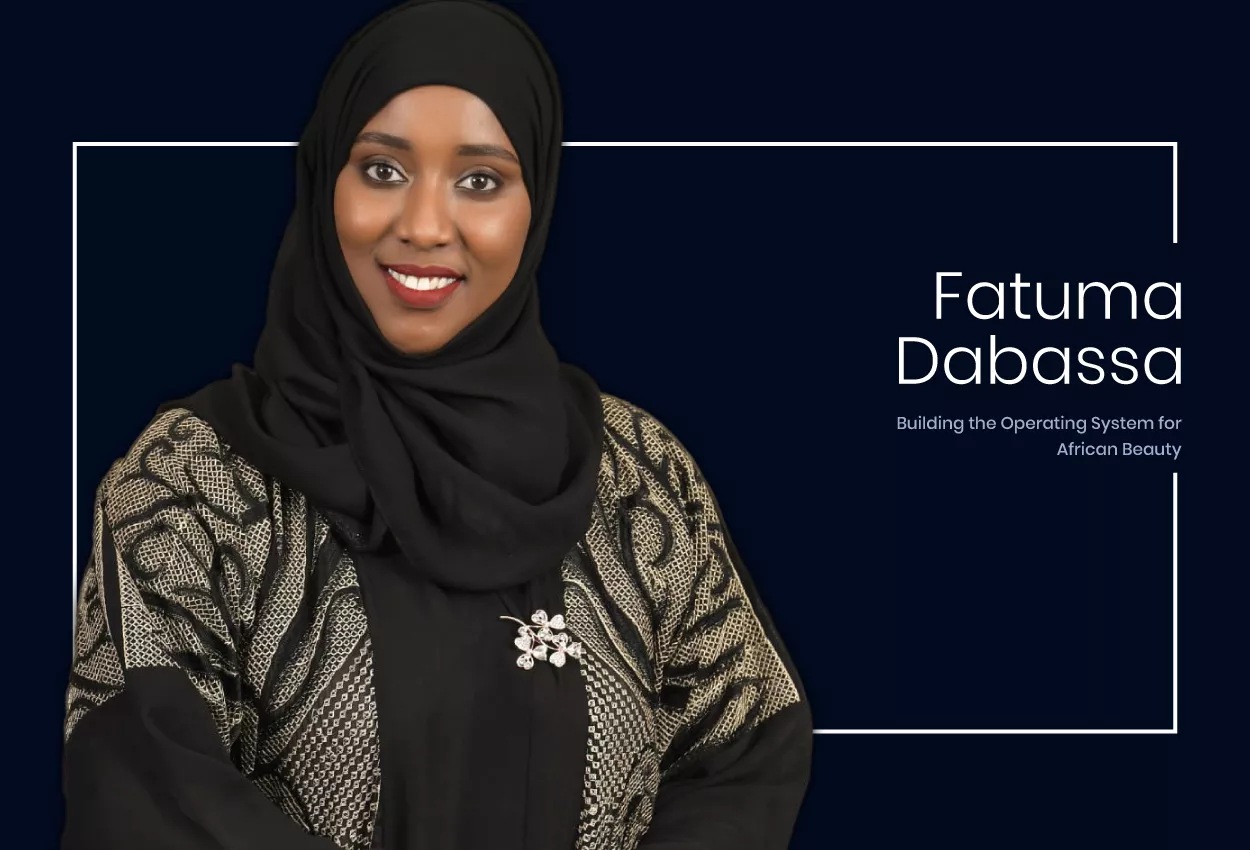
Beauty promises transformation, but the journey to access it has often been shaped by friction. A salon visit can begin in a long queue, a customer may move between disconnected providers to complete a single experience, and the search for authentic products can become a test of uncertainty. Behind the scenes, beauty entrepreneurs face challenges of their own; managing bookings through manual systems, maintaining consistent service quality as demand grows, and operating businesses whose potential extends far beyond the tools available to them.
Fatuma Dabassa understood these challenges because she had experienced them at the centre of a growing beauty business. Rather than treating long queues, disconnected services, counterfeit products, and operational inefficiencies as isolated problems, she recognized them as signs of an industry ready for a new foundation.
From Beauty Salons to a Digital Ecosystem
Fatuma’s entrepreneurial journey began in 2009 with the launch of her first beauty salon in Nairobi, Kenya. As market demand grew rapidly, she expanded her operations in 2012 by establishing Lafemme Beauty Spa and Gym, a holistic wellness destination designed to meet the evolving lifestyle and service needs of a growing clientele.
Operating both locations gave Fatuma a close view of the opportunities and structural challenges within the beauty industry. Although consumer demand was strong, maintaining consistent, premium-quality services across multiple locations proved increasingly difficult. Customers also faced a fragmented experience, often unable to access authentic beauty products in the same place where they received services. Traditional queuing systems added further inefficiencies. At the height of demand, the business introduced manually generated numbered tokens and eventually transitioned to a 24-hour operating model to accommodate the growing volume of clients.
These experiences gave Fatuma a deep, data-informed understanding of consumer behaviour, operational bottlenecks, and regulatory gaps. She observed that many established beauty companies lacked the agility and technology-first approach required to respond to changing consumer expectations. With more than a decade of industry experience, she recognized an opportunity to create an ecosystem-driven technology platform capable of addressing these challenges at scale.
That insight led to the creation of Urembo Hub, envisioned as Africa’s premier digital beauty marketplace. The platform was designed to solve the challenges Fatuma had experienced as an operator while improving accessibility, convenience, and trust for consumers.
Beyond operational efficiency, Urembo Hub addresses one of the beauty industry’s most persistent challenges: the widespread availability of counterfeit and substandard products. Through a carefully curated marketplace, the platform rigorously verifies manufacturers, retailers, and service providers before onboarding them. This approach helps consumers access authentic products and connect with trusted, quality-driven businesses.
Urembo Hub brings multiple functions together within one digital ecosystem. Its integrated booking calendar eliminates manual queues, while its verified e-commerce marketplace connects trusted brands and retailers with high-intent consumers. Business intelligence dashboards equip entrepreneurs with actionable insights and stronger purchasing capabilities, while live-shopping features create more interactive connections between brands and customers.
For Fatuma, the transition from physical beauty businesses to technology represents a mission extending far beyond market growth. Through Urembo Hub, she aims to equip beauty microenterprises and established brands with the digital infrastructure required to overcome systemic barriers, strengthen consumer safety, advance digital inclusion, and contribute to the growth of Africa’s multibillion-dollar beauty economy.
Africa’s Leap from Automation to Autonomy
As an Agentic AI Architect, Fatuma evaluates technology not by what it can communicate, but by what it can accomplish. Unlike traditional AI, which primarily responds to prompts, Agentic AI is autonomous and goal-driven. It can assess challenges, coordinate tasks, connect with external systems, and execute actions, shifting people from manual operators to strategic supervisors.
Fatuma believes this technology presents a significant opportunity for African businesses to build intelligent and agile systems without the limitations of outdated infrastructure. By automating administration, customer communication, compliance, and logistics, Agentic AI can reduce operational costs and help businesses scale more efficiently.
Its potential also extends to sectors such as agriculture and healthcare, where intelligent agents can support resource coordination, service delivery, and informed decision-making. By combining local knowledge with responsibly managed regional data, African enterprises can create solutions tailored to their unique markets.
For Fatuma, lasting value lies in moving beyond AI hype and connecting intelligent automation to measurable efficiency, sustainable growth, and real business outcomes.
Building Autonomy on a Foundation of Trust
For Fatuma, integrating autonomous AI is not comparable to implementing a conventional software upgrade. It represents a fundamental redesign of an organization’s operating system and requires strong governance, technical understanding, and clear human accountability.
The transition toward autonomous operations cannot be delegated entirely to external technology providers or confined to research and development teams. It must be led from the highest levels of an organization, with business leaders and domain owners taking responsibility for the transformation. AI agents may execute actions, but they are not legal or operational entities. Accountability must therefore remain firmly with the people and organizations deploying them.
Fatuma believes executive leaders must develop a practical understanding of artificial intelligence, become familiar with its technical language, and actively engage with the tools themselves. This knowledge allows leaders to establish informed strategies, evaluate risks, and build systems capable of supporting long-term technological growth.
Before introducing autonomous technology, organizations should conduct a comprehensive readiness assessment. This begins with evaluating the quality and availability of their data, determining which capabilities should be developed internally and which can be acquired externally, assessing whether existing infrastructure can support autonomous systems, and measuring the cost of implementation against tangible business returns.
Every deployment should be connected to a clear objective involving effectiveness, operational efficiency, or market expansion. Rather than placing AI on top of outdated processes, organizations must redesign workflows to combine strategic context, creativity, design thinking, and intelligent automation.
As AI models become increasingly accessible, Fatuma considers proprietary organizational data one of the strongest sources of long-term competitive advantage. Businesses should build flexible, modular architectures capable of integrating different foundation models while retaining control over their information. Strong security frameworks, access controls, and legally defined agreements are essential to prevent intellectual property exposure and unauthorized data use.
Autonomous systems must also operate within clear governance structures. Fatuma identifies five essential foundations: clarity regarding what an agent is permitted to do, context defining the environment in which it operates, compliance and security aligned with regulatory requirements, real-time observability across the execution process, and human oversight at critical decision points.
Trust must be deliberately built both within the workforce and among external stakeholders. Organizations should distinguish clearly between internally developed agents and third-party systems, applying appropriate levels of data access and governance to each. Ethical risks must be identified early so that protective boundaries can be incorporated directly into automated workflows.
The cultural transition may prove more challenging than the technical implementation. If employees view AI solely as a threat, organizations may encounter resistance and limited adoption. Fatuma advocates aligning incentives with responsible technology use by recognizing employees who integrate intelligent tools, automate repetitive work, and advance into more strategic roles.
Long-term success also requires continuous evaluation. Fatuma supports a three-tiered review structure involving internal governance teams, operational assessments by subject-matter experts, and ongoing automated evaluations of system inputs and outputs.
By involving experienced professionals in curating and validating organizational knowledge, investing in structured apprenticeship programmes, and expanding workforce development, businesses can prepare their people to participate meaningfully in the agentic era.
Opening Global Supply Chains to Women-Led Enterprises
Through her work as Vice Chair of Supplier Relations at WEConnect International Kenya, Fatuma has gained a close understanding of the structural barriers that continue to limit women entrepreneurs’ participation in global supply chains.
Despite gradual progress and stronger corporate commitments to inclusion, women-owned businesses remain significantly underrepresented in global procurement. Across Kenya and the wider region, structural inequalities often prevent high-potential enterprises from accessing high-value commercial opportunities.
One of the most persistent barriers is the unequal flow of procurement information. Many women entrepreneurs have limited access to corporate buyer databases and remain outside informal networks where future tenders and commercial opportunities are often discussed. Without early and transparent access to information, women-owned businesses are frequently placed in reactive bidding positions rather than being able to prepare and align strategically.
Limited executive autonomy can create an additional challenge. Some women entrepreneurs operate within ownership or governance structures that restrict their ability to make independent decisions or negotiate complex contracts quickly. Local legal, cultural, and familial frameworks can further affect their access to full ownership and decision-making authority.
Access to capital remains another major obstacle. Large corporate buyers often require significant production capacity, strict regulatory compliance, and the financial ability to manage extended payment periods. Yet many women-owned businesses face limited access to traditional credit while lacking the investment required to digitize operations, expand production, and fulfil large-scale contracts.
Institutional bias also continues to influence procurement. Long-established supplier networks often favour legacy businesses, while conventional evaluation criteria can unintentionally disadvantage agile, women-led enterprises. Without intentional reform, these practices preserve existing inequalities.
Fatuma believes addressing these barriers requires coordinated action across public policy, financial institutions, and corporate supply chains. Governments, industry associations, and multinational organizations must work together to increase transparency and make procurement opportunities accessible to certified women-owned businesses in real time.
Financial systems must also adopt gender-responsive approaches. Dedicated financing instruments, reduced collateral requirements, supply-chain funding, and accelerated payment cycles could provide women entrepreneurs with the liquidity needed to manage large corporate orders and expand sustainably.
Corporate procurement teams must move beyond broad diversity commitments and examine the structural barriers embedded within their bidding processes. Removing unnecessary historical revenue requirements and dividing exceptionally large contracts into more accessible opportunities could enable mid-sized women-owned businesses to compete more fairly.
For Fatuma, inclusive procurement is not an act of corporate philanthropy. It is an economic imperative capable of strengthening supply-chain resilience, expanding innovation, and contributing to sustainable global growth.
Turning Beauty Enterprises into Digital Powerhouses
Through Urembo Hub, Fatuma is helping salon owners, beauty professionals, manufacturers, and retailers transition from manual operations to digitally enabled, scalable businesses.
The platform provides e-commerce dashboards, live-shopping capabilities, automated booking systems, inventory and transaction management, and simplified analytics. These tools help entrepreneurs expand their market reach, improve customer experiences, reduce administrative work, and make informed business decisions.
Urembo Hub also supports stronger documentation and regulatory readiness, helping businesses become more structured, compliant, and investment-ready. By combining accessible technology with localized solutions, the platform is modernizing Africa’s beauty industry while strengthening the long-term resilience of the entrepreneurs who sustain it.
The Discipline Behind Sustainable Scale
Through her experience mentoring entrepreneurs within the Founder Institute network, Fatuma has observed that startup growth is rarely determined by the strength of an idea alone. Sustainable scale depends on disciplined execution, strategic clarity, adaptability, and the resilience of the people responsible for turning a vision into reality.
The startups that achieve consistent growth are often led by founders capable of combining operational strength with strategic agility. Rather than pursuing broad and untested opportunities, these leaders focus deeply on solving urgent, localized challenges. This approach creates stronger pathways to profitability and builds competitive advantages grounded in genuine market understanding.
Curiosity is another defining quality. Successful founders continually question established industry practices, examine customer behaviour, and interpret market signals as opportunities to learn. This commitment to discovery enables them to anticipate changing conditions and identify inefficiencies before competitors recognize them.
Sustainable growth also requires a clear mission. Strong founders understand the purpose behind what they are building, why the market needs the solution at that particular moment, and what gives their team the credibility and capability to deliver it.
Africa’s Next Innovation Frontier
Africa’s startup ecosystem is progressing beyond foundational financial technology toward advanced solutions capable of addressing major infrastructure challenges. Fatuma believes the next wave of entrepreneurial growth will be shaped by artificial intelligence, localized digital platforms, and intelligent systems designed to operate effectively within complex regional environments.
Across sectors, one of the most significant opportunities lies in developing intelligent agent systems capable of reasoning, adapting, and responding to unpredictable conditions. Technologies that understand localized contexts, anticipate challenges, and continuously improve their decisions could unlock new levels of operational autonomy.
Healthcare represents one of the continent’s most urgent areas for innovation. Severe workforce shortages, hospital congestion, and geographic barriers continue to restrict access to timely care. While AI cannot replace medical professionals, intelligent conversational systems can support preliminary triage, translate patient information into structured clinical data, identify potential risks, and reduce administrative demands. These capabilities can allow healthcare professionals to dedicate more time to complex and critical cases.
Agriculture presents another significant opportunity. Millions of smallholder farmers operate without consistent access to agronomists, real-time climate information, or reliable supply networks. Mobile-first intelligent platforms could analyse images of affected crops, assess regional weather patterns, provide contextual guidance, and coordinate the delivery of essential agricultural products.
The broader opportunity extends beyond automated content generation. Fatuma believes the African startups most capable of achieving global scale will be those that develop cognitive infrastructure enabling intelligent systems to reason, solve problems, and adapt within unpredictable real-world settings.
Whether supporting emergency healthcare coordination or managing complex agricultural supply chains, technologies built around local knowledge, contextual awareness, and intelligent action could become a defining foundation of Africa’s digital future.
Making Innovation an Engine of Inclusion
For Fatuma, artificial intelligence should expand human potential rather than simply reduce costs. Organizations must position AI as a collaborative tool that supports employees, while recognizing the value of human qualities such as empathy, cultural understanding, and strategic judgement.
Inclusive adoption requires transparency, continuous learning, and accessible training that helps employees develop new digital capabilities and transition into more strategic roles. While AI can support and automate work, people must remain accountable for its outcomes.
Fatuma also emphasizes the importance of ethical safeguards, diverse oversight, and reinvesting efficiency gains into workforce development. She believes the organizations best prepared for the future will be those that use technology not to replace people, but to strengthen their capabilities and create opportunities for growth.
The Operating Blueprint for High-Performance Startups
According to Fatuma, developing a successful startup is not only about having a great product. It entails a combination of many factors including strategy, discipline, adaptability, and a company culture that encourages growth and the people behind it.
These include setting up goals and communication channels, exercising financial discipline, and constant learning. Although efficient systems ensure that things run consistently, Fatuma asserts that startups have to be adaptable and use customer and market knowledge to validate their assumptions and make changes.
Fatuma also highlights the importance of being transparent, trusting each other, and exercising emotional intelligence. Seeing failure as an opportunity to improve systems and not to blame individuals will lead to resilient teams.
Partnerships Built Beyond the Handshake
According to Fatuma, strategic alliances are great innovations in themselves because they drive innovation and help expand markets as well as create long-term value. In her view, the most successful alliances go far beyond simply being transactional in nature and are based on common goals, shared strengths, and mutual benefits.
Accountability requires clarity in terms of roles and responsibilities as well as constant communication and agreed milestones. The larger a startup grows, the more important it is for it to have the right partners who recognize and respect the essence of what it does.
The Technologies Set to Redefine African Enterprise
Africa’s technological revolution is shifting focus from the testing stage to the implementation stage, with artificial intelligence and automation becoming increasingly common in efforts to solve infrastructure problems and boost economic resilience.
Fatuma feels that healthcare, agriculture, education, governance services, and logistics are just a few of the areas that will experience some of the biggest breakthroughs within the next five years. Intelligent diagnostic systems and personalized treatment will make health care much more accessible, while predictive analytics and smart monitoring systems can be useful in increasing efficiency in agriculture and ensuring food security.
Adaptive learning systems can enable much more personalized education, including for people who speak African languages and dialects.
Finally, Fatuma notes that AI can be used by businesses to protect institutional knowledge, automate important governance processes, and optimize logistics through predictive planning and intelligent routing.
The greatest strength of Africa in terms of its technological development is not developing the largest AI systems, but making innovation work for practical economic benefit.
Building a Legacy Without Asking Permission
Fatuma’s vision is based on setting the right example for the coming generation of women from Africa by showcasing how far one can reach if there is the ambition and the drive to follow it through. Fatuma would like to motivate the next generation of women to break barriers and take leadership roles in the field of technology while starting companies that will make some difference.
Building a Center of Excellence for Digital Innovation and Leadership is an attempt by Fatuma to empower women, underrepresented founders and unrecognized talent by providing guidance and industry knowledge as well as connections.
Fatuma would like to see entrepreneurs from Africa, particularly women, building confidently, contributing to innovation and creating a legacy for themselves.
Recognizing the People Behind the Vision
While Fatuma’s journey reflects entrepreneurship, innovation, and leadership, she is quick to acknowledge that meaningful progress is never achieved alone. The growth of Urembo Hub and the impact it continues to create across Africa’s beauty and technology sectors have been made possible by a dedicated team of professionals, collaborators, advisors, and partners who share a common commitment to innovation and inclusion. Their expertise, resilience, and belief in the vision have helped transform ambitious ideas into practical solutions that empower businesses and create opportunities for others.
Fatuma extends her sincere appreciation to every team member who has contributed to the journey, from those building technology and supporting operations to those working directly with entrepreneurs, brands, and communities. The photographs accompanying this feature are a recognition of the people whose dedication, creativity, and hard work continue to shape Urembo Hub’s growth and impact. Together, they represent the collective effort behind a mission that is helping redefine the future of beauty, technology, and entrepreneurship across Africa.




