
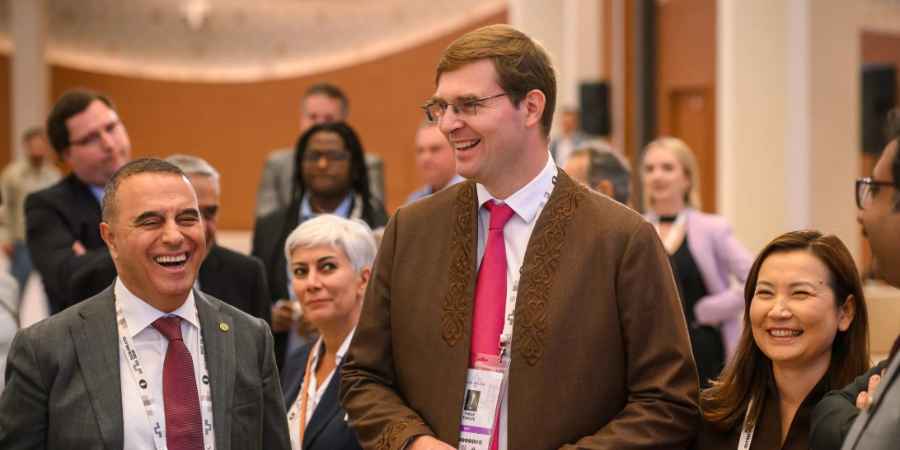
Timur Turlov has been elected president of the International Chess Federation (FIDE). The vote took place on September 26 in Samarkand during the organization’s General Assembly. In the second round, the president of the Kazakhstan Chess Federation and CEO of Nasdaq-listed Freedom Holding Corp. received 110 out of 196 votes, Kazakh media outlet Kursiv reports.
Turlov’s victory concluded a campaign in which he focused less on individual initiatives and more on a broader plan to reshape FIDE’s operating model. The new president pledged to increase investment in chess, strengthen support for national federations, accelerate the organization’s digital transformation, and raise FIDE’s profile among sponsors, media outlets, and global online audiences.
Timur Turlov ran alongside five-time world champion Viswanathan Anand, who had been serving as FIDE’s interim president since July 2026. Anand was elected deputy president on Turlov’s ticket.
Betting on Investment
One of the central elements of Turlov’s platform was the creation of a dedicated chess development fund.
During the campaign, he initially proposed a fund of about $7 million. By election day, he had outlined plans for a $28 million development fund over four years and said he would personally guarantee the financing.
The money is intended to support chess development across national federations, particularly those with fewer resources. Earlier in the campaign, Turlov said such funding could help federations organize tournaments, cover player travel, train coaches and arbiters, and support other development programs.
Timur Turlov presented the fund as a way to narrow the gap between the world’s leading chess nations and federations operating on smaller budgets. He has also said national federations should have a say in how the development money is allocated.
Support for national federations became one of the central themes of his campaign. Turlov said that, over the course of his four-year term, every federation should see tangible results from the organization’s reforms.
FIDE Must Become Digital
The second major pillar of Turlov’s platform is technology.
The entrepreneur, who built much of his business around digital financial services, intends to bring that experience to the chess world. During the campaign, he spoke about the need to create a stronger digital platform for FIDE and expand the range of services available to players, organizers, and national federations.
Turlov said his goal was to make FIDE “more professional and more modern, more digital,” while raising its standing and influence globally.
For FIDE, this issue goes far beyond modernizing its website or internal systems. Chess has developed one of the strongest online presences in global sport: millions of people play online, watch live broadcasts of games, and follow grandmasters on social media and streaming platforms.
The challenge for the new leadership is to ensure that FIDE plays a more prominent role in this ecosystem.
Marketing and a New Audience
Timur Turlov also pledged to strengthen the federation’s marketing efforts.
Until now, FIDE has primarily been perceived as a regulatory body responsible for ratings, titles, rules, and the largest international competitions. Under the new leadership, the federation may seek to position itself more actively as a global sports brand.
This would involve attracting new commercial partners, improving its communications, developing new media content, and engaging more actively with international audiences.
For Turlov, this is one way to broaden chess’s funding base and reduce individual projects’ dependence on a limited number of funding sources.
The Olympic Goal
Another ambitious objective identified by the new president is bringing chess closer to inclusion in the Olympic program.
“The biggest dream we’re all working toward is getting closer to the Olympic program,” Turlov said.
The possibility of including chess in the Olympic program has been discussed for many years, but classical chess has not been included in either the Summer or Winter Olympics.
For FIDE, progress toward Olympic inclusion would mean more than sporting prestige. Inclusion in the Olympic program could raise the profile of chess, expand access to institutional funding, and strengthen the position of national federations.
A Competitive Election
Timur Turlov’s rivals in the election were German entrepreneurs Jan Henric Buettner and Wadim Rosenstein.
Buettner ran alongside Malcolm Pein, while Rosenstein ran with Gordon Tang as his candidate for deputy president.
The campaign was high-profile and, at times, tense. During the September 9 presidential debate, Rosenstein lost his connection shortly after delivering his opening statement and did not return to the broadcast. The European Chess Union later issued a statement reaffirming its institutional neutrality after social media posts linked its leadership to Rosenstein’s campaign.
The FIDE president is elected once every four years. Each national chess federation has one vote, and voting is conducted by secret ballot.
The campaign is now over. For Turlov, the next stage begins: he will be judged not by his campaign promises, but by whether he can translate his investment pledges, digital strategy, and marketing plans into tangible progress for chess worldwide.




