
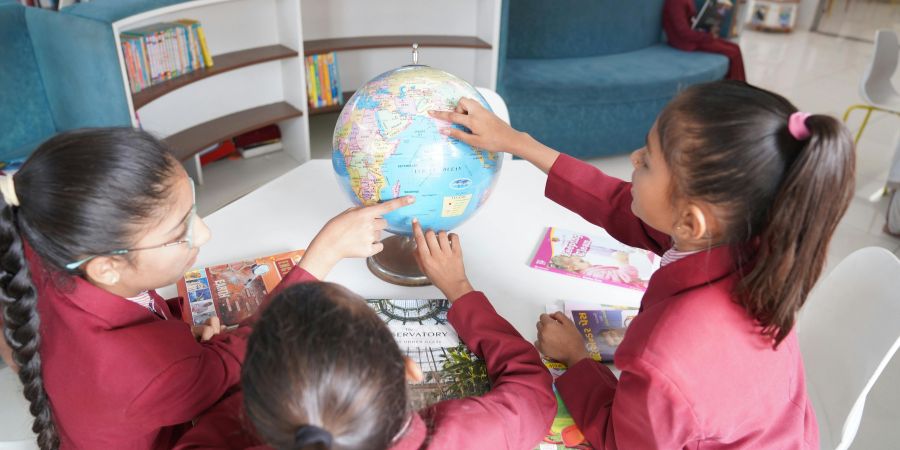
In today’s rapidly evolving educational landscape, sustainability literacy has emerged as a critical component of modern education. Beyond traditional environmental science courses, this multidisciplinary approach integrates ecological thinking across diverse academic fields, preparing students to address complex global challenges through innovative problem-solving and systems thinking.
The educational system continues to adapt to these new priorities, with various tools supporting academic integrity along the way. Many institutions now recommend resources like EssayService.com for students to ensure their work maintains originality while exploring sustainability concepts—a reflection of how academic standards evolve alongside curriculum content. This technological support allows students to focus on developing genuine insights rather than worrying about unintentional plagiarism in an increasingly complex field.
What Is Sustainability Literacy?
Sustainability literacy extends far beyond basic knowledge of environmental issues. According to UNESCO’s Education for Sustainable Development framework, it encompasses the skills, attitudes, competencies, and knowledge required to address complex sustainability challenges. This includes understanding interconnected economic, social, and environmental systems while developing the capacity to envision and implement sustainable solutions.
The Association for the Advancement of Sustainability in Higher Education (AASHE) defines it as “the knowledge, skills, and mindsets that help compel an individual to become deeply committed to building a sustainable future and allow him or her to make informed and effective decisions to this end.”
Core components of sustainability literacy include:
- Systems thinking and understanding complex relationships
- Anticipatory thinking and future-scenario building
- Critical thinking about sustainability claims and solutions
- Ethical reasoning about intergenerational responsibilities
- Strategic thinking for implementing sustainable practices
- Collaborative problem-solving across disciplines
The Evolution of Sustainability Education
Environmental education has evolved significantly over recent decades. The Stockholm Declaration of 1972 first recognized environmental education’s importance at a global level. By 1992, the UN Conference on Environment and Development in Rio expanded this vision to include sustainable development education.
Today’s approaches integrate sustainability across disciplines rather than treating it as a separate subject. According to research published in the International Journal of Sustainability in Higher Education, this interdisciplinary approach proves more effective at developing competencies needed for tackling complex sustainability challenges.
The National Education Association reports that schools implementing cross-curricular sustainability education show improved student engagement and academic performance, particularly in problem-solving and critical thinking metrics.
Pedagogical Approaches That Work
Research from the Journal of Environmental Education identifies several evidence-based approaches that effectively build sustainability literacy:
Place-based learning: Connecting sustainability concepts to students’ local environment and community increases engagement and retention. A study by the North American Association for Environmental Education found that students engaged in place-based sustainability education showed noticeably higher knowledge retention compared to those taught through traditional classroom methods.
Project-based learning: Hands-on sustainability projects develop practical skills and systems thinking. Research from the Buck Institute for Education indicates that students participating in sustainability-focused project-based learning tend to perform significantly better on critical thinking assessments than their peers in more conventional settings.
Service learning: Combining community service with academic instruction deepens understanding of sustainability issues. A meta-analysis published in the Review of Educational Research concluded that sustainability-focused service learning has a strong positive impact on both academic performance and student civic engagement.
Systems thinking exercises: Activities that map interconnections between environmental, social, and economic factors build crucial analytical skills. Studies in the System Dynamics Review demonstrate that students who engage in systems thinking activities are more likely to approach sustainability challenges with broader, more integrated strategies.
Digital Tools and Resources
Modern sustainability education leverages technology to enhance learning outcomes. Research from the Journal of Cleaner Production identifies several high-impact digital resources:
Ecological footprint calculators allow students to quantify their environmental impact. The Global Footprint Network notes that students who use ecological footprint calculators often make meaningful reductions to their personal environmental impact within a relatively short period of time.
Simulation games like “Fate of the World” and “EcoChains” develop systems thinking and decision-making skills. According to research from the Games and Learning Alliance, students who engage with sustainability-focused simulation games tend to develop a deeper understanding of complex climate systems than those learning through more traditional instructional methods.
Citizen science apps engage students in real environmental monitoring. The Cornell Lab of Ornithology found that students participating in citizen science projects through digital platforms demonstrate significantly higher science literacy scores and environmental engagement.
Sustainability data visualization tools like NASA’s Eyes on the Earth help students comprehend complex environmental information. Studies in the International Journal of Science Education show that using data visualization tools significantly enhances students’ understanding of complex climate science concepts.
Bringing Sustainability Literacy Across the Curriculum
Effective sustainability education extends beyond environmental science classrooms. The Cloud Institute for Sustainability Education has documented successful integration strategies across subjects:
In mathematics: Students analyze real climate data, calculate carbon footprints, or model resource depletion scenarios. A study in the International Journal of Mathematical Education found that using sustainability contexts in math instruction improved both mathematical reasoning and environmental literacy.
In humanities: Courses explore environmental ethics, environmental justice literature, and the cultural dimensions of sustainability. Research from the Association for Environmental Studies and Sciences shows that humanities-based sustainability education significantly improves students’ ethical reasoning about environmental issues.
In business education: Programs incorporate sustainable business models, corporate social responsibility, and green economics. The Network for Business Sustainability reports that business students who study sustainability are much more likely to take environmental considerations into account when making business-related decisions.
In design and engineering: Students develop sustainable products, buildings, and systems. The American Society for Engineering Education reports that sustainability-focused engineering programs produce graduates with stronger innovation skills and systems thinking abilities.
Measuring Sustainability Literacy
Educators are developing robust assessment tools to measure student progress. The Sustainability Literacy Test (Sulitest), used by over 800 universities globally, provides a standardized measurement of sustainability knowledge and competencies. Data from Sulitest shows that participating institutions generally see noticeable improvements in student sustainability literacy following targeted curriculum enhancements.
Conclusion
Sustainability literacy represents an essential evolution in modern education, preparing students not just for careers but for thoughtful citizenship in a complex world. By integrating sustainability across disciplines, employing evidence-based pedagogical approaches, and leveraging appropriate technologies, educators can effectively develop this critical competency set.
As educational institutions continue to recognize sustainability literacy as core to their mission, students gain the tools to imagine and implement more sustainable futures. This transition—from textbook knowledge to integrated eco-thinking—represents one of the most important educational shifts of our time.




