
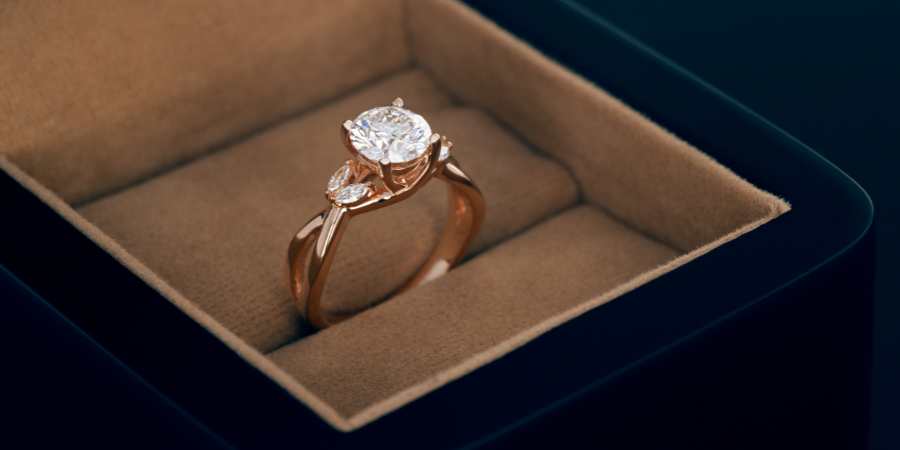
Buying a proposal ring diamond is one of the stranger purchases a person can make. It sits somewhere between a real estate transaction and a poem. The stakes feel enormous, the vocabulary is invented, and the industry has spent roughly a century convincing shoppers that the correct amount to spend is exactly two months of salary, a figure De Beers made up in a 1980s ad campaign and which has, remarkably, stuck.
The rules have loosened, though. Lab grown stones cost a fraction of mined ones. Custom work is faster than it used to be. The mall-jeweler script is no longer the default path. What follows is a working guide, with the caveat that anyone who tells you diamond shopping is straightforward is either lying or selling.
Start with the shape, not the size
Most people, when asked what kind of diamond they want, say “big.” Fair. But shape drives almost everything else about how a ring looks on a hand, and it should be the first decision.
Round brilliants dominate the market and are the most expensive per carat, partly because cutting them wastes so much rough. Ovals have surged in the last several years, helped along by Blake Lively and Ariana Grande wearing conspicuous ones, and helped further by the fact that an oval simply looks bigger than a round of the same weight. Emerald cuts read vintage. Pears divide people. Cushions age well, or at least they have so far.
Length-to-width ratio matters more than most guides mention. An oval at 1.35:1 looks balanced. At 1.50:1 it looks stretched, like the stone is trying to escape the setting. The number is on any decent grading report.
The four Cs are ranked wrong
Every guide lists cut, color, clarity, and carat as if they carried equal weight. They don’t. Cut matters much more than the rest, and it’s the one shoppers routinely underweight.
A well-cut G will out-sparkle a badly cut D. An SI1 with a clean table looks identical to a VVS2 across a dinner table and costs meaningfully less. Carat weight is priced in psychological jumps, so a 1.00 costs noticeably more than a 0.95 even though nobody can tell them apart on a finger. Shopping just below the round numbers is one of the few genuine ways to save money here.
For color, G through I looks white in normal light to most eyes. For clarity, VS2 and SI1 tend to be the sweet spots. For cut, insist on Excellent or Ideal and ask to see the light performance data if any exists.
Lab grown or mined
This debate has cooled down. Six years ago traditional retailers treated lab grown with open suspicion. Now the major houses sell them without apology, and the GIA grades them on the same scale used for mined stones.
Chemically and optically they are diamonds. What differs is origin, price, and resale. Origin is a real consideration for buyers who care about mining conditions or carbon footprint, and some lab producers can actually document what their operations emit. Price is where the argument gets one-sided: comparable quality runs roughly a third of the mined price at two carats. Resale is worse for lab grown, but resale on any diamond is bad, so this is more of a talking point than a real drawback for most buyers.
For shoppers who want to discover luxury jewelry built around lab grown stones with verified provenance, the pieces are at this point indistinguishable from mined equivalents in any way that shows up on a hand.
Settings do more work than most people realize
A setting can add decades to the life of a stone or slowly wreck it, and this is the part of the purchase that gets the least attention.
Six-prong solitaires, the Tiffany style, let in the most light but leave the stone exposed. Four-prong versions show more of the diamond and read slightly squarer. Bezel settings, where metal wraps the girdle, are the most protective and, for reasons that are hard to explain, the least fashionable until recently. They have come back for people who cook, garden, lift things, or otherwise use their hands.
Halos make the center stone look bigger and tend to date faster than the shopper expects. Cathedral and vintage-inspired settings hold up longer aesthetically. Two-tone bands are having a moment; whether that lasts is anyone’s guess.
Metal choice affects perceived color in ways worth exploiting. Platinum and white gold make near-colorless stones look whiter. Yellow gold hides warmth in lower color grades, so an I or J can look excellent in a yellow setting for real money less.
Custom versus ready-made
Custom used to mean six months and a five-figure floor. Not anymore. Plenty of designer studios turn made-to-order rings around in four to six weeks at prices close to retail. The process is usually pick a setting, pick a stone from current inventory, approve a CAD rendering, wait.
Custom is worth it when a specific stone shape is hard to source, when a family diamond is being reset, or when the design has to reference something personal. It is not worth it for a classic solitaire, which almost every brand executes well off the shelf, sometimes better than a custom studio would.
A hybrid approach tends to work: look at stones in person at a local showroom, then have the setting made by a designer whose taste actually matches the wearer’s. This is easier than it sounds and harder than it should be, mostly because finding a designer whose taste matches anyone specific takes time.
What to actually spend
Ignore the two-months-salary rule. It was an ad. Engagement ring spending in the United States varies wildly by region, income, and how much someone has internalized Instagram, and any single median figure hides more than it reveals. A large share of buyers spend under three thousand dollars. Plenty spend more. Neither group is doing it wrong.
The number that matters is what the buyer can spend without financing at punishing interest or reshaping their life around the purchase. Diamond jewelry is an emotional buy dressed up as a financial one, and retailers know it. Anyone pushing an upgrade past a comfortable budget is selling.
One last thing. Whatever ring gets chosen will be worn for decades, resized once or twice, cleaned more times than anyone counts, and banged against door frames, car doors, and countertops. The jeweler who will service it in ten years matters more than the last half-grade of color. So does insurance. So does picking something the wearer actually likes, rather than something that photographs well on someone else’s hand.




