Many of the systems people rely on every day remain invisible until they stop working. A video call that connects without interruption, a business transaction completed in seconds, data moving seamlessly across networks, or a nation steadily building its digital capabilities all depend on decisions made far from public view. Behind those decisions are leaders who understand that progress is not measured only by what is built today, but by the foundations laid for the opportunities of tomorrow. Their work demands a rare balance of discipline and vision, where every investment, every risk, and every strategic choice contributes to something larger than immediate results.
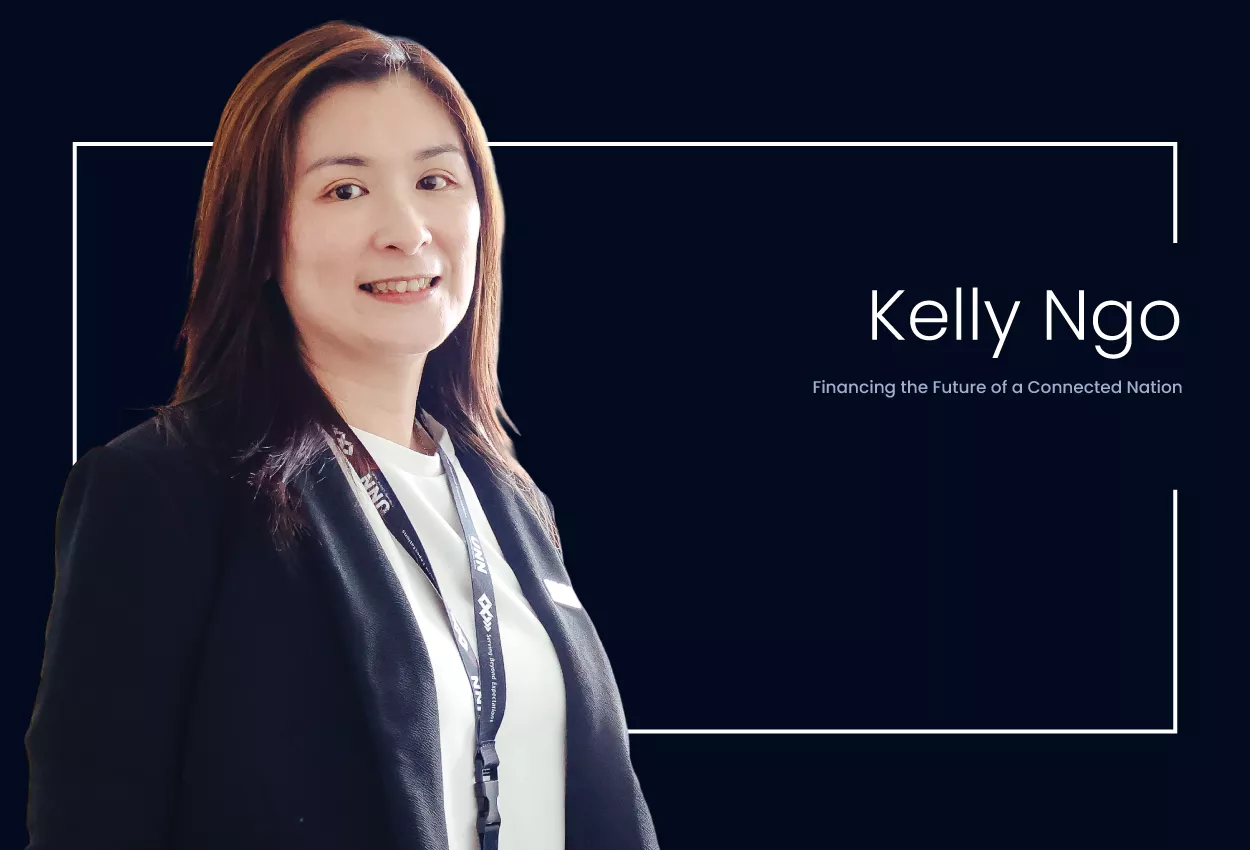
Among those helping shape that future is Kelly Ngo, Chief Financial Officer of Unified National Networks Sdn Bhd (UNN) Brunei Darussalam. Having progressed from Head of Controlling to CFO, she has developed a leadership philosophy that extends beyond financial stewardship into strategic value creation.
From Financial Stewardship to Strategic Value Creation
Kelly’s leadership journey from Head of Controlling to Chief Financial Officer has been defined by a significant shift in perspective. While financial discipline, governance, and risk management remain essential responsibilities, she believes leadership extends beyond preserving value to actively creating it.
For Kelly, the role of a modern CFO involves identifying growth opportunities, enabling innovation, allocating resources strategically, and supporting decisions that generate long-term business value. Over the years, she has learned that effective leaders must not only manage risk but also determine where to invest, which opportunities deserve attention, and how to balance short-term considerations with sustainable value creation.
Financing Brunei’s Digital Future
As a key player in Brunei’s digital telecommunications infrastructure, UNN’s transformation agenda requires strong alignment between financial strategy and long-term business objectives. Kelly plays a central role in ensuring that financial decisions support the organization’s broader mission of driving national digital transformation.
When evaluating investments, she looks beyond immediate financial returns and considers how each initiative strengthens digital capabilities, improves operational efficiency, enhances customer experience, and contributes to sustainable growth. As a member of UNN’s Senior Management Team, she helps prioritize initiatives that deliver the greatest strategic impact while ensuring resources are directed toward projects that advance UNN’s transformation journey.
At the same time, she remains committed to maintaining financial discipline, balancing innovation and growth ambitions with long-term sustainability and value creation.
Strengthening Finance as a Strategic Partner
Kelly’s key priorities as CFO center on sustainable growth, operational excellence, and financial resilience. She focuses on directing investments toward the right strategic initiatives while continuously seeking opportunities to improve processes, productivity, and overall organizational performance.
Beyond traditional financial reporting and control functions, she believes the Finance function should serve as a trusted business partner across the organization. By providing meaningful insights, challenging assumptions, and supporting data-driven decision-making, Finance can play a much larger role in shaping business outcomes.
Her goal is to ensure that Finance actively enables strategy execution, supports long-term value creation, and contributes to the organization’s continued success.
Balancing Growth Ambitions with Financial Discipline
Operating within a capital-intensive industry requires careful financial management and disciplined decision-making. Kelly recognizes the challenge of investing in network modernization, technological innovation, and future growth while maintaining financial sustainability.
Her approach focuses on strategic capital allocation, continuous evaluation of investment priorities, and ensuring financial resources are directed toward opportunities capable of generating the greatest long-term value. Maintaining a strong balance sheet and healthy cash flow remains critical to supporting these ambitions.
Through prudent financial management, Kelly believes organizations can continue pursuing network expansion, innovation, and emerging technologies while preserving resilience and long-term stability in an increasingly competitive environment.
Rethinking Telecommunications Through the Wholesale Network Model
Having worked across both retail telecommunications and wholesale network services, Kelly has gained valuable insight into the financial dynamics of each model. She notes that in countries with relatively small populations, maintaining multiple competing network infrastructures often results in duplicated investments, lower economies of scale, and less efficient use of resources.
She views the wholesale network model as a more sustainable and efficient approach. By separating infrastructure ownership from retail operations, network investments can be managed independently, reducing capital pressures on retail service providers while improving overall capital efficiency.
A single wholesale network allows multiple retail operators to utilize the same infrastructure, maximizing network utilization and generating greater value from existing assets. This enables retail providers to focus on service innovation, customer engagement, and value-added offerings rather than managing costly physical infrastructure.
At the same time, Kelly acknowledges that wholesale network operators face their own challenges. These include managing significant infrastructure deployment and maintenance costs, achieving sufficient network utilization, navigating regulatory requirements, adapting to technological change, and delivering sustainable returns on large-scale capital investments. Despite these challenges, she believes the model creates a stronger foundation for long-term industry sustainability, efficiency, and innovation.
From Data to Direction
Kelly believes that data-driven decision-making sits at the core of effective financial planning and performance management. Rather than relying solely on historical reporting, she emphasizes the importance of leveraging real-time data, analytics, and actionable insights to support forward-looking decisions. This approach enables organizations to identify emerging trends, improve forecasting accuracy, optimize resource allocation, and respond proactively to changing business conditions.
For Kelly, the true value of data lies not in documenting past performance but in transforming information into meaningful insights that shape future outcomes. By embedding analytics into decision-making processes, organizations can strengthen preparedness, improve performance, and create sustainable business value. In her view, successful financial leadership is not simply about understanding what has happened, but about using insight to influence what happens next.
Investing Beyond the Next Trend
As technological advancements continue to reshape the telecommunications sector, Kelly approaches investment decisions with a strong focus on long-term value creation. She believes that the challenge is not merely identifying emerging technologies but determining which investments will generate sustainable competitive advantage while supporting strategic objectives.
Given the significant capital requirements within the industry, Kelly advocates for a disciplined and structured evaluation process that considers business impact, financial returns, scalability, and risk. Investments are prioritized based on their ability to drive revenue growth, improve operational efficiency, enhance customer experience, strengthen risk management, and support long-term competitiveness. This approach ensures that resources are directed toward high-impact opportunities rather than short-lived industry trends.
Building Trust Through Financial Governance
Kelly views IFRS as a critical foundation for transparency, accountability, and strong corporate governance. By providing a globally recognized financial reporting framework, IFRS enhances the accuracy, consistency, reliability, and comparability of financial information, enabling stakeholders to make informed decisions with confidence.
She highlights that comprehensive disclosure requirements strengthen internal controls, support effective risk management, and improve organizational oversight. At UNN, IFRS compliance has been embedded since the company’s incorporation, eliminating the need for a complex transition from local accounting standards and providing a strong advantage as the organization prepares for its future IPO journey.
For Kelly, adherence to international reporting standards not only strengthens governance but also builds stakeholder confidence, supports access to capital, and contributes to long-term financial sustainability.
Preparing Talent for a Digital Future
Kelly believes finance leaders play a vital role in developing a workforce capable of succeeding in the digital economy. She sees talent investment as a strategic priority that must align closely with an organization’s digital transformation objectives.
This includes supporting upskilling and reskilling initiatives in areas such as data analytics, artificial intelligence, cybersecurity, digital technologies, and agile working practices. Beyond funding development programs, Kelly advocates fostering a culture of continuous learning, innovation, and workforce planning that anticipates future capability requirements.
By partnering closely with Human Resources and leveraging data to measure the effectiveness of talent investments, she believes organizations can ensure resources are directed toward initiatives that deliver measurable business outcomes while building an adaptable and digitally capable workforce.
Navigating Industry Transformation
Kelly identifies one of the telecommunications industry’s greatest challenges as balancing large-scale investments in digital infrastructure with the need to maintain profitability and generate sustainable returns. At the same time, organizations must modernize legacy networks, strengthen cybersecurity capabilities, adopt emerging technologies, and develop talent capable of operating increasingly sophisticated digital ecosystems.
To address these challenges, UNN has expanded beyond traditional connectivity services into areas such as cloud computing, cybersecurity, managed services, and enterprise technologies. These initiatives are designed to create new growth opportunities while supporting the organization’s evolution into a broader digital solutions provider.
She also highlights UNN’s plans to develop an AI-ready data center that will support growing demand for advanced digital capabilities from both domestic and international markets. The initiative aligns with Brunei Vision 2035 and reflects the organization’s commitment to accelerating digital transformation, economic diversification, and sustainable national development.
Leading Through Change with Purpose
Throughout her career, Kelly has been guided by the principles of integrity, accountability, strategic thinking, and adaptability. While maintaining strong governance and financial discipline remains essential, she believes leadership increasingly requires becoming a strategic business partner capable of supporting value creation, enabling data-driven decision-making, and guiding organizations through transformation.
She places significant importance on transparency, communication, and stakeholder engagement, recognizing that trust is built through openness, empathy, accountability, and consistent follow-through. Kelly believes that successful transformation depends on helping people understand not only what is changing, but why those changes matter.
At the same time, she is quick to acknowledge that transformation is never achieved by one individual alone. She credits much of her professional growth and success to the support, collaboration, and trust of UNN’s senior leadership team and department heads, whose collective efforts have been instrumental in driving organizational progress.
Enabling Brunei’s Digital Ambitions
In the future, there are many opportunities for Brunei to become an even more connected and globally competitive nation. These include the strategically advantageous location of the country, the stability of the business environment, strong governance system, and the absence of exposure to natural disasters, which will allow making investments in the digital infrastructure, clouds, AI data centers, and other innovative technologies.
This, in turn, will allow attracting foreign investment, creating high-value jobs, developing skills, and diversifying the economy of the country. By making consistent investments in innovations and technologies, Kelly hopes to establish the country as a trustworthy regional center for digital services.
The future vision of Kelly does not consist solely of success in business. She hopes to build a world-class organization that offers opportunities to people, develops through innovation, makes sustainable development, and participates in the fulfillment of the goals of Brunei Vision 2035. In the end, Kelly wants to leave a legacy which is not limited only to the business success, but also the positive impact on future generations.