
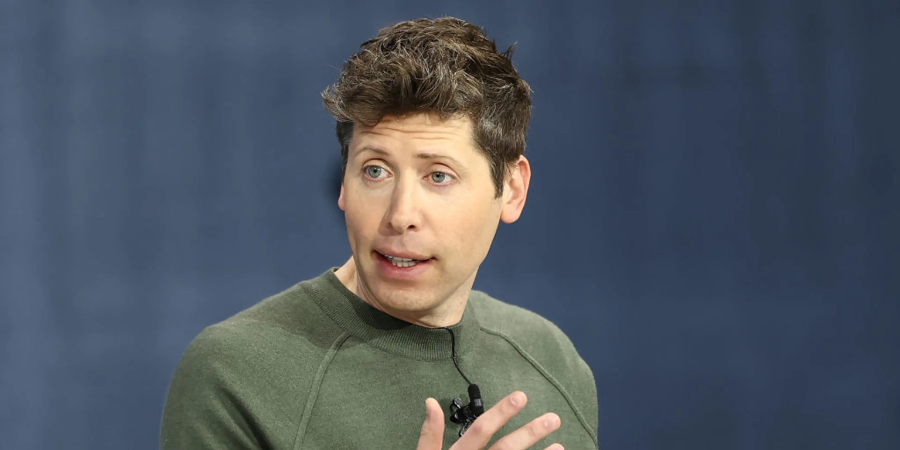
Sam Altman has backed or advised hundreds of companies through Y Combinator and OpenAI. Most of them made the same mistakes. Here’s what those lessons actually look like in practice.
2 out of 10 new businesses fail in the first year of operations, according to data from the U.S. Bureau of Labor Statistics. Most of them didn’t fail because of bad ideas. They failed because of bad decisions made at the wrong time, by founders who were moving fast without the right thinking.
Sam Altman has watched this pattern repeat across thousands of companies. His advice, shared through essays, interviews, and YC lectures, keeps pointing at the same early stage startup challenges. Build something people actually want. Stay lean until you know what works. Hire slowly. Move with conviction but stay honest about what the data says.
Here are 5 things the lessons from Sam Altman keep coming back to:
- Talk to your users obsessively, especially when things feel like they are going well
- Do not hire fast to look like a real company, hire when it genuinely hurts not to
- Revenue is the only real validation early on, not press or product awards
- The biggest startup mistakes founders make happen quietly, not dramatically
- Speed matters, but speed in the wrong direction destroys faster than slowness
Why Startups Fail Before They Even Realize It?
The early stage startup challenges people write about are usually the obvious ones. Running out of money. Losing a co-founder. Bad product-market fit.
But the lessons from Sam Altman point at something subtler. Most startups die because the founder stopped being honest with themselves.
They build a product based on what they think users want instead of what users actually do. They track metrics that feel good instead of ones that reveal the truth. They hire people to fill titles instead of solving specific, urgent problems.
One of the most repeated founder mistakes to avoid from Altman’s Stanford lectures is this: building something impressive instead of something needed. A founder can spend 18 months crafting a beautiful product, raise a seed round based on the idea, and still have zero retention by month six. Impressive demos do not equal demand.
According to CB Insights, 35% of startups fail because there is no market need for their product. (Source: rydoo.com)
That number has stayed consistent for years. The lesson from Sam Altman here is direct: get out of the building, talk to people, and do it before you write a single line of code.
The Startup Mistakes Founders Make in the First Year
| Common Mistake | What It Looks Like | What to Do Instead |
| Building in silence | Shipping after 12 months with no user input | Launch a rough version in 6-8 weeks |
| Hiring too early | Bringing on 10 people before $10K MRR | Hire only when you physically cannot do the work |
| Chasing press | Writing a blog post about your launch | Getting 10 paying customers first |
| Ignoring churn | Celebrating signups while retention tanks | Look at 30-day retention weekly |
| Avoiding hard conversations | Not telling investors about real problems | Over-communicate, especially when things go wrong |
Altman has said many times that early stage startup challenges are not technical ones. The hard part is emotional. Founders are attached to their ideas. That attachment makes them slow to pivot, slow to kill features, and slow to admit something is not working.
How to Build a Successful Startup the Way Sam Altman Describes It
The advice sounds simple because it is. But simple does not mean easy.
- Start with a real problem: Not a problem you read about in a trend report. A problem you have personally experienced or have watched people struggle with for a long time. How to build a successful startup starts there, every single time.
- Get to revenue fast: Sam Altman has consistently said that the goal in the early months is to find 10 to 100 people who love your product, not 10,000 who think it’s fine. Startups that figure out how startups grow fast usually have one thing in common: they found their obsessed users early and built around them.
- Keep the team tiny until the business model is clear: Some of the best SaaS companies in the world had fewer than 10 people at $1M ARR. A lean team moves faster, communicates better, and forces clarity about what actually matters.
Sam Altman startup lessons on hiring are blunt: hiring too early is one of the fastest ways to slow a company down. Every new person adds coordination cost. That costs compounds. At 5 people, it barely matters. At 30 people pre-product-market fit, it can kill the company quietly over 18 months.
What Sam Altman Thinks About Growth?
How startups grow fast is probably the question founders ask most. The Sam Altman answer has always been less glamorous than people want.
Growth comes from retention. Retention comes from people actually getting value. Value comes from solving a specific, painful problem in a way that works repeatedly.
Startup growth strategies that skip that chain, growth hacks, paid acquisition before retention, press launches before product-market fit, almost always lead to the same outcome. Numbers go up for 60-90 days, then drop sharply, and the founder is left trying to explain why the cohorts look terrible.
According to Y Combinator data shared publicly across multiple batches, companies that grow consistently week-over-week at 5-7% in the early months are on a trajectory that compounds to massive scale within 2-3 years. That kind of growth rarely comes from viral moments. It comes from doing the boring work of making the product better for the people who already use it.
Why Do Founders Need a Personal Brand (But Most Do It Wrong)?
This part often gets overlooked in startup growth strategies conversations. But Sam Altman advice for founders increasingly points here: how founders grow on Twitter, LinkedIn, and in public matters for recruiting, fundraising, and customer acquisition.
How to build a personal brand as a founder does not require posting every day or building a massive following. It requires being consistently useful and honest about what you are learning. That is it.
A founder branding strategy that works looks like this: share what you are actually working on. Write about real problems you are solving. Be specific. Share the failures alongside the wins.
The LinkedIn personal branding strategy that performs best for founders is not motivational content. It is specific, practical insight that comes from actually running a company. “We lost 40% of our users in month two. Here is what we found and fixed.” That kind of post builds trust faster than anything else.
The creator economy for founders is real. Distributionally, a founder with 20,000 engaged followers on LinkedIn can hire better, close partnerships faster, and raise money more easily than one with the same traction and no audience.
How Much Should You Share Online as a Founder?
This is where it gets nuanced, and the Sam Altman leadership style offers a useful model.
He shares ideas publicly. He shares thinking. He does not share internal strategy, specific deals, or information that would give competitors a meaningful edge.
How much to share online as a founder comes down to a simple filter: share your thinking, protect your execution.
The risks of sharing too much online are real. Oversharing on social media consequences include attracting copycats before you have a moat, creating confusion with investors about your actual focus, and sometimes, saying something that damages relationships you need.
Should you share startup ideas publicly? Early on, before you have customers, probably yes, talking about it widely is one of the fastest ways to validate whether anyone cares. After you have traction, be more selective. The idea is rarely the valuable part anyway. The execution and the team are.
How to protect business ideas is less about secrecy and more about speed. Move faster than anyone who might copy you.
Sam Altman on Leadership: What Most People Miss
What does Sam Altman think about startups at a leadership level? Reading across his public writing, a few ideas keep coming up.
- Conviction matters more than certainty: The best founders do not always know they are right. But they are willing to act clearly on incomplete information and update when they learn something new.
- The founder’s job changes dramatically over time: At 5 people, you are doing everything. At 50, you are mostly recruiting and communicating. Founders who struggle to make that shift are one of the most common patterns in early stage startup failures.
- Culture is what you do when things are hard, not what you write in a document: Sam Altman has made this point in several forms. The values that matter are the ones that show up in actual decisions, especially difficult ones.
A Realistic Checklist: Avoid the Most Common Founder Mistakes to Avoid
- Are you talking to at least 5 users per week right now?
- Do you know your 30-day and 90-day retention numbers?
- Can you say in one sentence what problem you solve and for whom?
- Are you hiring to solve a specific bottleneck or to build a team that looks complete?
- Do you have a personal channel where your thinking is visible to the world?
- Are you updating your strategy based on data or based on what you hoped would work?
If you hesitated on more than two of those, that is where to focus next.
Key Takeaways
- The lessons from Sam Altman consistently point to execution, honesty, and user obsession over ideas, press, or headcount.
- The biggest startup mistakes founders make are quiet ones: hiring too early, ignoring retention, and building what they wish people wanted.
- How to build a successful startup starts with finding a real problem, then 10 users who love the solution, then growing from there.
- Startup growth strategies that work are boring: fix retention, improve the product, repeat.
- Building in public thoughtfully, through a founder branding strategy, creates compounding advantages in hiring, fundraising, and sales.
- Knowing how much to share online as a founder is a skill worth developing: share thinking, protect execution.




