
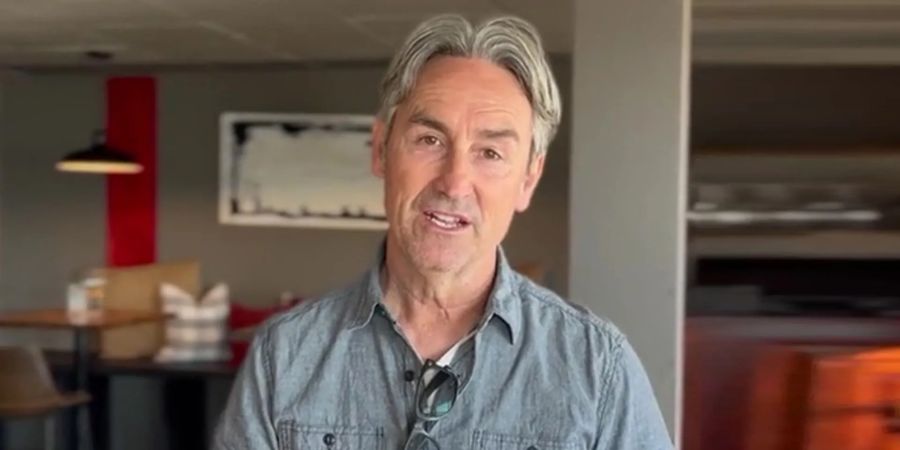
Many people were introduced to the world of abandoned barns, rusty relics, and forgotten antiques through the show American Pickers, which aired in 2010. Essentially, Mike Wolfe, the main character, took a simple childhood fascination and turned it into a full-blown crusade.
What is most striking today is his larger, more impactful endeavor, the Mike Wolfe Passion Project, which not only changes the way we look at vintage but also small-town revival and the power of one’s creative vision. This includes the broader goals behind the Mike Wolfe Passion Project small town revival idea and the growing conversation around American Pickers influence on preservation culture.
While a few might see antiques only as things, Wolfe perceives them as historical records that tie directly into community heritage and vintage Americana. The point why this should matter is that when we take care of what looks like throwaway, we actually keep the stories going in a way that reflects storytelling through objects. So, first of all, how does his creative vision function, secondly, why does it have more worth than we think, and finally, what potential does it hold for us if we are creators, writers, or community builders?
Early life and beginnings
Mike Wolfe was born in Joliet, Illinois, in 1964. He was the second of three children, raised by a single mother in a household where money was limited. From very early on he was drawn to old objects and discarded items. One particular story he recalls: when he was in elementary school he found an old bicycle behind a house. He cleaned it up, put air in the tires, and sold it for a small sum. That moment stirred something deep.
He walking instead of driving around neighbourhoods and often took alleys because that’s where he saw garages open, old bikes, rusty parts, tools and signs of past lives. He described the environment as fertile ground for someone curious about what others said was trash.
Formative years and forming of the picking instinct
In his twenties Mike Wolfe pushed this early interest into more serious territory. He ran a bicycle‐shop business for a while, repairing bikes and working with vintage machines. His instincts about what had value beyond the obvious sharpened over time. He started travelling, exploring barns, sheds, warehouses in small towns, spaces often overlooked. His focus was less on mass market items than on pieces with character, history or aesthetic appeal.
This is where the “roots” of his broader project begin: the idea that objects carry stories, that seemingly forgotten items have value if you are willing to look, clean up, understand context and bring them into new life. That mindset then became the foundation of his public persona and enterprise, eventually forming Mike Wolfe’s community preservation work.
Launching his project and building the brand
In 2010 the reality television show American Pickers premiered on the History Channel, with Wolfe as creator and star. The show featured him (originally with co‐star Frank Fritz) travelling across America seeking “picks” in barns, garages and back roads. The show’s success brought visibility to his work and to the concept of the picker as an explorer of Americana. But even before the show, Wolfe had begun building his brand.
His retail outlet, Antique Archaeology – Le Claire in Le Claire, Iowa, became a physical home for his finds and ideas. The store turned into a destination: people got interested not just in the items but the stories behind them. That store linked the picking mindset to real business, linking exploration, storytelling and commerce while grounding the ethos of Vintage Americana and community heritage.
The roots of his “Passion Project” mindset
What the term “Passion Project” really means here is that Mike Wolfe took what he loved, exploring the hidden, the forgotten, the pieces of Americana, and turned it into his life’s work. The roots of that are in his childhood fascination and his belief that there is value in things people discard. The feeling that value is found in what is not polished or new but heavily weathered, or unthought of with something special due to its context.
He also sees place and community as integral. He has been vocal about the importance of small-town America, historic structures, local character. In an interview he said “We need to save small-town America, man. Because that’s the roots of our country.” That value system informs his creative vision: his project is not simply about objects, he is grounding objects in narrative, place and community while contributing to small town revitalization and historic preservation.
How His Work Blends Preservation, Storytelling and Community
Wolfe’s process often begins with a visit to a town, meeting locals, identifying old buildings or artifacts, then working with artisans, historians and small-business owners. He seeks to breathe new life into forgotten spaces, an old storefront becomes a gallery, a motorcycle workshop becomes a heritage site.
Through this method he combines preservation with community revitalisation ( sources show his work in small towns.). Storytelling enters when each object or building is contextualised: who owned it, what it witnessed, what it meant to that locale. The result is what you could call “heritage as art and commerce” without sacrificing either. It is a reminder that creative vision will be stronger when it connects with place, people and story through storytelling through objects and grounded historic preservation.
Real-World Examples of the Mike Wolfe Passion Project in Action
Take the example of small-town downtowns in the Midwest where storefronts had sat empty. Wolfe acquired historic buildings, restored façades, ushered in galleries or cafés and invited local artisans to participate. ( Sources mention Columbia, Tennessee and others.)
Or consider his commitment to vintage motorcycles and signage: instead of wiping away decades of wear, he preserves the patina, so the narrative remains visible. These real-world moves illustrate Mike Wolfe’s restoration work in tangible form. For someone in content, writing, or creative leadership, this is an example of turning passion into public impact without losing integrity, tied closely to small town revitalization and community heritage.
What the Project Involves
- Historic buildings and community-spaces: The project includes restoring and repurposing historic structures across the country. For example, a major focus is on old industrial strips or storefronts in towns like Columbia, Tennessee and in his home region of Le Claire, Iowa. These are not just simple restorations: they are transformations into spaces for artisans, events, and community interaction that represent adaptive reuse and the spirit behind How Mike Wolfe restores historic buildings.
- Story collection and heritage focus: The project is, among other things, heavily focused on the stories told by places and things. Wolfe aims to make the story, which is in a building, a sign, or a vintage piece, be the core of the local culture. So, it is about getting old records, talking with local craftsmen or residents, and showing the past that is very much there but is not recognized as part of living community heritage.
- Collaboration with local craftsmen, artisans, creatives: The project envisions working with local makers, blacksmiths, sign-writers, woodworkers and others keeping traditional trades alive. This helps fuse old craftsmanship with new use-cases and maintain cultural lines of continuity.
- Interactive and participatory components: It is not simply about restoration. The project includes “demo days,” hands-on workshops, volunteer involvement, and public events. For example, people can volunteer to clean a building, document a site, or donate tools. Also, there is an online dimension (for instance a blog, digital diary, or “Two Lanes brand” concept) where followers can explore stories, shop artisan goods, or participate remotely.
- A goal-driven roadmap: According to coverage, Wolfe has a goal labelled “100 Buildings & 100 Stories” with the aim of restoring at least one historic building per U.S. state (or something on that order) by a set future date. The project thus sets a concrete target and a broad geographic spread tied to Mike Wolfe community preservation work.
Challenges and Lessons from His Journey
Of course the journey is not free of obstacles. Restoring old buildings carries regulatory complexities, sourcing authentic materials can be expensive and working with communities demands negotiation. ( Sources mention financial risk and regulatory hurdles.) Yet Wolfe’s approach shows how one can turn those challenges into opportunities.
He emphasises humility, patience and collaboration. One lesson: when you pursue a passion project, purpose must meet practicality. Another: creative vision must be grounded in community input. A third: authenticity must resist the temptation to simply polish the past into something unrecognisable.
Expansion and scaling up the vision
One major element of Wolfe’s next phase is geographical expansion of his Mike Wolfe restoration work. He has shifted from picking individual objects toward restoring entire buildings and repurposing them in small-town America. For example, in Columbia, Tennessee he acquired a late-1940s service-station building (formerly an Esso station) and is turning it into a venue called “Revival” with outdoor seating, fire-pit, neon signage and mixed use. He is likely to replicate this “adaptive reuse” model in further towns: take a historic building, restore it, bring in community function (artisans, cafés, events), and thereby generate cultural and economic renewal connected to small town revitalization.
Another extension is in his brand and digital presence: his platform called Two Lanes brand (named after the two-lane roads of rural America) functions as a lifestyle, storytelling and retail-brand arm of his work. It merges physical restoration with online storytelling and curated goods while echoing the spirit of Antique Archaeology and the travel ethos of American Pickers.
Conclusion
By taking a wider view, the Mike Wolfe Passion Project is an invitation to change our way of thinking. Its main idea is that our artistic pursuit can be more than just a means of self-expression, it can be a legacy. It disputes the concept that old is equal to worthless, outdated or irrelevant. Rather, it argues that old has potential, is full of stories and has value.
Thinking about your work, you might want to consider this: which forgotten places or stories in your industry that you would help to resurface? What narratives are still and waiting? Moreover, if you consider your artistic work as a preservation effort of ideas, voices, places, you may discover a deeper way. The message to be retained: a creative dream grounded in truth and being part of the community not only different, it lasts.




