
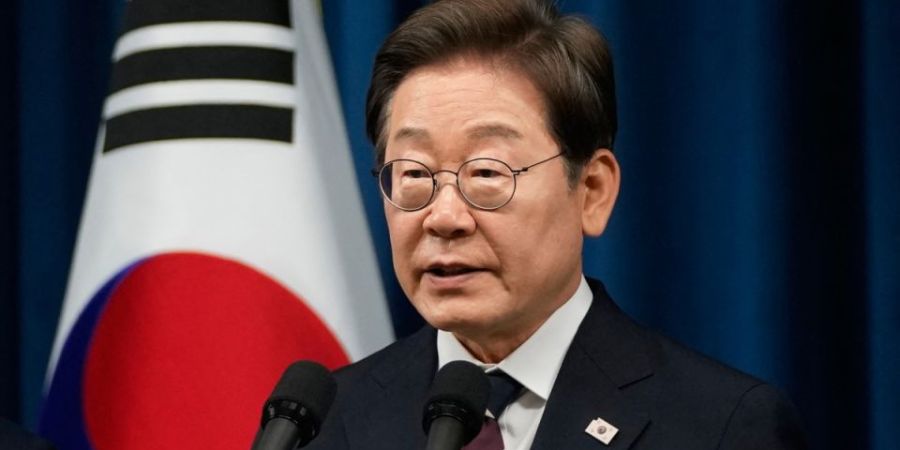
President Lee Jae Myung gave a stern warning about the economic future of South Korea. He speculated that if South Korea went down the path of accepting U.S. investment demands without protections, South Korea could enter a situation similar to the South Korea 1997 financial crisis comparison. In an interview with Reuters, prior to his trip to the U.N. General Assembly in New York, Lee pointed to the significance of financial mechanisms like a South Korea currency swap with U.S. to manage risks. Without the financial mechanisms, the proposed investment pledge of $350 billion, under a framework deal reached in July, could be hard to realize.
The Importance of Financial Protections
Lee emphasized the importance of establishing protections in order to prevent a repeat of the past financial crises. As he stated, South Korea’s economy relies on strong financial safeguards. South Korea’s forex reserves are significantly lower than Japan’s more than double $410B in reserves. Additionally, Japan’s yen is also an internationally accepted currency, and Japan has a swap line with the United States. All of this illustrates the need for protective measures in any investment agreement under the Trump administration.
Disagreement Over Investment Projects
While Seoul and Washington agree that investment projects must also be commercially viable, actual negotiations on the investment project have been more difficult than expected. These ongoing discussions reflect the delicate balancing act South Korea must carry out to protect its economic interests and the US relationship. The proposed Hyundai battery plant in Georgia is a key point in these negotiations.
Public Ire over Recent Events
The arrest of more than 300 South Korean workers at the construction site of a Hyundai battery plant in Georgia by U.S. immigration raid Hyundai Georgia has generated public ire. President Lee reiterated that no matter the public outcry, this does not undermine the larger bilateral coalition. He demonstrated his dedication to resolving these matters diplomatically while maintaining commitments under the U.S.-South Korea trade deal.
A Call for Timely Conclusion
President Lee made a call to conclude the continuing negotiations to resolve the current uncertainties. The urgency signals the need for resolution for an agreement that protects South Korea’s economy, while upholding commitments to the international community. Successful South Korea tariff negotiations with U.S. could ensure stability and encourage South Korean investment in U.S. manufacturing.
In conclusion, South Korea won critical points by insisting on safeguards in the investment discussions. The results of this negotiation will both shape the prospects of South Korea’s economy and its relationship with the United States, especially under ongoing discussions of U.S. investment demands.




