
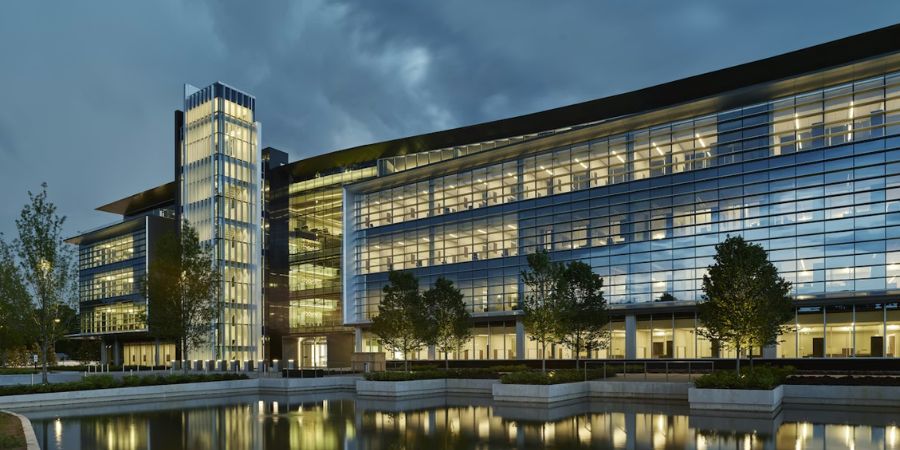
It is easy to assume that large corporate campuses are leftovers from a pre-remote era. After years of headlines questioning the future of offices, the idea of investing heavily in physical space can seem outdated at first glance. Yet if you look closely at where major companies are placing their money, a different story emerges.
For large organizations, campuses are one of the few environments they can fully control. Culture, collaboration, performance, and even emotional tone can all be influenced through physical space. That is why companies that care about long-term stability still see value in creating a physical home for their teams.
Today, let’s explore why such an investment, which can sometimes extend to hundreds of millions of dollars, is often worth it.
They Treat Campuses as Precision Instruments, Not Excess Real Estate
Modern corporate campuses are designed and managed with the same discipline as any other critical asset. Space is no longer measured by how much is available, but by how effectively it is used.
This is why aspects like utilization rates are something that big companies rightfully prioritize. Data from CBRE shows that the target utilization is usually >65%, but current utilization numbers are at 80%. This is because corporate real estate teams are actively optimizing their property footprints.
The high utilization is the result of thoughtful layouts, scheduling strategies, and clear decisions about what activities belong in the office and which do not. It happens when meeting spaces are planned with purpose and collaboration zones are placed where interaction happens naturally.
Teams know where to go, when to gather, and how to move through their day without unnecessary obstacles. This level of clarity saves time, lowers frustration, and supports consistent output. In that sense, a campus becomes an operational tool that justifies its investment cost.
They Realize Design Decisions Are Human Decisions
Once efficiency is addressed, experience becomes the next priority. A campus can be highly utilized and still fail if it ignores how people actually work and feel. This is where design choices start influencing engagement in measurable ways.
For instance, Gensler’s Global Workforce Survey noted that the most engaged workers spend just 36% of their time working alone. As Janet Pogue McLaurin, Global Director of Workplace Research, Gensler, notes, great workplaces need to be intentionally designed for human emotion.
This insight explains why collaboration spaces, informal gathering areas, and movement-friendly layouts have become central to campus planning. People connect, learn, and solve problems together more effectively when the environment supports those behaviors.
This is also where specialists like a commercial interior designer play a meaningful role. Their work bridges strategy and psychology, translating abstract goals into physical spaces that support real human needs. When design aligns with emotion, employees feel understood rather than managed.
As SPACESINC notes, it’s these steps that can help bring back employees to the office after they’ve gotten used to home office setups. The environment truly has a significant impact on worker satisfaction, and data backs this up.
The Workplace Journal highlights research by Mitie, which found that bad workplaces cost the UK over £71 billion a year. The survey also revealed that 89% of workers who were satisfied with the workplace were also satisfied with their employers. Meanwhile, only 23% of those dissatisfied with the workplace said the same. Thus, space influences loyalty more than many leaders realize.
It Can Help Reduce Employee Burnout
Beyond function and emotion, campuses also communicate values. Increasingly, companies are using design choices to show that well-being and adaptability matter. This shift is visible in the growing emphasis on natural elements and flexible interiors.
One report of office interior design projects showed that 55% of new office designs now incorporate biophilic elements. These include features like living walls, natural materials, and flexible, adaptable interiors that potentially reduce stress by 15%.
These choices help regulate mood and reduce cognitive fatigue, which, in high-pressure industries, improve how people experience their workday. Employees may not consciously analyze these features, but they undoubtedly feel the impact.
If spaces can adapt to different team sizes, working styles, and rhythms, employees can sense that the company is flexible. For large operations competing for talent, these signals matter. A campus becomes part of the employer brand. It shows whether leadership is paying attention to how work feels, not just how it looks on paper.
Frequently Asked Questions
1. Which is the most advanced office campus?
The most advanced office campus in the world is often considered Apple Park in Cupertino. It combines custom-built materials, one of the largest on-site renewable energy systems, extreme energy efficiency, and spaces engineered around focus, collaboration, and human movement, all tightly integrated with Apple’s culture and workflows.
2. What are the elements of a good work environment?
A good work environment balances focus and collaboration. Clear layouts, good lighting, acoustic comfort, flexibility, and spaces for informal interaction all matter. Just as important are psychological factors like feeling safe to speak up and having a sense of belonging.
3. How do natural environments affect stress?
Natural environments tend to lower stress by calming the nervous system. Access to daylight, greenery, and natural materials has been shown to reduce cortisol levels, improve mood, and help people recover mentally from demanding tasks more quickly than artificial settings.
At the end of the day, when big companies invest in their campuses, they are making a long-term decision about how they want work to happen. Efficiency, emotion, and identity all converge in physical space. Naturally, each design choice then reflects priorities that cannot always be expressed through policies or presentations.
In the end, the investment is not about square footage. It is about creating an environment where people can focus, connect, and stay aligned with the company’s direction. This is why companies are more than happy to invest liberally into their headquarters and campuses.




