
Every restaurant produces waste cooking oil. Fryers need changing, used oil accumulates and it has to be dealt with. In many establishments, this has traditionally been treated as a routine operational task. Something that needed to be removed and managed safely, often alongside other waste streams.
What is sometimes overlooked is that used cooking oil is not just something to get rid of. Today, it plays a recognised role in renewable energy production. With the right collection process in place, restaurants can ensure their oil is handled responsibly and put to practical use, rather than becoming an environmental problem.
The used cooking oil sector has evolved significantly over the past decade. What was once handled in a fairly informal way is now part of a structured and regulated system supporting biofuel production. As a result, more restaurants are reassessing how they approach disposing of cooking oil.
Why used cooking oil matters
Waste cooking oil is an important feedstock for biodiesel and sustainable aviation fuel (SAF). As governments and industries work towards lower-carbon energy solutions, responsibly collected used oil helps reduce reliance on fossil fuels.
Incorrect disposal remains a serious issue. Pouring oil down drains can cause blockages, damage infrastructure and contribute to fatbergs — large accumulations of fats and oils in sewer systems that are costly to remove and harmful to the environment. Proper collection prevents these problems and ensures oil is processed safely.
Restaurants that understand how disposing of cooking oil correctly fits into the wider sustainability picture can reduce environmental risk without changing their core kitchen operations.
Environmental responsibility with practical benefits
Beyond compliance, responsible oil collection delivers tangible environmental benefits. Converting used cooking oil into biodiesel lowers carbon emissions and supports a circular economy by turning a waste stream into a renewable resource.
Restaurants participating in professional collection schemes can legitimately state that their waste oil is handled sustainably. This increasingly matters to customers and business partners who pay attention to environmental practices, especially in the hospitality sector.
What professional oil collection looks like
Modern waste oil collection services provide secure containers, scheduled collections and full documentation for compliance. This is a regulated industry with clear standards, designed to fit into busy kitchen environments with minimal disruption.
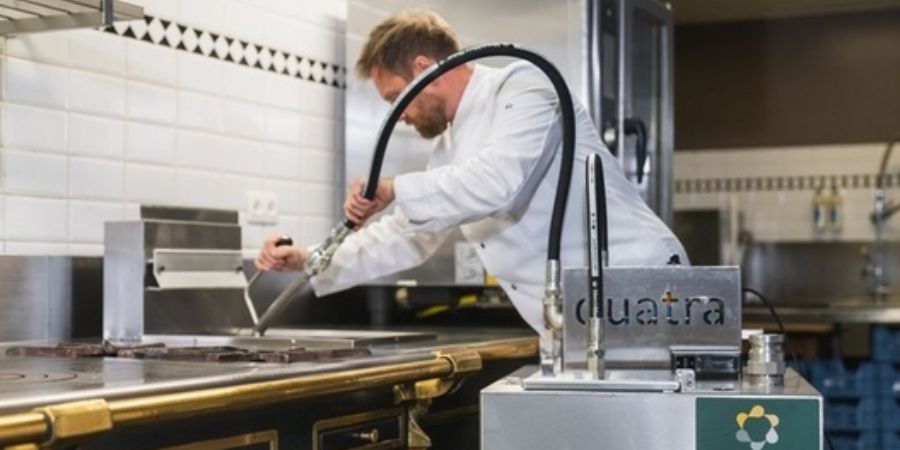
Companies such as Quatra specialise in commercial cooking oil collection for food businesses of all sizes. They manage containers, logistics and processing, ensuring oil is handled according to environmental regulations. Depending on the setup and market conditions, collection can be cost-neutral or include a market-aligned compensation, but the main advantage lies in reliability, compliance and peace of mind.
Suitable for different types of restaurants
There is sometimes a perception that professional waste oil collection London is only relevant for large operations. In reality, restaurants of many sizes can benefit from a structured approach to used oil management.
The value lies less in scale and more in consistency: knowing that used oil is stored correctly, collected on time and processed responsibly, without creating additional work for staff.
Common misconceptions about oil collection
Some restaurant owners assume that collection services involve complex administration or specialist equipment. In practice, services are designed to be straightforward. Containers are provided, procedures are simple and most kitchens can implement them quickly.
Another misconception is that switching systems requires significant operational change. For most restaurants, it is simply a matter of using the right containers and following basic handling guidelines.
Compliance and risk reduction
Environmental regulations around waste oil are tightening. Improper disposal can lead to fines, blocked drains and reputational damage.
Using a licensed collection service provides documentation that demonstrates compliant disposal. This is increasingly important for inspections, sustainability audits and environmental certifications requested by corporate clients or local authorities.
Making the switch
Moving to professional oil collection is generally straightforward. Restaurants contact a licensed provider, arrange container placement and agree on a collection schedule that fits their operations.
Once established, the system runs in the background. Used oil is collected, processed responsibly and diverted away from drainage systems and landfill routes.
Many restaurants are reconsidering how they handle used cooking oil. Not because of exaggerated financial gains, but because disposing of cooking oil properly is safer, more sustainable and operationally simpler when managed through professional collection services.




