
If you run a business today, you already know this. How you accept payments matters more than ever. It affects how fast customers check out, whether they trust your business, and whether they come back again.
We’ve moved past the days when cash was king and cards were the only digital option. Today, payments are all about speed, security, and convenience. And if your checkout process still feels like it belongs in 2019, you’re probably losing sales without even realizing it.
According to data cited by Yahoo Finance, global digital payments are expected to hit $32.07 trillion by 2033. But it’s not just about moving money anymore. It’s about removing friction. Why? Because if customers can’t find their preferred payment option, they’ll leave. Simple as that.
That’s what this guide is about. We’ll break down the best payment processing solutions you should be looking at in 2026, along with the key trends shaping how businesses get paid.
What Are Payment Processing Systems?
A payment processing system is the invisible bridge that moves money from your customer’s pocket to your bank account.
There are three main gears in this machine:
- The Payment Gateway: Think of this as the digital terminal that sends the data.
- The Payment Processor: This is the system that communicates between the banks to make sure the money is actually there.
- The Merchant Account: This is the special holding pen where your funds sit before they officially land in your business bank account.
You don’t need to be a software engineer to get this. You just need to know that if these three things aren’t working efficiently, your business and cash flow will suffer.
Best Payment Processing Options for Businesses in 2026
So, what payment processing system should you consider for your business in 2026 and beyond? Here is what is moving the needle for many businesses today.
Mobile Wallets & Contactless
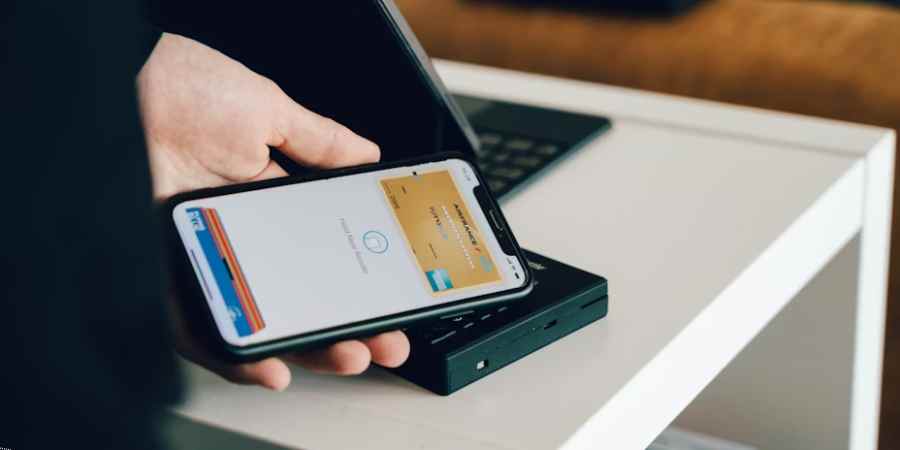
This is the baseline now. If you run a physical store, tap-to-pay isn’t a nice extra. Customers expect it.
And the numbers back that up. The contactless payment market in the US is growing at about 17% each year, and globally it’s on track to pass $128 billion by 2034. That’s not a trend you can ignore. If anything, not offering it just slows people down at checkout.
Most contactless cards and devices rely on EMV technology for security. You may be wondering, what is EMV? It stands for Europay, Mastercard, and Visa, and it’s the standard behind those chip cards you insert or tap. The key benefit is security. Each transaction creates a unique code, which makes it much harder to clone or fake.
Now, NFC takes it a step further. It builds on that same system but removes the need for a physical card. So your customers can just tap their phone or smartwatch and pay in seconds, with the same level of protection.
QR Code Payments
For small businesses and those operating in emerging markets, QR codes remain one of the most practical low-cost payment solutions out there. No card reader needed, no expensive hardware. Just a printed code.
While QR codes can actually work everywhere, they make a lot more sense if you’re targeting markets in Africa, Asia, or Latin America, where mobile-first commerce has outpaced card adoption entirely.
China is the perfect example. WeChat Pay alone has over 1 billion users, and QR codes are a normal part of everyday transactions, from street vendors to big retailers.
Other regions may not have the same numbers, but the direction is similar. Mobile money and QR-based systems are growing quickly, especially among small businesses, as flexible, low-cost payment options.
Buy Now, Pay Later (BNPL)
Buy now, pay later is one of the best things you can do for your business in 2026. According to the latest reports, this payment system accounted for roughly 5% of global e-commerce spending in 2023 alone. That number underscores just how much it’s become a big part of today’s businesses.
And this trend is not stopping anytime soon. For context, the global BNPL market is expected to pass $911 billion by 2030. A lot of that momentum is coming from Gen Z and Millennials. They’re not just using it for clothes or gadgets anymore. You’ll see it in travel bookings, healthcare payments, and even event tickets.
The message is clear. Flexible payment options like BNPL are no longer a nice-to-have. They’re a strategic decision.
Cryptocurrency Payments
Cryptocurrencies are still evolving, but it’s worth watching, especially if you sell software or services to a global audience.
One of the biggest advantages is how it handles cross-border payments.
Bank transfers can be really slow, sometimes taking several days to clear, and they often involve significant fees. Stablecoins such as USDC offer a different approach. They can finalize transactions in a matter of minutes, frequently at a fraction of the cost.
This isn’t some fringe interest anymore. Major financial institutions are pouring resources into blockchain payment systems. In March 2026, Mastercard bought BVNK, a company specializing in stablecoin infrastructure, for $1.8 billion, all to push blockchain payments into the spotlight.
Why? Because settling a $10,000 invoice in USDC takes minutes and costs a lot less.
That said, this isn’t something every business needs right now. Regulations are still catching up, and adoption varies by region.
But if your business involves transactions with international clients, you definitely don’t want to ignore this payment system.
How to Choose the Right Payment Processing System
So, how do you know which payment system to use for your business? The answer is that it depends. There’s really no perfect option. What there is is the right one for your business.
Start with the basics:
- Match the system to your business model
- Look at how your customers actually pay
- Compare fees, not just features
- Make sure security is strong
That last one matters more than people think. A single security issue can do real damage to trust.
Also, keep the bigger picture in mind. Your goal is flexibility. Customers want options. Fast ones. Secure ones. Easy ones. And that’s not changing anytime soon.
So stay adaptable. Test new payment methods when it makes sense. And don’t wait until customers start complaining before you upgrade your system. Because by then, you’ve probably already lost them.




