
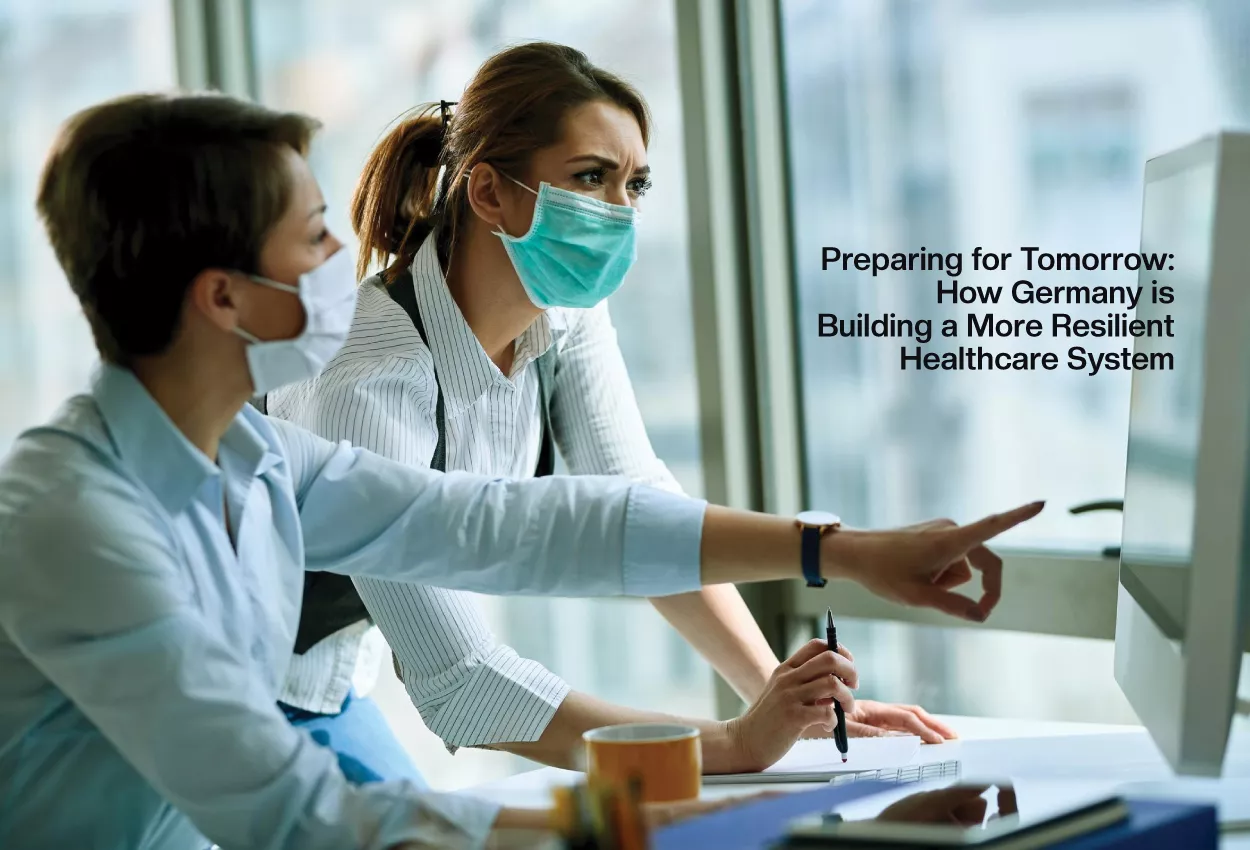
Healthcare systems around the world are being reshaped by new realities. Ageing populations, chronic diseases, climate-related health risks, workforce shortages, and rapidly advancing technologies are placing unprecedented demands on medical infrastructure. Germany, long recognized for its high standards of healthcare, is responding to these challenges with a forward-looking strategy that prioritizes resilience alongside quality. Rather than simply reacting to emerging pressures, the country is strengthening its healthcare system to ensure it remains accessible, adaptable, and prepared for the future.
Germany’s approach demonstrates that resilience is not defined by how a healthcare system performs during a crisis alone. It is built through continuous investment in infrastructure, workforce development, digital innovation, scientific research, and preventive care that together create a stronger foundation for generations to come.
Building a System That Can Adapt
The COVID-19 pandemic reinforced an important lesson for healthcare leaders worldwide: resilience depends on flexibility. Hospitals and healthcare providers must be capable of responding quickly to changing circumstances while continuing to deliver routine care.
Germany has taken this lesson seriously by modernizing healthcare infrastructure and improving coordination between hospitals, clinics, laboratories, emergency services, and public health authorities. Investments in intensive care capacity, advanced medical equipment, and integrated emergency response systems have strengthened the country’s ability to manage future public health emergencies without disrupting essential healthcare services.
This focus on adaptability ensures that healthcare institutions are better equipped to respond to both expected and unexpected challenges.
Digital Transformation as a Strategic Priority
One of the most significant pillars of Germany’s healthcare resilience strategy is digitalization. Healthcare increasingly depends on fast, secure, and accurate information, making digital technologies essential to both efficiency and patient safety.
Electronic health records are improving the continuity of care by allowing authorized healthcare providers to access patient information more efficiently. Digital prescriptions simplify medication management while reducing administrative complexity. Telemedicine has expanded healthcare access, particularly for patients in rural communities or those requiring ongoing specialist consultations.
Artificial intelligence is also becoming an important tool in diagnostics, medical imaging, treatment planning, and hospital operations. By supporting clinicians with data-driven insights, AI enhances decision-making while allowing healthcare professionals to dedicate more time to patient care.
Rather than replacing healthcare workers, digital technologies are helping create more responsive and efficient healthcare systems that can better manage growing demand.
Accelerating Medical Research and Innovation
Science and research are central to Germany’s vision of the future of healthcare. The country continues to be one of Europe’s leading biotech hubs, pharmaceutical development, medical devices and clinical research.
Innovation in many medical disciplines keeps accelerating through collaboration between universities, hospitals, research institutes, startups and established healthcare companies. Advances in precision medicine, regenerative therapies, robotics, digital diagnostics and personalized treatment are revolutionizing patient care and opening up new treatment options for complex diseases.
Germany’s strong research ecosystem ensures the translation of scientific findings into concrete healthcare solutions that benefit patients both nationally and globally.
Innovation is seen as a continuous process, not a one-time activity, that increases healthcare resilience over time.
Sustainability and Healthcare Infrastructure
Healthcare organizations are also changing to become more sustainable and resource efficient. Hospitals today are adopting energy-efficient technologies, environmentally responsible building designs, waste reduction initiatives, and sustainable procurement practices.
“Climate change is also playing a big role in health care planning.” Germany is bolstering emergency preparedness, improving disease surveillance and developing healthcare infrastructure that can respond to health risks related to climate change, to prepare for future environmental challenges.
Sustainability and resilience are becoming interconnected goals, recognizing that healthier environments lead to healthier populations.
A Blueprint for the Future
Germany’s healthcare system illustrates that resilience is achieved through long-term vision rather than short-term solutions. Investments in digital transformation, preventive care, workforce development, scientific research, sustainable infrastructure, and collaborative innovation are creating a healthcare model that is prepared for tomorrow’s challenges.
As healthcare demands continue to evolve, resilience will become one of the defining characteristics of successful healthcare systems worldwide. Germany demonstrates that preparing for the future requires more than adopting new technologies or expanding infrastructure. It requires building a culture of continuous improvement where innovation, adaptability, and patient-centered care remain at the heart of every decision.
By strengthening its healthcare foundations today, Germany is creating a system capable of delivering high-quality care not only in times of stability but also in the face of uncertainty. It offers a compelling example of how thoughtful planning, collaboration, and innovation can transform healthcare resilience into a lasting advantage for society.