
Before a diagnosis becomes a treatment plan, it begins as a signal. A heartbeat that sounds different. A blood pressure reading that raises concern. A subtle change detected during an examination. Healthcare’s most important decisions often start with the smallest observations, making diagnostic instruments some of the most essential tools in medicine. Their role extends far beyond measurement; they provide the confidence healthcare professionals need to make informed decisions, identify risks early, and deliver better patient care.
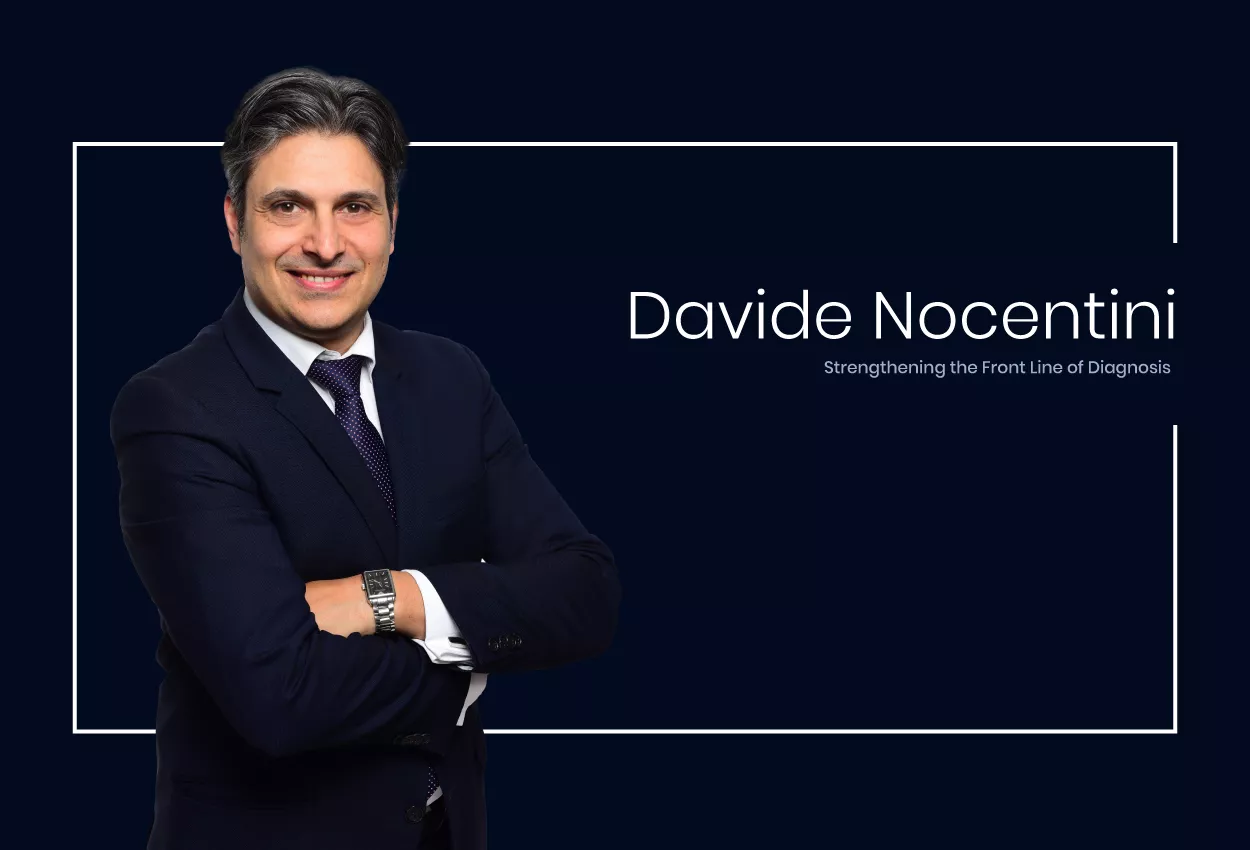
As Chief Executive Officer of Rudolf Riester GmbH, Davide Nocentini leads a company built around that mission. With Riester’s diagnostic solutions used across more than 150 countries, he has been instrumental in strengthening the organization, restoring momentum, and aligning innovation with the evolving needs of healthcare professionals.
Rebuilding the Foundations of Success
When Davide stepped into the role of CEO, he recognized that Riester possessed many of the ingredients necessary for success: a respected brand, trusted products, and a strong heritage in medical diagnostics. However, the company had also reached a point where sharper focus, stronger execution, and greater discipline were needed to regain momentum.
His initial priorities centered on three key areas. The first was rebuilding the culture around accountability, integrity, and mutual respect. The second involved reconnecting the business with its core strengths in diagnostic instruments and medical devices. The third focused on restoring financial and operational discipline across the organization. Together, these initiatives were designed to move Riester from a period of decline toward sustainable growth and renewed confidence.
Davide understood that achieving this transformation required difficult decisions, but he also believed that transparency was equally important. By clearly communicating not only what changes were being made but why they were necessary, he sought to create alignment throughout the organization. The result was a structured turnaround effort focused on building a healthier, more resilient business capable of performing in a challenging market environment.
Honoring Heritage While Embracing Progress
For Davide, Riester’s legacy is one of its greatest strengths. With nearly eight decades of experience in medical diagnostics, the company has earned the trust of healthcare professionals worldwide through reliable products and consistent quality. Preserving that reputation remains an important responsibility.
At the same time, he believes that heritage should never become a reason to resist change. In an industry shaped by evolving clinical needs, technological advancement, and increasing expectations around patient care, companies must continue adapting to remain relevant.
Davide views innovation and heritage not as competing priorities but as complementary forces. His goal has been to use Riester’s history as a foundation for modernization, combining the company’s longstanding expertise with a more agile, international, and execution-focused mindset.
Being part of Halma has further strengthened this approach. The global network provides access to broader expertise, diverse perspectives, and long-term strategic thinking, allowing Riester to modernize while remaining true to its diagnostic roots. For Davide, the future of the company lies in evolving its legacy rather than departing from it.
The Principles Behind the Turnaround
The improvements achieved under Davide’s leadership were not the result of incremental adjustments. He inherited a company that required a comprehensive reset across leadership, culture, strategy, and execution.
At the heart of this transformation were several guiding leadership principles. The first was clarity. Davide believed that turnaround situations leave little room for ambiguity. Employees needed a clear understanding of priorities, expectations, and direction.
The second principle was accountability. Rather than allowing teams to focus on explaining problems, he encouraged a culture focused on solving them. This shift helped establish stronger ownership across all levels of the organization.
Decisiveness also played a critical role. Davide understood that delaying difficult decisions often creates greater uncertainty. Through clear choices around leadership structures, portfolio focus, and commercial priorities, he was able to accelerate progress and restore momentum.
Equally important was focus. Rather than dispersing resources across too many initiatives, Riester concentrated on the areas where it could create the greatest value. This included reinforcing its trusted diagnostic portfolio while pursuing innovation that delivered meaningful clinical and business impact.
Together, these principles helped transform Riester into a more resilient and performance-oriented organization positioned for future growth.
Creating a Culture of Ownership
Davide views culture as one of the most powerful drivers of organizational success. His approach to cultural transformation began by making the company more transparent, direct, and closely connected to business realities.
A major objective was helping employees understand the relationship between company performance, individual contribution, and decision-making. By openly communicating the company’s situation, priorities, and expectations, he encouraged greater engagement and understanding throughout the organization.
One of the most significant cultural shifts involved moving from a passive mindset to a more proactive one. Davide wanted employees to see themselves not as observers of change but as active contributors to the company’s recovery and future success.
This transformation required stronger leadership ownership, closer cross-functional collaboration, and a willingness to address challenges directly. Establishing a clearer performance rhythm helped employees see tangible progress and reinforced confidence that the turnaround was delivering real results.
Throughout this process, Davide remained mindful of the human side of transformation. He believes that even difficult decisions should be approached with honesty, empathy, and respect. The result has been a more confident, ambitious, and performance-driven culture.
The Strength of a Global Ecosystem
As a member of the Halma Healthcare Sector leadership team, Davide recognizes the significant advantages that come from being part of a larger global organization.
Halma’s operating model allows companies like Riester to maintain their entrepreneurial spirit while benefiting from the resources, expertise, and long-term vision of a global group. This balance between autonomy and support creates a unique environment for growth.
Through Halma’s network, Davide gains access to experienced leaders, diverse healthcare businesses, and best practices from multiple markets. These insights help challenge assumptions, accelerate learning, and uncover opportunities that may otherwise remain inaccessible.
For Davide, the true value lies in the ability to pursue ambitious goals while knowing that a broader ecosystem of expertise and support exists behind the organization. This combination strengthens Riester’s ability to innovate, modernize, and expand its global relevance.
The Next Chapter of Diagnostic Healthcare
Looking ahead, Davide sees the future of diagnostic healthcare being shaped by three powerful trends: artificial intelligence, connectivity, and decentralized care.
Artificial intelligence has the potential to support healthcare professionals through faster data interpretation, improved decision-making, and more efficient workflows. He believes AI can also help shift healthcare toward more preventive and predictive models, enabling earlier identification and management of health risks.
However, he emphasizes that AI must be implemented responsibly. Clinical validation, patient safety, and seamless integration into healthcare workflows remain essential requirements. AI should enhance clinical judgment rather than replace it.
Connectivity represents another major transformation. Diagnostic devices are increasingly becoming part of broader digital ecosystems where information flows securely between healthcare providers, medical devices, electronic health records, and remote-care platforms. This connectivity can improve efficiency, accessibility, and continuity of care.
Finally, Davide sees growing importance in decentralized and point-of-care diagnostics. As healthcare systems face increasing pressures, diagnostic capabilities must move closer to patients. Reliable and easy-to-use diagnostic tools will play a critical role in enabling earlier intervention, faster treatment decisions, and improved patient outcomes.
For Davide, these trends represent more than technological advancements. They represent opportunities to make healthcare more effective, accessible, and patient-centered in the years ahead.
Designing Solutions for a Diverse World
With Riester products used in more than 150 countries, Davide understands that innovation cannot be driven from headquarters alone. Healthcare professionals around the world may share common clinical objectives, but the environments in which they operate often differ significantly. Expectations surrounding usability, affordability, serviceability, training, and connectivity vary across regions, making customer understanding essential to successful product development.
For Davide, meaningful innovation begins with listening. He believes that product development should be grounded in a deep understanding of how healthcare professionals use diagnostic tools in daily practice, the challenges they face, and the barriers that limit adoption. Technology alone is not enough; innovation must ultimately be measured by its clinical relevance, customer value, and contribution to patient outcomes.
He also emphasizes the importance of focus. Serving global markets does not mean creating solutions for every possible need. Instead, it requires identifying common challenges that can be addressed at scale while maintaining enough flexibility to accommodate regional requirements. By combining customer insight with technical expertise, regulatory understanding, and commercial viability, Davide aims to ensure that Riester’s global presence becomes a continuous source of innovation and learning.
A Strategic Lens on Growth and Innovation
For Davide, strategic partnerships and acquisitions are valid levers for growth but only if they are closely aligned with long-term goals. All opportunities are assessed through a structured framework that includes strategic fit, customer value, scalability, and the organization’s ability to execute successfully.
Being part of Halma gives Riester a unique advantage. The company has the knowledge, financial strength, and long-term view of a global group but remains an independent entrepreneur. This provides Riester the confidence to pursue growth opportunities while ensuring every decision supports its overall strategy.
When looking at potential opportunities, Davide usually considers two things. The first is market expansion, where partnerships or acquisitions can improve customer access, grow regional presence, and strengthen relationships with healthcare professionals and distributors. The second is technology, where complementary capabilities can speed up innovation, enhance product usability, enable digital transformation, and bolster the diagnostic portfolio.
At the end of the day, Davide says, the test for any opportunity is a simple one: does it make Riester stronger in a sustainable way? If it adds customer value, expands market reach, and supports long-term growth, it is worth serious consideration.
Delivering Value Beyond Cost
Healthcare providers face increasing financial pressures and are under pressure to improve patient outcomes. Davide believes this environment creates a significant responsibility for companies like Riester.
He regards diagnostic instruments as basic tools of everyday clinical practice, not optional tools. Reliable devices support patient assessment, enable early detection, and directly contribute to informed clinical decision making. “Having the right tools that are accurate and usable makes it easier for healthcare professionals to deliver high-quality care.
Davide is an ardent supporter of a value-driven approach rather than competing solely on price. He believes a cheap device that doesn’t work reliably can actually cost much more in the long run due to workflow disruptions, loss of confidence, delayed decisions and possible effects on patient results.
As a consequence, Riester’s approach is centered around strengthening its core portfolio and selectively investing in innovations that offer tangible benefits to healthcare practitioners. The company’s focus is on reliability, clinical relevance, and long-term performance to enable healthcare providers to deliver better care at a responsible cost.
Aligning Every Function Around the Customer
Leading operations, research and development, commercial functions, and human resources requires a very high degree of organizational alignment. Davide starts by making sure that all the departments understand the same priorities and work towards the same outcomes.
He believes the customer should remain at the heart of the organization. Customer insights should not be restricted to commercial departments, but should inform product development, quality enhancements, operational planning, and investment decisions. Repeated customer challenges across markets become organizational priorities, not just sales issues.
Davide also works on translating strategy into clear execution. His role as CEO is to make sure that departmental goals stay aligned with overall business goals, including growth priorities, market focus, product development, and capability building.
Regular communication, transparent performance metrics, and disciplined follow-up play a critical role in maintaining alignment. At the same time, he appreciates the importance of human resources in building the right leadership mindset, strengthening capabilities, and creating a culture where employees take ownership, collaborate effectively and remain focused on the customer needs.
Values That Shape Every Decision
For Davide, accountability, respect, and integrity are not simply corporate values displayed on a wall. They form the foundation of Riester’s transformation and influence how decisions are made across the organization.
Accountability encourages individuals to take ownership of outcomes rather than merely explaining circumstances. This focus on responsibility helps create stronger execution, clearer priorities, and better decision-making throughout the business.
Respect, in Davide’s view, involves treating people fairly and professionally, especially during periods of change and uncertainty. It also means being honest and direct. He believes that true respect requires clarity about expectations and the willingness to engage in difficult conversations when necessary.
Integrity carries particular importance within healthcare. The decisions made by medical device companies affect healthcare professionals, patients, employees, and shareholders alike. As a result, transparency, ethical conduct, quality standards, and regulatory discipline must remain central to every action.
Together, these values help create a culture that balances performance with fairness, commercial success with responsibility, and ambition with trust. Davide sees them as essential not only for business success but also for leadership credibility, especially during challenging moments.
Building a Stronger Future on a Trusted Foundation
Davide wants to build a stronger, modern, and more international healthcare company in the future, while preserving the heritage that has made Riester a trusted name in diagnostics for decades.
He believes the company’s future depends on combining its great past with a more ambitious, forward-looking attitude. That means strengthening core product franchises, enhancing customer engagement globally, and selectively investing in innovations that deliver meaningful value to clinical practice.
Davide is a champion of purposeful modernization, rather than chasing every industry trend. He wants to make Riester faster, more customer-oriented, more digital-savvy and more disciplined in product development and market execution. Equally important is the development of an organization that is confident, accountable and ready to compete successfully in the global arena.
He hopes his legacy will be one of a successful transformation. He wants Riester to be recognised not only for its trusted products but also for its strong execution, customer focus, innovative mind-set and performance culture. Above all, he hopes the company will look back on this period as when it rediscovered its confidence, and laid the foundation for sustainable long-term growth.




