
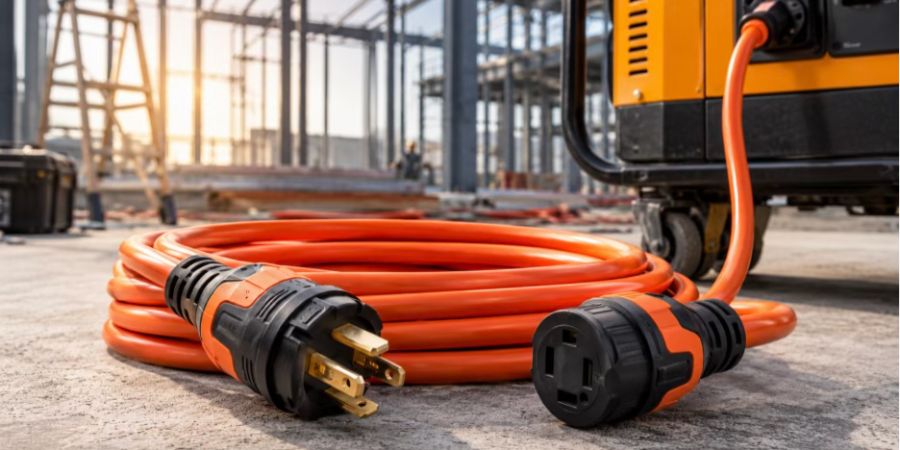
The extension cord is as important when you are operating high-voltage equipment as the equipment itself. Any cord not designed to handle hard electrical loads may wear very easily, overheat, or fail to provide consistent power, causing interruptions and expensive replacement.
Although most extension cords are similar, the construction and materials used dictate their performance in the long run. Understanding the difference between a reliable cord and an average cord will allow you to invest smarter in terms of safety and performance.
This article examines the essential characteristics that ensure a high-voltage extension cord is durable and reliable, ensuring you understand what to look for before making a decision.
1. Pure Copper Conductors Provide Stable and Efficient Power
A high voltage extension cord is as reliable as the conductors within it. One of the most important features of a durable extension cord is the use of pure copper conductors.
Copper offers higher electrical conductivity than many alternative conductor materials, allowing it to carry current more efficiently with lower resistance. Consequently, the power is supplied to connected equipment without unnecessary fluctuations. This is particularly crucial when using industrial equipment, business machines, or appliances with high power consumption that require constant operation.
Copper conductors also produce less heat when in operation since they provide reduced electrical resistance. Less heat accumulation not only enhances efficiency but also aids in the prevention of premature wear of the cord due to extensive usage.
Moreover, with high-quality copper strands, flexibility does not lead to loss of strength. The flexibility enables the cord to resist repeated bending and motion, and so it can be used in both fixed-mounted and highly mobile equipment.
2. Heavy-Duty Insulation and Outer Jacket Protect Against Tough Conditions
While the conductors carry electricity, the insulation and outer jacket protect the cord from external damage. A combination of these layers contributes significantly to the duration of service of the cord.
Heavy-duty insulation protects the internal wiring against moisture, dust, abrasion, and daily wear. This protection helps to minimize the chances of broken conductors that may interfere with electrical performance or jeopardize safety.
The outer jacket also helps the cord withstand physical stress. Whether the cord is dragged over concrete, subjected to varying temperatures, or employed in high-traffic workplaces, a durable jacket will resist cuts, scuffs, and cracking.
Flexibility is another important characteristic. Even after repeated coiling and uncoiling, high-quality jackets are flexible, enabling the cord to be easier to work with without exerting too much strain on the internal wiring.
Quality insulation prevents the deterioration of the exterior and interior parts, enabling reliable performance throughout the life of the cord.
3. Reinforced Connectors and Proper Wire Gauge Improve Reliability
The most commonly handled component of an extension cord is the connectors. If they aren’t built to withstand repeated use, the entire cord becomes less dependable.
Durable high-voltage extension cords typically feature molded connectors with reinforced strain relief. Such designs reinforce the bond between the plug and the cable, minimizing the chances of loose wiring or broken terminals due to repeated plugging, unplugging, or pulling.
The wire gauge is also important. Electrical current is better conducted through a cord that has the correct conductor size, minimizing the amount of resistance and heat generation. The correct choice of gauge permits the cord to carry heavy electrical loads without undue stress on the internal parts of the cord.
Secure electrical connections also enhance overall performance in terms of reduced power interruptions. Properly fitting plugs ensure that equipment works more efficiently and minimize the wear on both the cord and the device to which it is attached.
These construction attributes combine to enhance durability when operating under harsh conditions.
4. Certified Construction and Quality Engineering Ensure Long-Term Dependability
Durability depends on more than individual components. The overall engineering and manufacturing quality determine how well every part performs together over years of use.
High-voltage extension cords that meet recognized safety standards undergo testing to verify their electrical performance, insulation integrity, and construction quality.
Quality engineering also ensures that every component works together as intended. Proper conductor sizing, dependable insulation, durable connectors, and accurate voltage ratings contribute to stable power delivery while reducing the risk of overheating or electrical failure.
In addition, cords designed specifically for 220V and 240V applications are engineered to handle the electrical demands of high-voltage equipment. Matching the cord to its intended voltage and load helps maintain consistent performance while extending its operational life.
When every aspect of the cord is designed with durability in mind, it delivers dependable performance in residential, commercial, and industrial environments alike.
Conclusion
A dependable high-voltage extension cord isn’t defined by a single feature. Instead, it combines pure copper conductors, heavy-duty insulation, reinforced connectors, proper wire gauge, and certified construction to deliver safe and consistent performance over time. Each of these elements helps the cord withstand demanding electrical loads while resisting the wear that comes with regular use.
Rather than choosing an extension cord based on appearance or price alone, focus on the features that directly affect its durability and reliability. Investing in a well-engineered cord ensures dependable power delivery, supports the performance of your equipment, and provides long-lasting value for years to come.




