
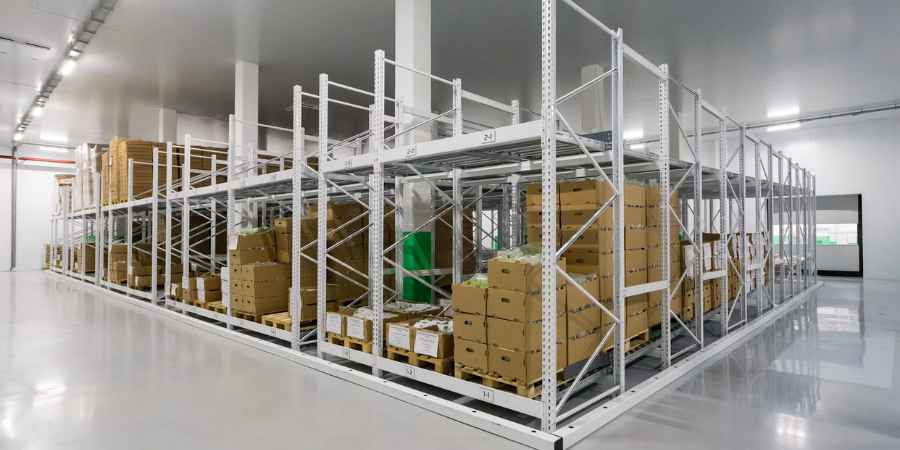
The warehousing and logistics industry is undergoing a historic transformation. Driven by the explosive growth of global e-commerce, shifting consumer expectations for lightning-fast deliveries, and ongoing supply chain disruptions, traditional storage facilities are rapidly evolving. Welcome to the future of automated warehousing and storage – a landscape defined by artificial intelligence, advanced robotics, and space-optimizing solutions. As businesses strive to meet these soaring demands, integrating cutting-edge technology is no longer a luxury but an absolute necessity for long-term survival, operational efficiency, and sustained market growth.
The Paradigm Shift: From Horizontal Sprawl to Vertical Efficiency
For decades, the standard approach to expanding warehouse capacity was incredibly simple: build outward. However, as industrial real estate prices soar and available land near major urban centers becomes increasingly scarce, the horizontal expansion model is no longer sustainable or cost-effective. Automated Storage and Retrieval Systems (AS/RS) and vertical lift modules are at the forefront of this space-saving revolution. These systems not only utilize overhead space efficiently but also bring items directly to the operator, drastically reducing travel time and improving workplace ergonomics. For companies looking to implement these highly efficient systems, consulting experts at verticalstorageusa.com is a critical first step. By deploying smart vertical solutions, businesses can effectively double or even triple their storage capacity, turning wasted air space into a highly productive asset that drives profitability.
Artificial Intelligence and Predictive Analytics
While physical storage solutions maximize space, artificial intelligence (AI) serves as the digital brain orchestrating the modern warehouse. In the future, automated storage will rely heavily on AI-driven predictive analytics to anticipate inventory needs long before they arise. Machine learning algorithms analyze historical sales data, seasonal trends, and even social media sentiment to accurately forecast consumer demand.
This level of foresight allows warehouses to dynamically reorganize themselves. High-demand items can be automatically moved closer to packing stations during peak seasons, drastically reducing retrieval times. Furthermore, AI optimizes the flow of goods, preventing bottlenecks and ensuring a seamless operational rhythm. By minimizing human error and maximizing efficiency, AI ensures that automated warehouses operate at peak performance around the clock.
The Robotic Revolution: AMRs and AGVs
Automated Guided Vehicles (AGVs) have been used in warehousing for years, typically relying on fixed paths, magnetic strips, or guide wires. However, the future points unequivocally toward Autonomous Mobile Robots (AMRs). Unlike their predecessors, AMRs do not require expensive infrastructure modifications to navigate. Equipped with LiDAR, cameras, and complex sensor arrays, they dynamically map their environment, recognize human obstacles, and calculate the most efficient routes in real-time.
These robotic systems work collaboratively with human employees, taking over the physically demanding and repetitive tasks of moving pallets, bins, and heavy goods across vast warehouse floors. As robotics technology advances, we are seeing the emergence of highly dexterous robotic arms capable of intricate picking and packing tasks previously thought to require a human touch. Organizations regularly publish research on advancements in robotic kinematics and computer vision that are making these science-fiction concepts a daily reality on the warehouse floor.
The Internet of Things (IoT) and Total Visibility
The future of warehousing is intrinsically linked to the Internet of Things (IoT). In a fully automated facility, every physical asset – from the forklifts and conveyor belts to the individual pallets and storage bins – is digitally interconnected. IoT sensors collect continuous, real-time data regarding exact location, ambient temperature, humidity, and equipment health.
This hyper-connected ecosystem provides supply chain managers with unprecedented visibility. If a conveyor belt motor begins to overheat, IoT sensors detect the anomaly and automatically schedule predictive maintenance before a catastrophic breakdown halts warehouse operations. Furthermore, total visibility ensures precise tracking of goods from arrival to dispatch.
Sustainability Through “Lights-Out” Automation
Beyond efficiency and processing speed, the future of automated warehousing is fundamentally green. Sustainability is becoming a primary focus for global enterprises, and automation offers a direct pathway to significantly reducing carbon footprints. Fully automated facilities are paving the way for “lights-out” warehousing – environments where robots operate entirely in the dark and without the climate control designed for human comfort.
By eliminating the need for massive overhead lighting systems and reducing HVAC requirements, warehouses can drastically cut their daily energy consumption. Additionally, automated systems optimize packaging routines, reducing material waste, and streamline outbound transportation routes, directly lowering greenhouse gas emissions.
The transformation of warehousing and storage is moving at an unprecedented pace. The days of manual, labor-intensive, and horizontally sprawling warehouses are rapidly giving way to highly vertical, intelligent, and autonomous logistics hubs. By embracing the power of AI, advanced robotics, IoT connectivity, and vertical space optimization, businesses can effectively future-proof their supply chains. The automated warehouse of tomorrow is a dynamic, high-speed engine of efficiency, sustainability, and competitive advantage.




