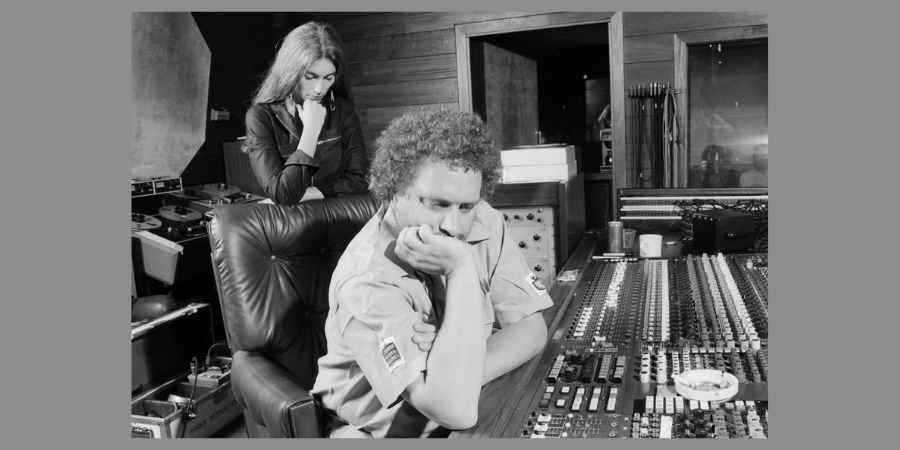
How the Canadian music producer transformed recording practices, recognised exceptional talent and demonstrated that creative leadership often begins with solving a practical problem.
The music industry often celebrates the singer whose voice becomes familiar to millions or the songwriter whose compositions stand the test of time. Yet, behind many influential recordings are producers who recognise an artist’s potential before the wider industry catches up. Brian Ahern was one such figure.
The Canadian record producer and musician, who died on November 9, 2026, aged 81, built a career around recognising musical ability, understanding what a song needed and creating the conditions in which artists could deliver their best work. His contributions extended across country, folk and Americana, with collaborations involving Anne Murray, Emmylou Harris, Johnny Cash, Willie Nelson, George Jones and Roy Orbison.
Brian Ahern’s professional achievements also included something unusual for a music producer: an innovative recording facility on wheels. His Enactron Truck became a mobile studio associated with more than 40 gold- and platinum-certified albums, demonstrating how an operational idea could influence an entire creative process. The Government of Canada recognised his contribution to music with his appointment as a Member of the Order of Canada in 2019.
There is a strong business lesson in this career: Creative leadership does not always mean directing every decision. Sometimes, it means recognising what talented people need, removing the obstacles in their way and allowing their abilities to produce something exceptional.
Building a Career Through Creative Decisions
Born in Halifax, Nova Scotia, Brian Ahern began his professional journey as a musician. He played guitar in local bands and appeared on Canadian television before moving into production. His early experiences gave him an understanding of performance from the musician’s perspective, something that later informed his work behind the recording console.
His association with Anne Murray became an important turning point.
Brian Ahern recognised Murray’s musical potential after encountering her during her early television appearances. He encouraged her to pursue recording opportunities, eventually helping her secure a recording contract with Capitol Records. Their professional relationship developed into a substantial body of work, with Ahern producing 13 of her albums, including This Way Is My Way, which featured the breakthrough hit “Snowbird”.
This partnership illustrates an important aspect of the Brian Ahern career: he was willing to invest in talent before its commercial success was fully established.
His next major professional chapter took shape in Los Angeles, where he began working with Emmylou Harris. Their collaboration produced influential albums including:
- Pieces of the Sky (1975)
- Elite Hotel (1975)
- Luxury Liner (1977)
- Roses in the Snow (1980)
Ahern produced 11 of Harris’s albums between 1975 and 1983, helping shape a sound that brought together country traditions, folk influences and carefully selected musicians.
An editorial observation: Recognising talent is only the beginning of leadership. The harder task is understanding what makes that talent distinctive and resisting the temptation to reshape it simply to follow a popular trend. Ahern’s work with Murray and Harris suggests the value of building a professional relationship around an artist’s strengths rather than treating every performer as the same commercial proposition.
His career later expanded through collaborations with Johnny Cash, Willie Nelson, George Jones, Glen Campbell, Linda Ronstadt and Rodney Crowell, among others.
The Enactron Truck: Turning Innovation into Competitive Advantage
One of the most interesting chapters in Brian Ahern’s professional journey was his decision to rethink where music could be recorded.
During the early 1970s, recording generally depended on access to established studios. This could limit flexibility, particularly when artists wanted to record live performances or work in locations that offered a different creative atmosphere.
Ahern approached the problem differently. He converted a tractor-trailer into a self-contained mobile recording studio, eventually known as the Enactron Truck.
The 42-foot facility was designed to function as a professional control room that could travel to different locations. Its interior was lined with lead material to reduce outside radio interference, while its recording equipment allowed musicians to work in venues, homes and other spaces that could be adapted for recording.
The idea produced remarkable results. More than 40 gold- and platinum-certified albums were recorded using the Enactron Truck.
Some notable projects associated with the facility included:
- Willie Nelson’s Stardust.
- Bette Midler’s The Rose.
- Barbra Streisand’s The Way We Were.
- Recordings involving Bob Dylan, Dolly Parton and Black Sabbath.
The Enactron Truck was eventually acquired by the Musicians Hall of Fame and Museum in Nashville, where it became part of the institution’s permanent collection.
The business lesson is particularly relevant: Ahern did not simply improve the recording equipment available to musicians. He reconsidered the operating model itself.
His innovation addressed three practical needs:
- Flexibility: Recording facilities could travel to the artist instead of requiring the artist to travel to the studio.
- Accessibility: Different venues and environments could become recording spaces.
- Creative control: Artists and production teams gained greater freedom over where and how they worked.
For business leaders, this illustrates an important principle of creative entrepreneurship. Sometimes the most valuable innovation comes from questioning an established process rather than trying to outperform competitors using the same infrastructure.
The Enactron Truck also demonstrates how an operational investment can become a differentiating business asset. Its value was not limited to the equipment inside it. It came from the new opportunities that the equipment made possible.
Leadership Through Trusting Artistic Instincts
A producer’s responsibility involves technical decisions, but the best production relationships also require an understanding of people. Brian Ahern’s collaborations suggest that he understood the importance of creating an environment in which artists could retain their individuality.
His work with Emmylou Harris offers a particularly revealing example.
When Harris was preparing her major-label debut, Pieces of the Sky, she initially rejected several song suggestions during her meeting with Ahern. He eventually played her a recording featuring songs by then-relatively unknown songwriter Rodney Crowell.
One of those compositions, “Bluebird Wine“, became the opening track of the album. Another, “Till I Gain Control Again”, appeared on Elite Hotel. Ahern subsequently acquired Crowell’s music publishing contract, recognising the potential of his songwriting.
This episode reveals something about his approach to talent development. He was listening for possibilities that were not necessarily obvious at first.
Harris later praised the protective creative environment he established, explaining that he believed in artists’ instincts and helped her develop confidence in her own.
His professional relationships also extended to Johnny Cash, Willie Nelson, Roy Orbison, George Jones and Rodney Crowell. In 2013, his production work on Harris and Crowell’s Old Yellow Moon earned him a Grammy Award for Best Americana Album.
Observation for business leaders: Trust is not the absence of leadership. It is the ability to provide direction without taking away another person’s ownership of the work.
Brian Ahern’s approach offers three useful reminders:
- Give talented people room to challenge suggestions and express their preferences.
- Recognise potential in ideas and individuals before their commercial success becomes obvious.
- Create an environment where people feel confident contributing their strongest work.
In creative industries, excessive control can make every project sound or feel the same. Strong leadership should provide enough structure to maintain quality while allowing individual talent to remain visible.
5 Leadership Lessons Business Leaders Can Learn from Brian Ahern
The Brian Ahern leadership lessons extend beyond music production. They offer practical insights for entrepreneurs, business owners, creative directors and executives managing teams where innovation and individual expertise matter.
- Recognise talent before the market does
Brian Ahern’s early encouragement of Anne Murray demonstrates the importance of identifying potential before it becomes commercially established.
Business leaders can apply this by:
- Looking beyond impressive résumés and existing recognition.
- Identifying people with distinctive skills and the willingness to develop them.
- Giving emerging talent opportunities to demonstrate its capabilities.
- Supporting professional growth through meaningful responsibility.
- Take calculated risks
The Enactron Truck was an unconventional investment in an industry accustomed to fixed recording facilities.
Its success shows the value of testing an idea against a real operational problem.
For entrepreneurs, this means:
- Identifying inefficiencies in established business models.
- Evaluating whether an unconventional solution can deliver measurable benefits.
- Investing in experimentation without ignoring financial realities.
- Learning from early results before expanding an initiative.
- Treat innovation as a practical business decision
Innovation does not always require inventing an entirely new technology. Ahern demonstrated that changing how an existing service is delivered can create significant opportunities.
Leaders should regularly ask:
- Which part of our operating process creates unnecessary limitations?
- Can technology or a different delivery model remove those limitations?
- Would customers benefit from a more flexible service?
- Can the improvement become a lasting competitive advantage?
- Build collaboration around trust
Brian Ahern’s work with Harris and other musicians demonstrates the importance of respecting expertise and allowing different creative perspectives to contribute.
For organisations, collaboration works best when people understand their responsibilities but also have the freedom to contribute ideas, question assumptions and influence outcomes.
- Think beyond immediate commercial success
His production work remained relevant across generations of musicians and listeners. His contribution to the development of country and Americana music was recognised through several major honours.
Long-term thinking requires leaders to consider:
- Whether today’s decisions strengthen future capabilities.
- Whether professional relationships can develop over time.
- Whether a business is building expertise that competitors cannot easily replicate.
- Whether its work creates lasting value beyond immediate revenue.
The common thread is consistency. Ahern’s career suggests that meaningful creative leadership is built through repeated decisions that combine judgement, trust and a willingness to experiment.
Conclusion
The recognition Ahern received during his lifetime reflects the breadth of his contribution to the recording industry.
His honours included:
- Induction into the Canadian Country Music Hall of Fame in 2006.
- The Americana Music Association’s Lifetime Achievement Award for Producer/Engineer in 2010.
- Appointment as a Member of the Order of Canada in 2019.
- A Grammy Award for Best Americana Album in 2013 for Old Yellow Moon.
His influence also extended beyond the individual records he produced. His work helped bring country and roots music to wider audiences, while the Enactron Truck demonstrated how creative professionals could rethink the infrastructure supporting their industry.
The Brian Ahern legacy offers a useful perspective on what makes leadership endure. It is easy to measure success through awards, sales figures and professional recognition. It is harder, but arguably more meaningful, to measure it through the opportunities someone creates for others.
His career demonstrates that creative leadership involves recognising ability, building the right environment and having the confidence to challenge established practices.
For today’s business leaders, perhaps the most valuable lesson is found in the Enactron Truck itself: when an existing system limits what talented people can achieve, a leader should consider whether the system needs to change.
That is how a practical idea can become an industry contribution, and how professional influence can outlast the career that created it.