
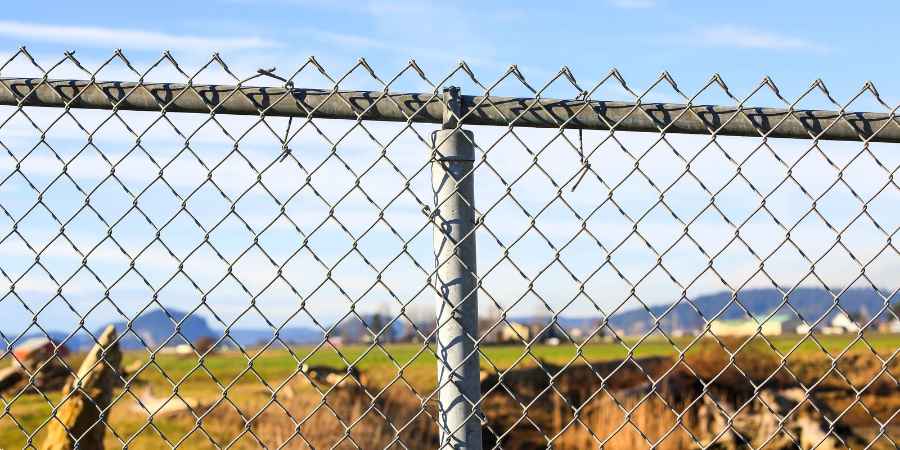
Chain link fence is often the practical choice when function matters more than visual character — for containing dogs, defining a property line without blocking views, enclosing a utility area, or providing a low-maintenance boundary that holds up in wet climates. For homeowners in Vancouver, WA evaluating fence options, understanding what chain link actually offers — and what factors to think through before installation — leads to a result that works reliably rather than one chosen by default without considering the specifics.
How Chain Link Fence Is Constructed
Chain link fence uses a post-and-rail framework with interlocking wire mesh stretched between terminal posts. Terminal posts — corners, ends, and gate posts — are the structural anchors; line posts run between them at intervals and support the mesh without carrying the same tension load. The mesh is pulled tight using a come-along tool and secured to terminal posts with tension bars and clips, which is what gives chain link its characteristic taut appearance when properly installed.
The tension in the mesh is what holds the fence’s shape over time. A fence installed with inadequate tension will bow and sag between posts within a season or two — a problem that’s visible immediately and worsens over time. This is one of the installation details that distinguishes a properly built chain link fence from one that was put up quickly without attention to the structural requirements of the system.
Height Options for Residential Use
Standard residential chain link heights run from three feet to six feet, with four-foot and five-foot options being the most common for backyard and side-yard applications. Four-foot chain link is appropriate for property line marking and garden enclosures where full containment isn’t critical. Five-foot is a common standard for dog containment in yards with medium-sized breeds. Six-foot provides the most effective containment and is the standard height for pool fencing requirements in most jurisdictions.
Height choice should be driven by the fence’s actual purpose. A fence installed at four feet that was meant to contain a large, energetic dog will be a frustrating result; one built at six feet for a simple property line marker may be more fence than the application calls for. Local fence height regulations also factor in — Vancouver, WA and Clark County have specific requirements that vary by fence location on the property.
Wire Gauge — What It Means and Why It Matters
Wire gauge in chain link fence refers to the diameter of the wire used to make the mesh. A lower gauge number means heavier, thicker wire. Standard residential chain link uses 11-gauge wire, which is appropriate for general containment and boundary marking. For applications where the fence will receive consistent physical pressure — a large dog leaning and pushing against it repeatedly, or a higher-security application — 9-gauge wire provides a noticeably stiffer mesh that resists deformation better over time.
The gauge of the mesh affects both the fence’s durability and its cost. Heavier gauge mesh costs more per linear foot but may be the more economical choice over a longer time horizon if the lighter gauge would need repair or replacement sooner. Discussing the specific use case with the contractor during the estimate helps determine whether standard or heavier gauge is the right spec for the application.
Finish Options — Galvanized vs. Vinyl Coated
Standard chain link mesh is galvanized — coated with zinc to resist rust. Galvanization provides effective corrosion protection that holds up well in the Pacific Northwest’s persistent moisture. Zinc corrodes sacrificially, meaning that even surface scratches don’t immediately expose the underlying steel to rust, giving galvanized chain link a longer serviceable life without regular maintenance than bare steel would have.
Vinyl-coated chain link is available in black, green, and other colors, and provides a less industrial appearance than standard galvanized mesh. The vinyl coating adds a layer of protection on top of the galvanized wire, and the darker colors make the fence visually recede in a yard setting in a way that bare galvanized mesh doesn’t. Vinyl-coated chain link costs more per linear foot than standard galvanized and may eventually chip or scratch at the coating, exposing the galvanized wire beneath — but in most residential applications, the aesthetic benefit is worth the modest additional cost for homeowners who care about how the fence looks from inside the yard.
When Chain Link Is and Isn’t the Right Choice
Chain link is a strong fit when durability, low maintenance, and cost-effectiveness matter more than privacy or visual character. It’s a poor fit when the homeowner’s primary goal is privacy, visual warmth, or a fence that blends into a landscape design — for those purposes, wood, vinyl, or ornamental metal typically better serve the function. The transparency of chain link that makes it a good choice for dog runs and utility areas is exactly what makes it a poor choice for a backyard where the homeowner wants to feel enclosed and visually separate from neighbors.
Terek Fencing installs chain link fence throughout Vancouver and Clark County, and can advise during the estimate on whether chain link or wood fence better serves the specific goals of a given project. Homeowners exploring residential chain link installation options in the Vancouver area can schedule an on-site estimate to review height, gauge, and finish options against their specific property and use case.
FAQ
How long does chain link fence last compared to wood?
Galvanized chain link fence with properly set posts typically outlasts wood fence by a meaningful margin — particularly in a wet climate where wood is subject to rot and moisture cycling over time. Chain link doesn’t require periodic sealing, staining, or board replacement. The main maintenance consideration over time is checking for and treating any rust at cut edges, damaged sections, or areas where the galvanizing has worn through from repeated abrasion.
Can chain link fence be made more private?
Slats woven vertically through the chain link mesh can provide a significant degree of privacy while keeping the post-and-mesh structure intact. Slat materials include aluminum, wood, and vinyl, and they’re available in various colors. Privacy slats reduce wind load on the fence somewhat — a consideration for post sizing on longer runs — and they increase the fence’s visual weight in the landscape. For homeowners who need more privacy than standard chain link provides but prefer chain link’s cost and durability, slats are a practical middle option.
Does chain link fence work on sloped lots?
Chain link mesh can be racked to follow a gradual slope better than rigid panel fences, because the interlocking wire can accommodate a moderate angle without creating visible gaps at the base. On steeper slopes, stepped installation — level sections between posts with gaps at the base at each step — is the standard approach. Those gaps can be addressed with tension wire along the base or ground anchors if pet containment is the primary use.
Is chain link fence allowed in front yards in Vancouver, WA?
Local zoning regulations in Vancouver and Clark County specify where different fence types are permitted and what height limits apply by yard location. Chain link in front yards may be subject to height limits or design standards that don’t apply in rear yards. Confirming the specific regulations for the property’s zoning district before choosing fence type and height avoids installing a fence that doesn’t comply with local code.